




Carved Oak Planter
These carved oak planter pieces bring architectural weight and rich timber grain to interiors, offering a sturdy home for indoor greenery.
Carved Oak Planter
A carved oak planter brings heavy timber construction and botanical display together, often taking the form of coopered barrels, two-tier plant stands, or jardinières. Buyers searching for a carved oak planter encounter styles ranging from plain rustic country pieces to heavily carved revival designs.
The selection combines dedicated planters with related oak plant stands, log boxes, and architectural elements from the seventeenth, nineteenth, and early twentieth centuries. Edwardian and Victorian examples appear frequently alongside earlier revival interpretations.
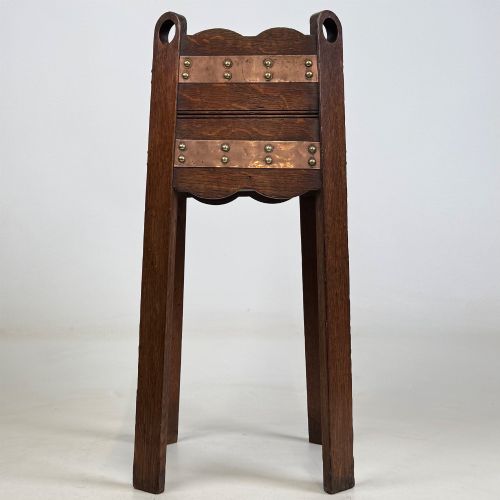
Makers utilised solid oak alongside contrasting metals such as brass and copper liners or bands, creating functional vessels designed to protect interiors from damp earth.
Materials and construction methods
Makers fashioned these pieces primarily from solid oak, sometimes combining fruitwood or mounting the timber with iron, brass, and copper fittings. Coopered barrel techniques appear in cylindrical stands, where individual oak staves are bound tightly with metal bands.
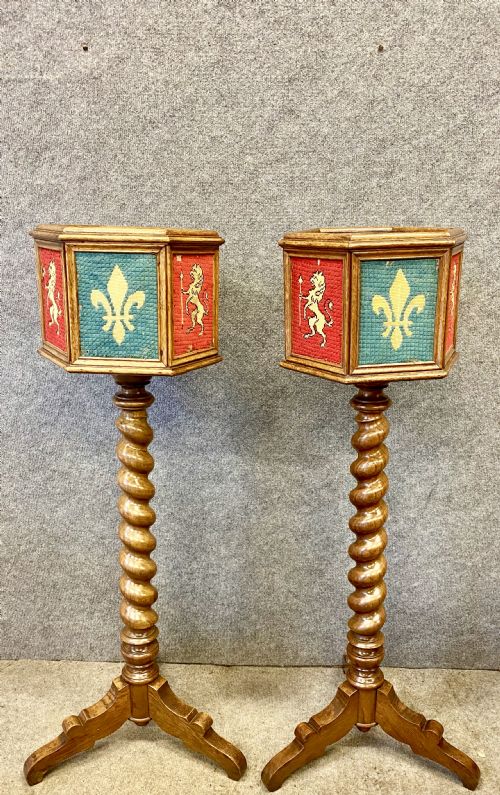
Carpenters applied relief carving, barley twist turnings, and architectural motifs directly to the timber surface. Metal liners were frequently integrated to contain soil and moisture, preserving the underlying oak structure from water damage.
Carved Oak Planter Retail Price Guide 2026
Typical asking prices for carved oak planter among the pieces listed under this phrase on Sellingantiques today, from the lower quarter to the upper quarter. They describe what is for sale here now, not the wider market.
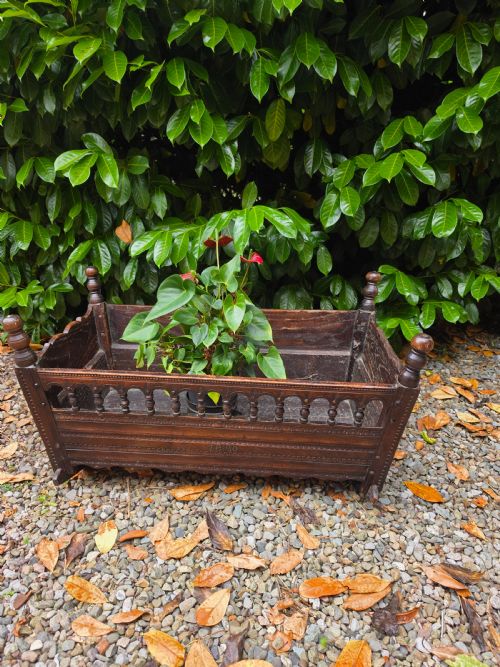
One unexpected cradle has snuck into the botanical lineup, proving that seventeenth-century woodworkers were ready to rock anything.
Judging quality in oak planters
Quality rests in the crispness of the timber carving and the integrity of the original construction rather than mere age. Pieces featuring well-defined chisel work or hand-hammered metal binding demonstrate superior craftsmanship compared to plain utility items.
The survival of internal metal liners and the depth of the oak grain heavily influence desirability. Better examples maintain rich patination on the timber surface without masking the natural grain beneath layers of later finish.
The Carved Oak Planter Glossary
- Coopered
- Built using vertical wooden staves held together by metal hoops, much like a traditional barrel. This method provides immense structural strength for holding damp soil.
- Jardinière
- An ornamental pot or stand designed specifically for holding flowers or plants. These vessels often feature decorative exterior carving or metal mounts.
- Barley Twist
- A spiral turning carved into furniture legs and upright supports, popular in seventeenth-century English woodwork and later revival periods.
- Patina
- The deep surface sheen and colour developed by aged oak over decades of handling and exposure to light. It serves as a key indicator of genuine age.
Carved Oak Planter: Frequently Asked Questions
What is a carved oak planter used for?
These pieces function primarily as decorative holders for large potted plants, ferns, or floral arrangements within a room. They elevate greenery off the floor while adding texture through carved timber surfaces.
Historically, many designs incorporated metal liners to catch drainage water, protecting fine interior floors from moisture damage.
Are plant stands the same as planters?
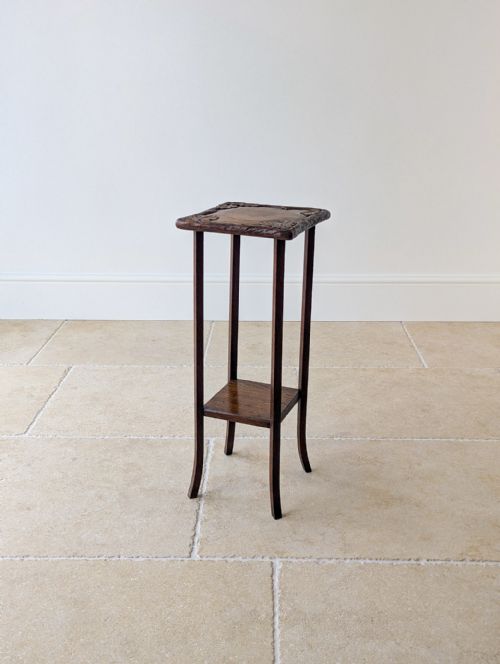
Plant stands typically feature an elevated platform or tiered shelves designed to display a single pot at height. Planters are generally box-like or barrel-shaped vessels meant to contain the plant container directly.
Both categories frequently share similar Arts and Crafts or Gothic revival design traits in this collection.
How can I tell the period of oak pieces?
Dating relies on examining construction marks, timber selection, and stylistic vocabulary such as heavy seventeenth-century mouldings or Edwardian Arts and Crafts simplicity. Tool marks left by hand saws or adzes differ significantly from later mass-produced machinery.
Revival styles often copy earlier centuries, so examining the wear patterns on the base helps confirm the actual manufacturing era.