



Turned Column Cabinet
A turned column cabinet brings solid timber structure and architectural detail into a room, offering practical storage disguised by classical proportion.
Turned Column Cabinet
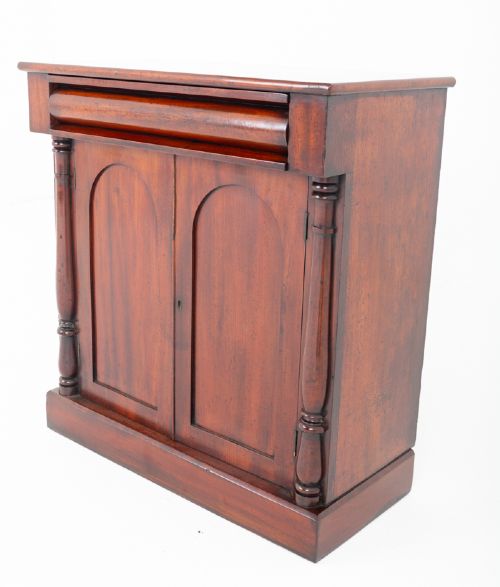
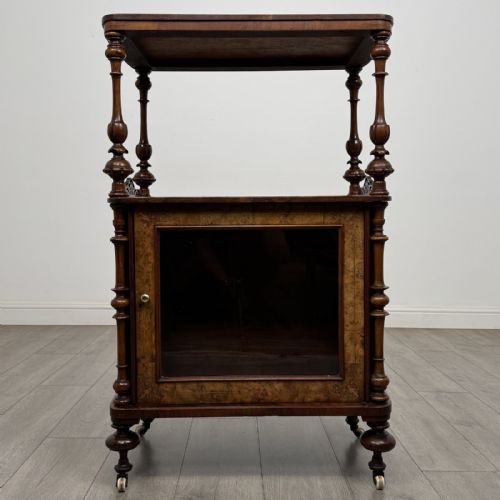
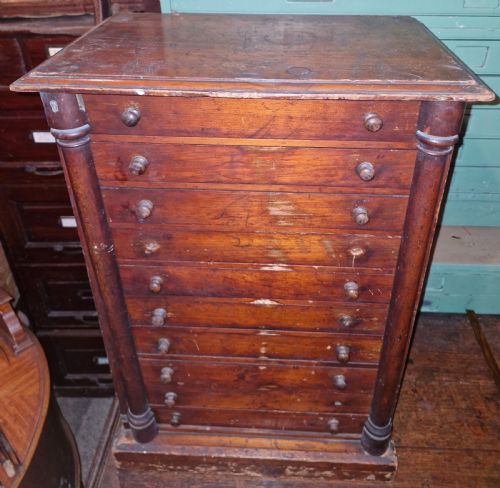
A turned column cabinet gathers various forms of small storage furniture, including bedside tables, bedside cupboards, lamp stands, and miniature chests of drawers. These pieces share sturdy timber frames augmented by distinct cylindrical supports that frame the doors or corners.
The materials span mahogany, walnut, burr walnut, oak, and occasional marble tops, reflecting periods from the Georgian era through the Victorian period and into the early twentieth century. You will encounter side cabinets, glazed display units, and tiered etageres among the listings.
Makers drew on Georgian, Victorian, Art Nouveau, and French provincial styles to shape these items. The turned column element remains the unifying anchor across bedside cupboards, music cabinets, and small specimen chests.
Construction and materials
Cabinet makers utilised dense hardwoods such as mahogany and oak for the primary carcases, often applying finer veneers like burr walnut to visible door panels and drawer fronts. Timber was seasoned carefully before joining to prevent warping across the structural panels.
Turning columns required a lathe to shape cylindrical wooden shafts with consistent rings and collars, which were then dowelled or glued into the cabinet corners. Brass handles, glass panes, and inset marble tops were integrated to finish pieces like bedside tables and display cabinets.
Turned Column Cabinet Retail Price Guide 2026
Typical asking prices for turned column cabinet among the pieces listed under this phrase on Sellingantiques today, from the lower quarter to the upper quarter. They describe what is for sale here now, not the wider market.
One tiny chest includes a secret drawer, built so the maker could hide small treasures away from prying eyes.
Distinctions in craftsmanship
Quality rests on the depth of the timber selection and the precision of the turning work on the columns. Finer examples display carefully matched veneer grains and tight joinery that holds firm over decades of use.
The refinement of secondary elements, such as inlaid stringing, secret drawers, and fitted brass hardware, separates utilitarian pieces from masterworks. Heavy marble tops and properly hung glazed doors indicate a higher standard of original workshop production.
The Turned Column Cabinet Glossary
- Burr walnut
- A figured timber veneer sliced from walnut tree growths, prized for its swirling grain patterns on cabinet doors.
- Etagere
- An open tiered shelving unit used for displaying small objects, supported by slender uprights or columns.
- Pot cupboard
- A small bedside cabinet originally designed to house a chamber pot behind a single door.
- Specimen chest
- A small multi-drawer cabinet intended for organising natural history samples or collector items.
Turned Column Cabinet: Frequently Asked Questions
What is a turned column cabinet?
A turned column cabinet is a small timber storage piece featuring cylindrical wooden posts as structural or decorative supports.
These items range from bedside cupboards to miniature chests of drawers across Georgian and Victorian periods.
How were these cabinets used originally?
They served multiple domestic purposes, acting as bedside tables, lamp stands, music cabinets, or display units.
Smaller versions like apprentice chests functioned as scale models or repositories for precious personal items.
How do I identify the period?
Dating relies on timber choice, construction methods, and stylistic cues such as Georgian proportions or Art Nouveau lines.
Mahogany and oak dominate the earlier items, while burr walnut and marble tops frequently appear in later Victorian and twentieth century pieces.
Where should I place one at home?
Their compact scale suits bedrooms as bedside cupboards, or living spaces as lamp tables and display stands.
The architectural turned columns allow them to anchor corner spaces or sit alongside larger seating arrangements.