




Turned Brass Candle Stands
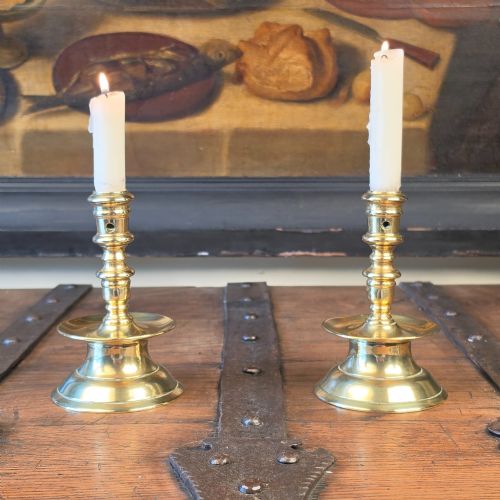
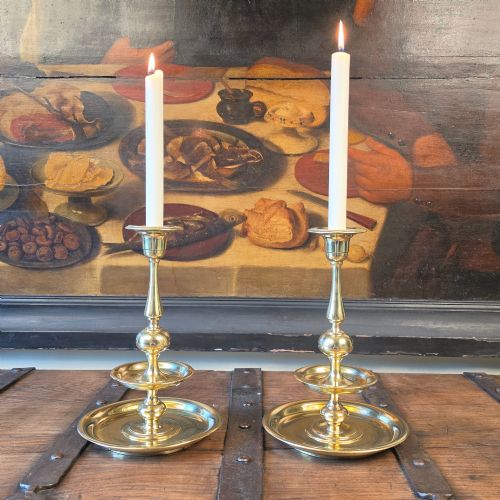
Turned brass candle stands bring warmth and architectural rhythm to a room, offering the satisfying weight of solid metal turned on a lathe.
Turned Brass Candle Stands
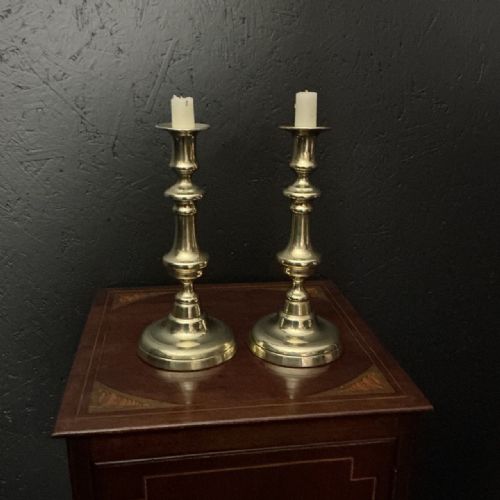
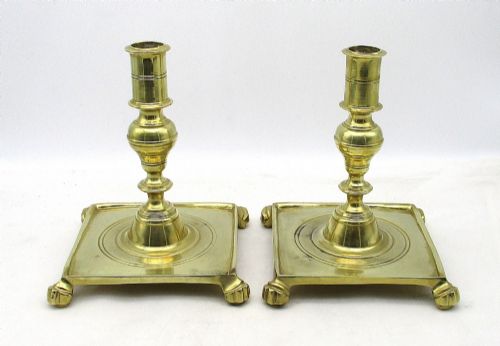
When you search for turned brass candle stands, you encounter pieces designed to elevate a candle securely while displaying the sharp lines and smooth curves characteristic of lathe work. The selection spans straightforward domestic lighting from the Victorian and Edwardian eras alongside earlier Georgian and eighteenth-century examples.
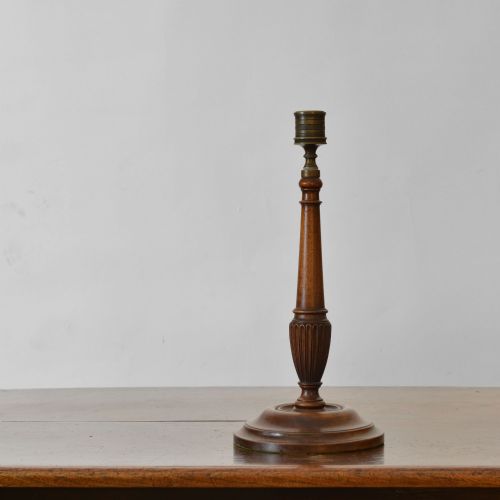
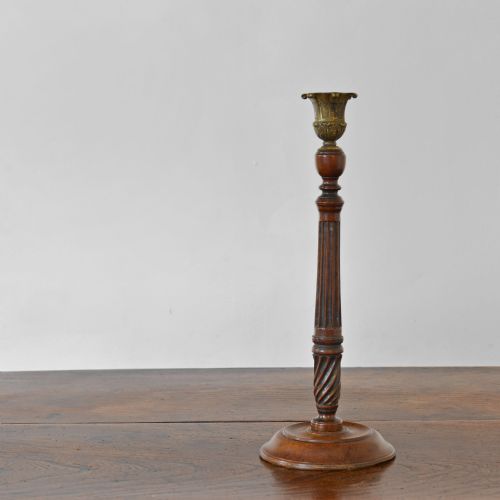
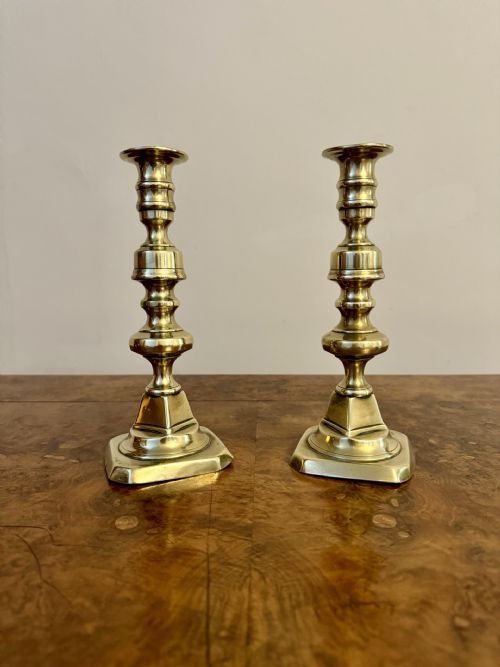
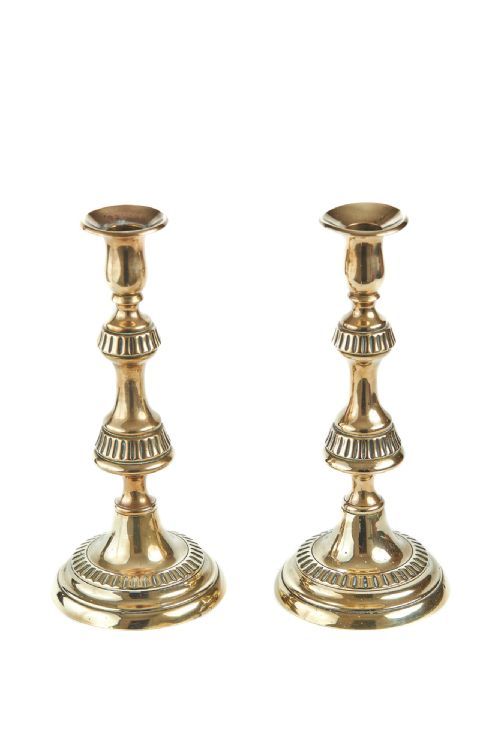
Most pieces met here are tall or medium-height pairs forged in solid brass, sometimes incorporating turned mahogany, oak, or teak columns with brass fittings. Styles stretch from restrained classical proportions to ornate revival designs reflecting seventeenth-century Baroque influences.
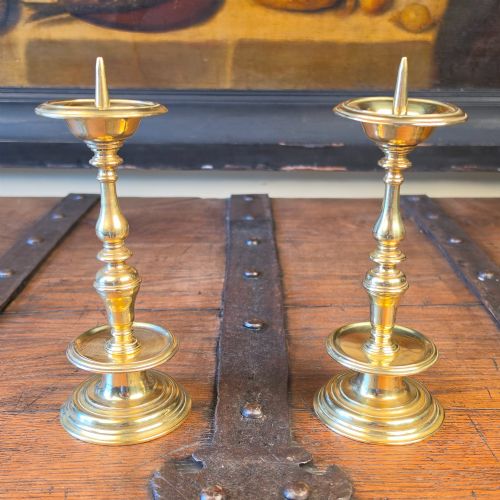
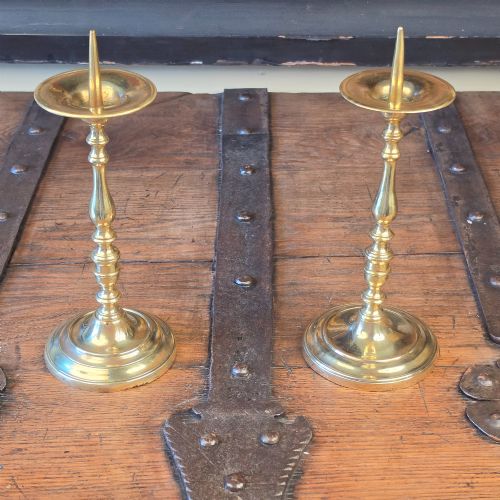
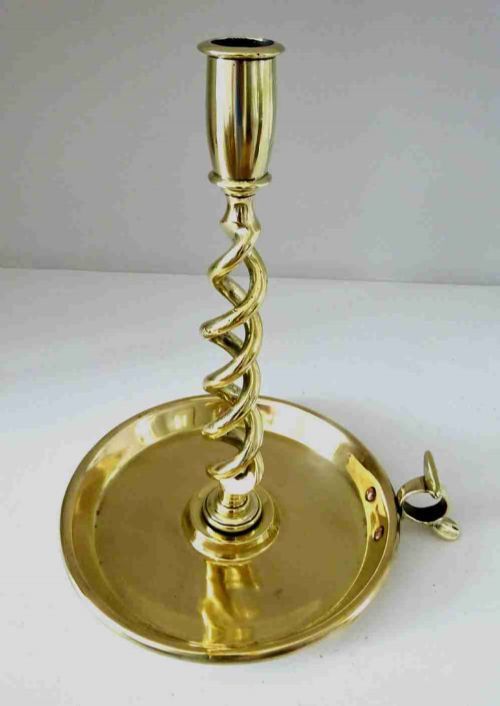
Forms vary from slender twisted shafts to sturdy stems featuring prominent vase-shaped knops and fitted bases. Occasional variations pair turned timber bodies with cast metal sconces, demonstrating how makers combined materials for visual contrast.
How they were made
Makers utilised traditional foundry methods, pouring molten brass into moulds before mounting the cooled components onto lathes for precision turning and smoothing. This mechanical rotation created the clean rings, reeding, and barley twist columns visible on the shafts.
Wooden elements such as oak, mahogany, and teak were similarly shaped on woodturning lathes to form complementary bobbin or barley twist stems. Craftsmen then assembled the metal and wooden components using threaded joins, pins, or fitted bases.
Materials span solid brass, gilt bronze, mahogany, oak, teak, and ebonised wood across Victorian, Edwardian, and Georgian periods.
What varies in quality
The division between ordinary and exceptional examples rests upon the crispness of the turning and the substance of the metal. Superior specimens display deep, clean mouldings and heavy, reassuring proportions that sit firmly on any surface.
Casting clarity also dictates worth, where finely finished edges and sharp detailing distinguish workshop output from mass production. Well-balanced assemblies where wood and metal meet seamlessly demonstrate superior craftsmanship.
Frederick J Smith & Co·Wm Tonks & Sons·Abel Landry
The Turned Brass Candle Stands Glossary
- Knop
- A prominent swelling or knob on the stem of a candlestick, often shaped like a vase or a sphere to add visual weight and grip. They appear frequently on eighteenth-century and revival designs.
- Pricket
- A sharp metal spike set in the drip pan to impale a candle rather than sliding it into a socket. These are typical of ecclesiastical or early revival pieces.
- Sconce
- The metal cup at the top of a candlestick that holds the base of the candle and catches melting wax. They are often detachable on better examples for easier cleaning.
- Barley twist
- A helical turning resembling the spiralling growth of barley, carved into wood or cast into metal shafts. This style gained immense popularity during the late nineteenth and early twentieth centuries.
- Bobbin turned
- A series of rounded spherical or cylindrical shapes resembling spools of thread joined end to end along a wooden column. This technique creates a rhythmic, tactile profile.
Turned Brass Candle Stands: Frequently Asked Questions
How do I clean old brass?
Dust the surface gently with a soft dry cloth to remove everyday particles without disturbing the underlying patina. Avoid harsh chemical polishes that strip away the aged character accumulated over decades.
For stubborn grime, use warm soapy water on a damp cloth, drying the metal immediately afterwards to prevent spotting. Preserving the natural warmth of the metal matters more than achieving a mirror shine.
How do I date a turned brass candlestick?
Examine the construction methods, base weight, and stylistic clues such as knop shape or twist profiles. Earlier eighteenth-century examples often feature cast hexagonal bases and heavy proportions, while Victorian pieces show sharper machine turning.
Maker stamps or registration marks on the base provide definitive chronological markers when present. Comparing the wear patterns around the base offers further context regarding age.
Where should I display them?
Position them on mantelpieces, sideboards, or dining tables where their height and reflective metal surfaces catch the light. Grouping pairs together creates symmetry and visual impact in a room.
Keep them away from excessive moisture and direct heat sources to protect any integrated wooden columns or ebonised finishes. Their sculptural forms look striking even when unlit.