

Turn Top Table
A turn top table offers a clever mechanism for expanding surface space, combining practical utility with period craftsmanship.
Turn Top Table
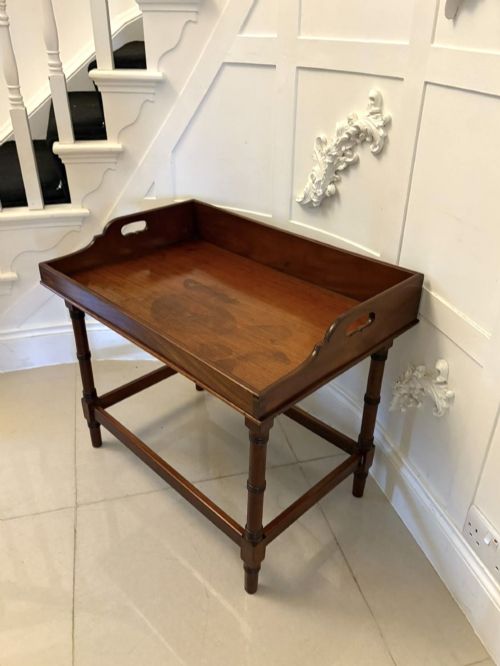
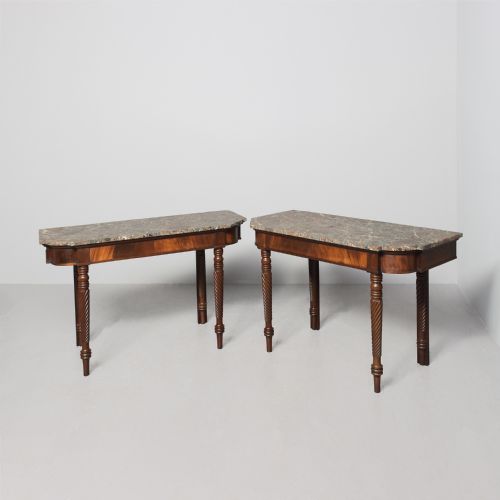
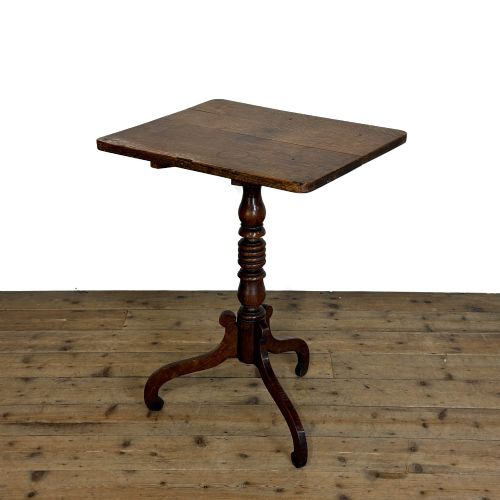
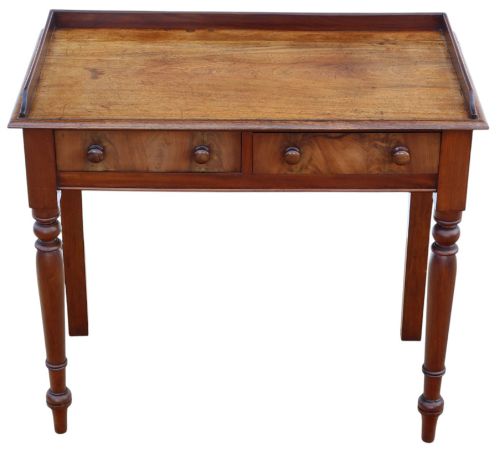
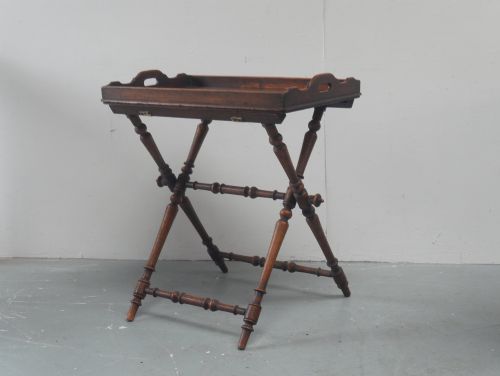
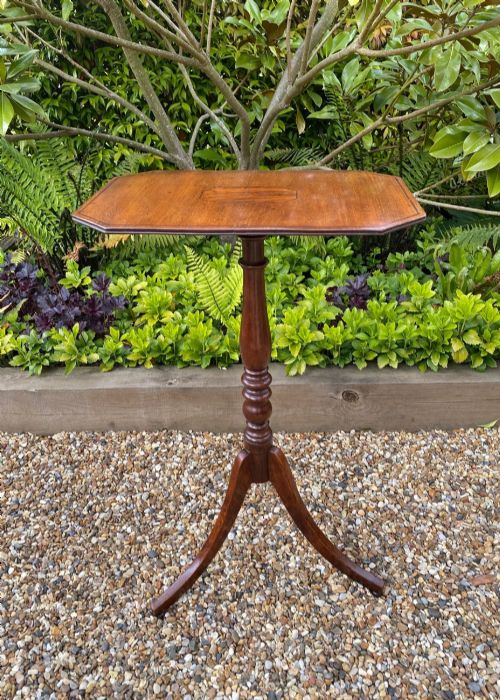
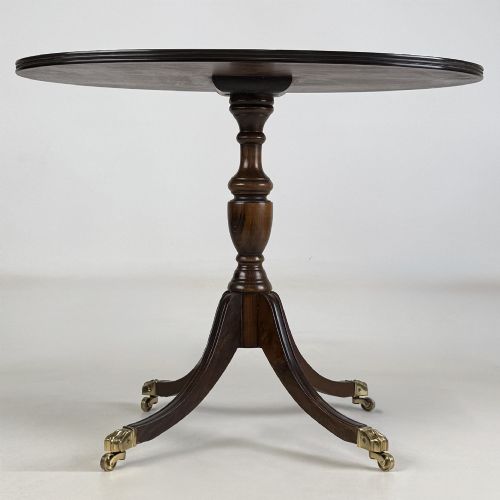
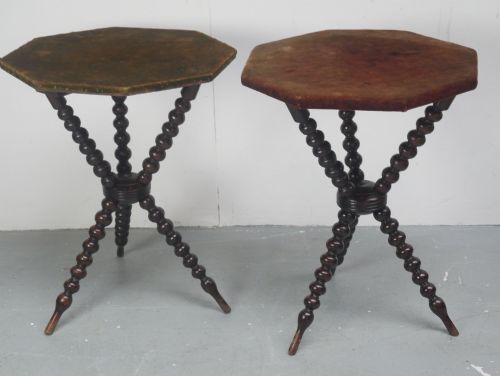
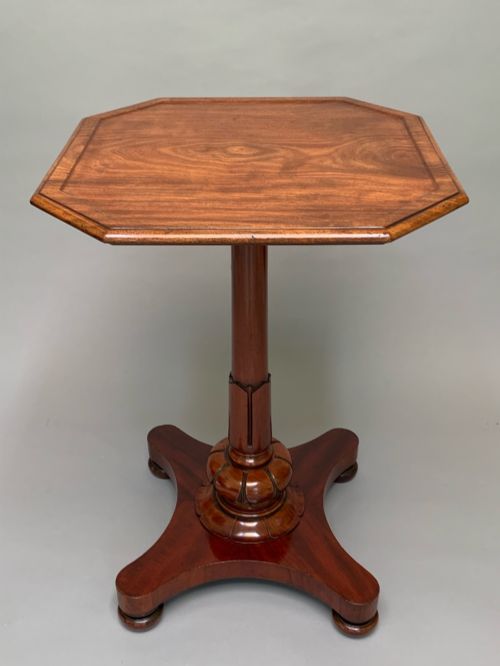
The version most commonly met on this page is the mahogany card or tea table from the Georgian and Regency periods, featuring a hinged top that rotates and folds out upon a concertina or swing-leg frame. Alongside these, buyers will find occasional oak and pine kitchen tables utilising similar pivoting or tilting mechanisms, reflecting both formal entertaining and everyday utility.
Makers and regional cabinet makers utilised rich timbers such as mahogany, walnut, and satinwood, often embellishing the pivoting tops with fine inlay, cross-banding, or figured veneer. The structural integrity relies entirely on the precision of the pivot hinge and the alignment of the top when closed, making these tables as mechanically interesting as they are decorative.
How they were made
Makers constructed turn top tables using solid hardwoods like mahogany and oak for the primary framework, paired with secondary timbers for interior framing and drawer linings. The pivoting mechanism often involved a sophisticated pivot hinge or a wooden swivel pivot let into the frieze rail, allowing the upper leaf to rotate smoothly before folding flat.
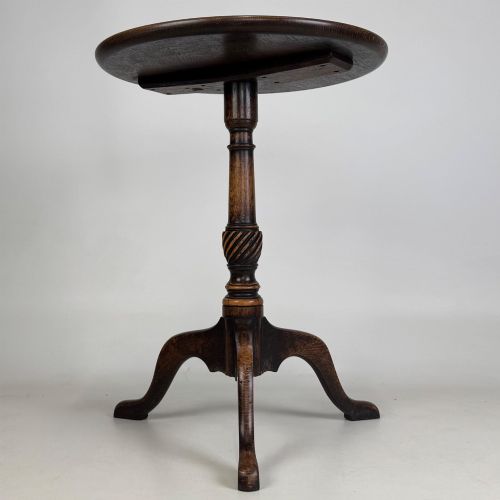
Surface decoration frequently incorporated intricate satinwood inlay, cross-banding, or burr walnut veneers, applied with animal protein glues that have survived centuries of atmospheric change. Turned wooden columns, reeded pillar supports, and tripod or swept legs provided stable bases capable of supporting the shifted weight when the top was opened.
What varies in quality
Quality in a turn top table is determined by the precision of the joinery within the rotating mechanism and the stability of the frame when the leaf is fully extended. Superior examples maintain a tight, seamless fit between the folded leaves without sagging at the unsupported corners.
The choice of timbers and the finesse of the decorative inlay also separate standard utility pieces from high-status salon furniture. Finely figured mahogany veneers, crisp hand-carved tripod legs, and original brass hinges indicate superior workshop production.
Shapland & Petter·Johnstone & Jeanes·Gillows·Thomas Turner
The Turn Top Table Glossary
- Turn-over top
- A hinged tabletop design that rotates on a central pivot and unfolds to double its surface area. This clever mechanism allows a compact side or console table to function as a dining or card table.
- Concertina action
- An expanding framework that stretches out accordion-style to support the unfolded leaf of a table. It provides hidden structural backing without relying on a swing leg.
- Frieze
- The horizontal band of wood running directly beneath the tabletop. In turn top tables, this rail often houses the pivot mechanism and occasional storage drawers.
- Cross-banding
- A decorative border of veneer laid around the perimeter of a tabletop with the grain running perpendicular to the central panel. It frames the primary wood with contrasting tones.
- Tripod base
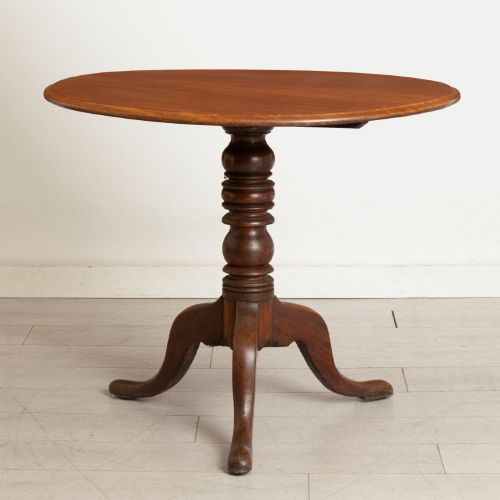
- A pedestal support branching out into three distinct feet. These are frequently carved or swept upward to balance a central column.
Turn Top Table: Frequently Asked Questions
How does a turn top table work?
The upper leaf rotates on a central pivot built into the supporting frame beneath. Once turned ninety degrees, the leaf unfolds flat over an extended support rail or swing leg.
This ingenious movement doubles the surface area while maintaining a compact footprint when closed against a wall.
Were these tables used for dining?
Many smaller turn top tables were specifically designed as tea or card tables for evening entertaining in Georgian and Victorian reception rooms. Larger oak examples served utilitarian purposes in kitchens and pantries.
The folding action made them versatile for rooms where permanent large tables took up too much daily space.
How do I identify a Georgian turn top table?
Georgian examples typically feature dense, rich mahogany timbers, hand-cut dovetails in any underlying drawer construction, and restrained classical proportions. Look for subtle details such as brass swing handles and candle recesses.
Makers of this era frequently employed concertina frames rather than simple swing legs to support the extended leaf.