



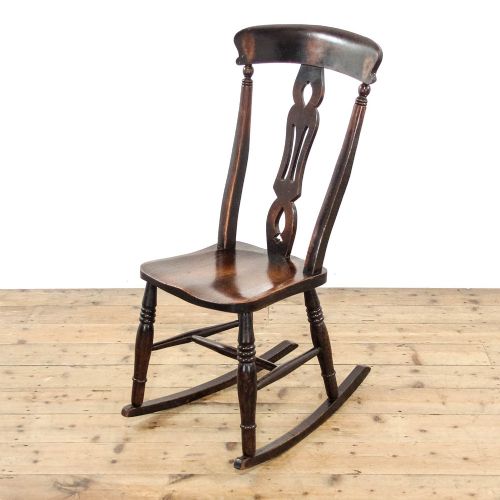


Turn of Century Rocker
These turn of century rocker pieces bring tactile country comfort to a room, offering gentle motion in traditional wood and rush forms.
Turn of Century Rocker
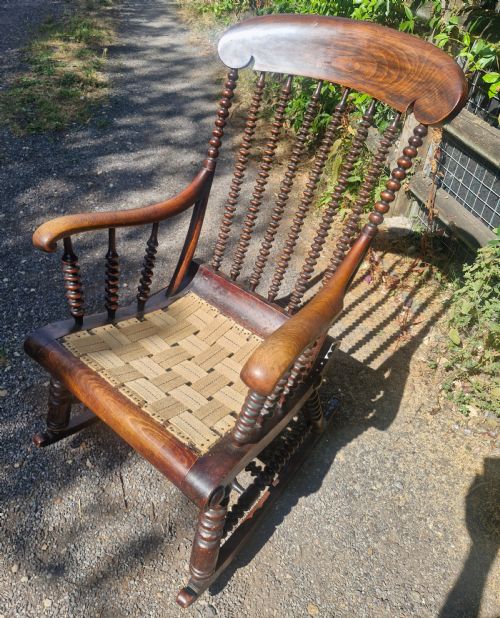
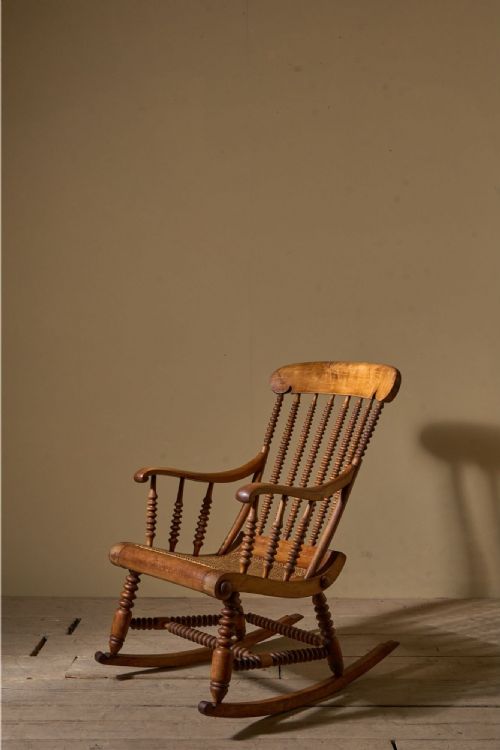
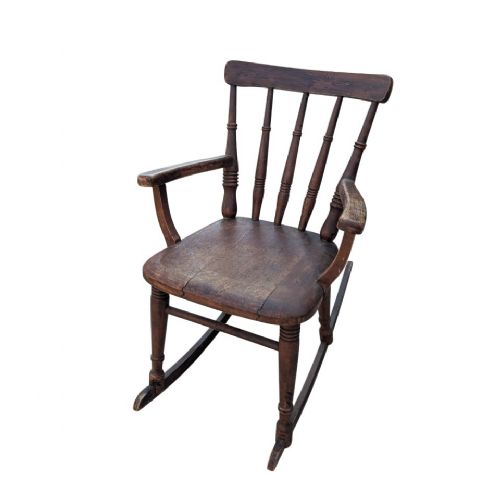
Most examples meet on this page as country-style Windsor chairs, ladder back firesides, or spindle back seating. Materials range from native hardwoods like beech, elm, ash, and oak to painted finishes and rush or cane seats.
Origins stretch across English, Scandinavian, and American workshops, showing both child-sized and adult proportions. These pieces combine domestic utility with decorative painted surfaces or exposed timber grain.
How they were made
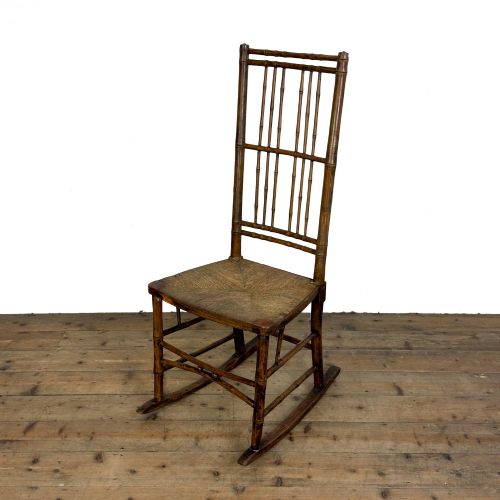
Makers utilised native timbers including beech, elm, ash, and oak for structural frames and turned spindles. Bobbin turning, faux bamboo carving, and steam bending shaped the uprights and arms of country and Victorian models.
Seats incorporated woven rush, sea grass, cane, or fitted leather, while others relied on solid timber planking. Original paint or polished wood finishes protected the surfaces, often complemented by floral upholstery on later Edwardian variants.
Turn of Century Rocker Retail Price Guide 2026
Typical asking prices for turn of century rocker among the pieces listed under this phrase on Sellingantiques today, from the lower quarter to the upper quarter. They describe what is for sale here now, not the wider market.
The listings span the nineteenth century and Edwardian eras, incorporating beech, elm, oak, ash, pine, rush, cane, and painted wood.
What varies in quality
The integrity of the timber frame and the retention of original surface paint determine the distinction between ordinary and notable examples. Original rush or cane seating surfaces show differing degrees of tension and wear across surviving items.
Turned elements such as bobbin framing or spindle backs display varying levels of crispness in the lathe work. Proportion and scale, particularly in child-sized and nursing rocking chairs, influence the balance and character of the piece.
The Turn of Century Rocker Glossary
- Windsor
- A chair built with a solid wooden seat into which the legs and back spindles are wedged directly. This form appears frequently in country styles.
- Bobbin turned
- A style of furniture turning that creates a series of rounded wooden spheres resembling bobbins along the vertical frame members. It defines distinct nineteenth-century seating.
- Rush
- A marsh plant woven to create durable, textured seating surfaces. It is found on traditional country rocking chairs.
- Spindle back
- A chair back constructed from multiple slender turned wooden rods. These rods provide flexible support.
- Faux bamboo
- Wood carved or painted to imitate the segmented stalks of natural bamboo. This technique reflects Victorian aesthetic tastes.
Turn of Century Rocker: Frequently Asked Questions
What is a turn of century rocker?
A turn of century rocker is a nineteenth-century or Edwardian rocking chair built in regional, Windsor, or ladder back styles. These chairs provide gentle motion using traditional timber construction.
Such pieces range from small child chairs to full-sized armchairs with rush, cane, or wooden seats. They reflect domestic comfort from various country traditions.
How do I identify a Windsor rocking chair?
Windsor rocking chairs feature a thick wooden seat that directly anchors the legs underneath and the back spindles above. This construction creates a sturdy, unified frame.
They often include bow backs or comb pieces, combined with native woods like elm and beech. Their vernacular design distinguishes them from formal parlour seating.
Where were these rocking chairs made?
These rocking chairs originated across English, Scandinavian, and American domestic workshops. Country makers utilised local hardwoods available in their respective regions.
Styles varied from Scandinavian painted frames to English country ladder backs and American spindle designs. Each region applied distinct turning and finishing methods.
How should I care for a rush seat rocker?
Rush seat rocking chairs require a stable indoor environment with consistent humidity to prevent the natural fibres from drying out and snapping. Gentle dusting helps maintain the woven surface.
Avoid placing these chairs in direct sunlight or damp areas. Regular inspection of the joints ensures the wooden frame remains stable during use.