



Turn of Century Card Table
A turn of century card table brings folding leaves and ingenious pivoting mechanisms into the sitting room for evening play.
Turn of Century Card Table
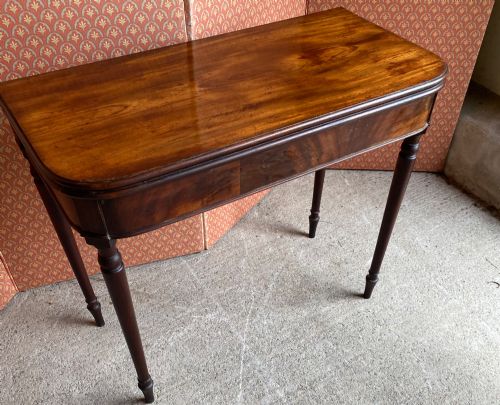
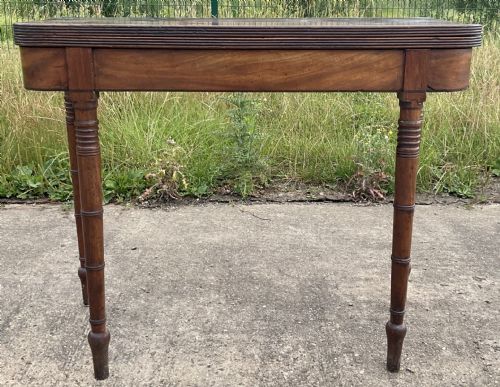
A turn of century card table comprises foldover, swivel and pivoting designs intended for games and tea, appearing across Georgian, Regency, Victorian and Edwardian periods. These tables use mahogany, walnut, rosewood, satinwood and amboyna, often incorporating brass details, ceramic castors or tooled leather inset tops.
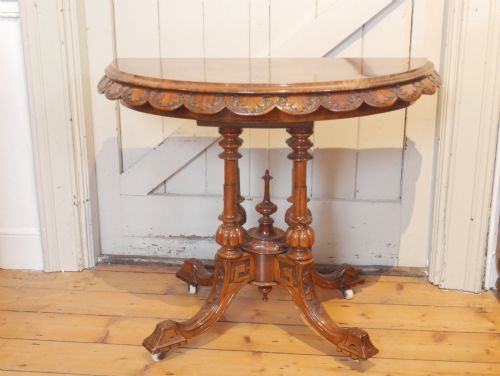
The version most commonly met on this page is the Victorian walnut or mahogany card table featuring a foldover or turn over leaf supported on a pedestal or pillar base. Alongside these, buyers find Regency rosewood games tables and Georgian mahogany tea tables adapted for folding leaves.
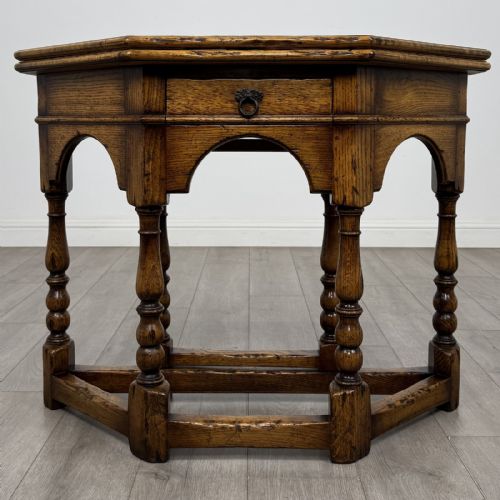
Forms extend beyond standard rectangles to include D-end console tables, octagonal centre tables, triangular bentwood pieces and demi-lune shapes. Makers utilise contrasting wood inlays, hand-painted decoration and ebonised timber to accent the folding mechanism.
Distinctions in quality and execution
Quality rests upon the precision of the pivoting mechanism and the integrity of the hinges supporting the foldover leaf. Finer examples retain tight joints where the timber meets when open, whereas lesser pieces show movement or dropping in the leaf.
The choice of cabinet woods and the complexity of the internal framework define the upper tier of production. Pieces featuring figured burr walnut, amboyna veneers or detailed inlaid satinwood demonstrate greater workshop ambition than plain mahogany versions.
Turn of Century Card Table Retail Price Guide 2026
Typical asking prices for turn of century card table among the pieces listed under this phrase on Sellingantiques today, from the lower quarter to the upper quarter. They describe what is for sale here now, not the wider market.
One exceptional bentwood table folds into a triangular footprint before the nineteenth century closes.
Thonet·S&H Jewell·Gregory and Co
The Turn of Century Card Table Glossary
- Foldover leaf
- A hinged table top that unfolds to double the surface area for card playing or dining. This mechanism sits upon a rotating pivot or swinging rear leg.
- D end
- A table end shaped in the semi-circular outline of the letter D, common in Georgian and William IV console and dining designs. Pairs of these tables join together to form larger surfaces.
- Inlay
- A decorative technique where pieces of contrasting wood, shell or metal fit flush into recesses carved into the primary timber. Satinwood and ebony frequently serve this function on Victorian tables.
- Pedestal base
- A central column support rising from a platform or feet, replacing traditional four-corner legs. This construction allows unrestricted legroom when sitting at a games table.
- Bentwood
- Wood steamed and bent into curved shapes under pressure, utilised in late period designs such as triangular card tables. This technique creates strong, lightweight frames without traditional joinery.
Turn of Century Card Table: Frequently Asked Questions
How does a turn over card table work?
The upper leaf lifts and pivots ninety degrees on a central wooden pivot or swinging framework, opening out flat to reveal a polished timber surface or baize lining.
Supporting rails swing out from the frieze to hold the newly exposed leaf securely in place during card games or writing.
What periods do these card tables cover?
The pieces span the Georgian, Regency, William IV, Victorian and Edwardian eras, encompassing styles from Reformed Gothic to Aesthetic Movement.
Earlier examples favour solid mahogany with understated lines, while later Victorian and Edwardian items introduce burr walnut, amboyna and elaborate inlaid satinwood.
Where were card tables placed in a home?
These tables stood against parlour or drawing room walls when closed, functioning as console or side tables for decorative objects and lamps.
When evening arrived, occupants pulled the furniture into the centre of the room and unfolded the top for chess, draughts or card games.
How do I identify a games table from a tea table?
Games tables often feature specific internal details such as inlaid chessboards, backgammon wells or plain baize surfaces beneath the folding lid.
Tea tables generally present a clean polished wooden interior surface designed for serving tea rather than holding game pieces.