




Turkish Long Runner
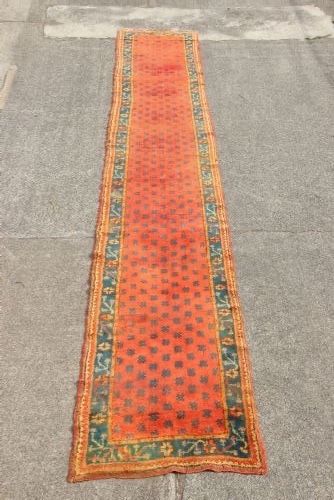
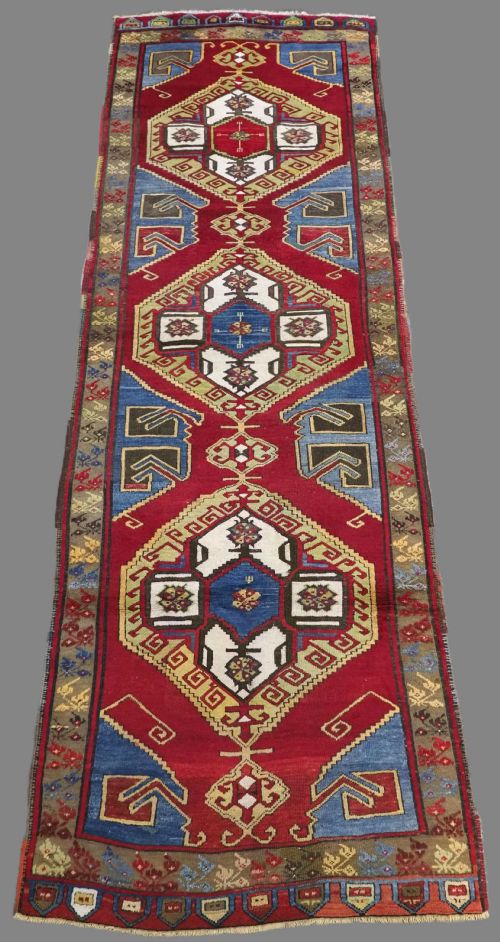
These turkish long runner examples are narrow floor coverings spanning the late nineteenth and early twentieth centuries, bringing authentic regional craft and rich pattern to hallways.
Turkish Long Runner
A turkish long runner is a narrow floor covering designed for corridors, hallways and long spaces, appearing on this page across periods from the eighteen eighties to the nineteen thirties. These pieces originate from various Anatolian weaving traditions, including Oushak, Konya, Taspinar, Yagcibedir and Yuruk styles.
The format is characteristically elongated, with lengths stretching well over three metres while the width remains narrow, suiting traditional architectural proportions. Most specimens found here belong to the broader categories of tribal and traditional weaving, carrying distinct geometric or medallion layouts.
How they were made
Construction relies upon hand knotted wool pile set against cotton foundations, utilising traditional loom techniques passed down through generations of Anatolian makers. Natural dyes provide the underlying palette, creating depth within the reds, blues and neutral tones that define these floor coverings.
Certain examples incorporate flatweave kilim sections alongside knotted pile, particularly in hybrid formats like the Malatya Konya half kilim runners. The resulting structures combine durability for high traffic areas with the supple drape characteristic of regional hand made textile production.
Turkish Long Runner Retail Price Guide 2026
Typical asking prices for turkish long runner among the pieces listed under this phrase on Sellingantiques today, from the lower quarter to the upper quarter. They describe what is for sale here now, not the wider market.
Listings span five decades of production from eighteen eighty to nineteen thirty, all constructed from wool and cotton.
What varies in quality
Quality rests upon the fineness of the knotting, the complexity of the design layout and the integrity of the wool foundation. Stronger structural density allows a runner to withstand decades of footfall without losing the definition of its motifs.
The character of the dye work and the preservation of the original borders also influence the overall standard. Pieces with balanced proportions and clear regional stylistic attribution stand apart from simpler commercial productions.
The Turkish Long Runner Glossary
- Oushak
- A style originating from the town of Usak in western Anatolia, known for larger scale floral motifs and softer pastel or saturated red and blue palettes. These runners frequently feature expansive field designs.
- Kilim
- A flatweave textile produced without a pile, created by tightly interweaving warp and weft threads to form geometric patterns. Some runners combine this technique with knotted pile sections.
- Yuruk
- A term describing pieces woven by nomadic or formerly nomadic Turkmen groups in Anatolia. These textiles typically display bold geometric medallions and saturated tribal colour palettes.
- Warp
- The vertical foundation threads stretched tightly on the loom before knotting begins. Cotton is commonly used for these structural elements in Turkish pieces.
- Pile
- The soft, upright surface of the rug formed by individual knots tied to the warp and weft. Hand knotted wool pile provides both warmth and resilience underfoot.
Turkish Long Runner: Frequently Asked Questions
Where should I place a long runner?
These narrow formats suit hallways, corridors and long gallery spaces where traditional floorboards or stone benefit from added warmth and texture. Their elongated proportions bridge rooms while introducing regional pattern to transitional areas.
Because they were built for heavy domestic traffic, they handle daily movement well when properly secured with a suitable underlay on hard floors.
How do I care for an antique wool runner?
Regular gentle vacuuming without a rotating brush roll prevents dust accumulation within the wool pile. Professional cleaning suited to antique textiles preserves the natural lanolin and dye stability.
Keep these textiles away from direct, continuous sunlight to prevent fading of the natural plant and insect based dyes used in nineteenth and early twentieth century workshops.
How do I identify an Oushak runner?
Oushak pieces typically display looser, more expansive knotting and larger scale floral or geometric medallion designs. The palette often relies on softer terracotta, muted reds and gentle blues.
They carry a distinct decorative presence that sets them apart from the denser, strictly geometric patterns found in regional tribal village weaving.
Are these runners entirely hand made?
The pieces listed here represent traditional hand knotted and hand woven production from Anatolian workshops and nomadic groups. Artisans tied each knot individually onto cotton foundations using locally sourced wool.
This manual construction method ensures that no two runners share exact dimensions or identical decorative nuances.