

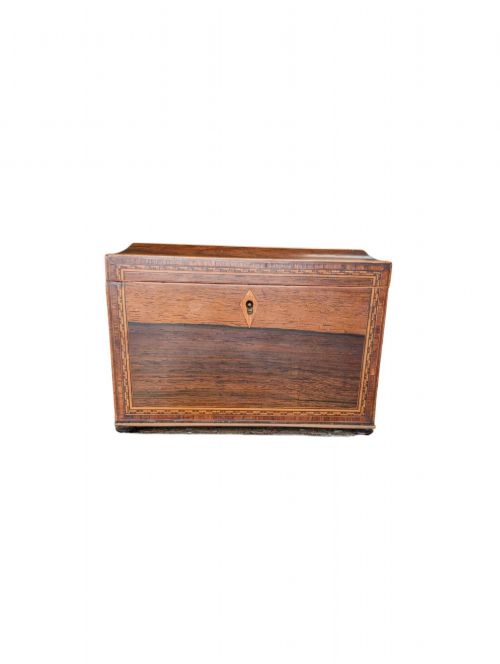
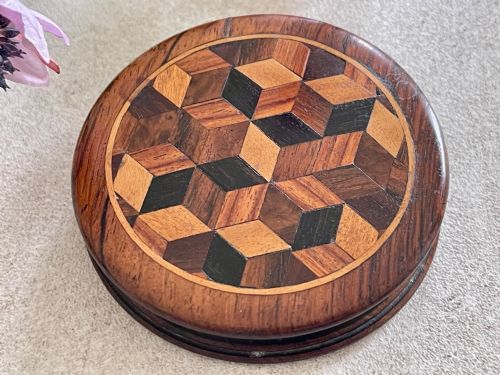


Tunbridge Ware Marquetry Box
A tunbridge ware marquetry box brings intricate mosaic wood pictures into daily use, offering small lidded containers crafted during the Regency, Victorian and Georgian periods.
Tunbridge Ware Marquetry Box
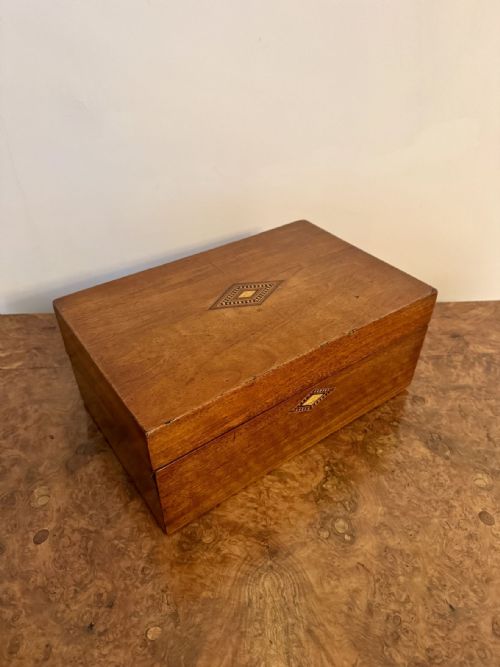
A tunbridge ware marquetry box appears in forms designed for specific domestic tasks, including tea caddies, jewellery boxes, writing slopes, stationery boxes and sewing baskets. Most examples encountered on this page date from the Victorian era and the nineteenth century, though earlier Regency and Georgian pieces also occur.
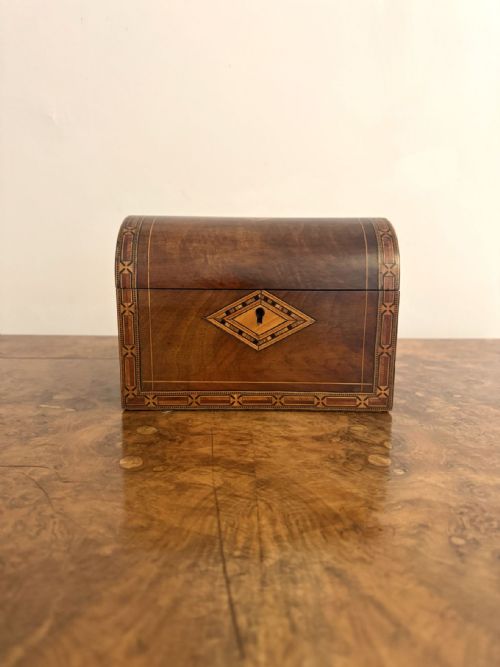
These lidded containers range from small snuff boxes and trinket boxes to larger desk top boxes and caskets. Makers constructed them in diverse shapes such as octagonal baskets, domed top caddies and travelling inkwells, utilising varied timber foundations.
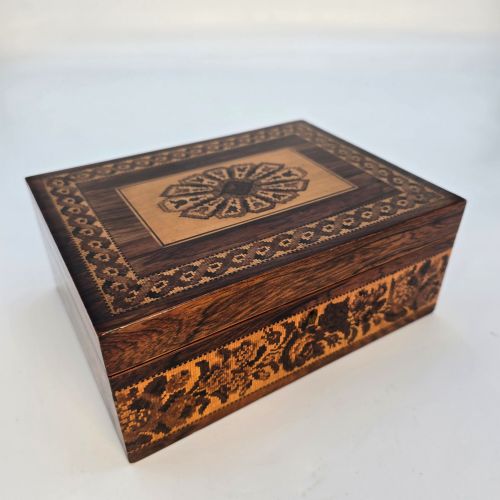
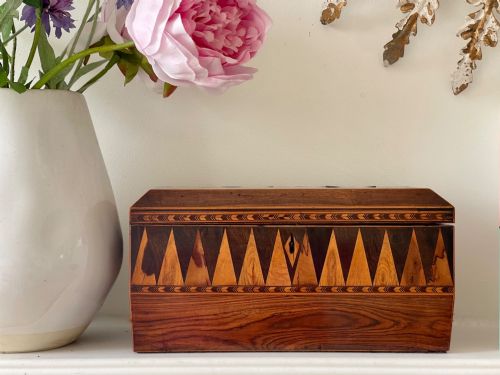
The primary visual characteristic across these objects is the application of tiny wood mosaic tiles forming geometric patterns or pictorial panels. Buyers frequently encounter rosewood and walnut bodies enhanced by multi-coloured marquetry bands.
Materials and Mosaic Technique
Craftsmen built the carcases of these boxes using dense timbers such as rosewood, walnut, sycamore and boxwood. These solid foundations provided stable bases for the intricate decorative veneers applied to the exterior surfaces.
The defining technique relies on assembling countless tiny strips of naturally coloured woods, including holly and boxwood, glued together in bundles and sliced across to create identical mosaic tile patterns. This painstaking process produced pictorial panels depicting castles, flowers and geometric tessellations.
Additional detail often involved brass fittings, fitted interiors, and mixed wood inlay to organise compartments for tea, letters, sewing implements or jewellery.
Listings demonstrate that rosewood and walnut served as the most common primary timbers for these lidded containers.
Assessing Craftsmanship and Condition
The distinction between ordinary and exceptional pieces rests upon the density, fineness and pictorial ambition of the mosaic work. Boxes featuring complex figurative panels or extensive tessellated banding demonstrate a higher degree of specialist skill than those with simple geometric borders.
The choice of primary timber also influences the standing of a piece, with figured burr walnut and rich rosewood foundations elevating the work. Original fitted interiors, complete compartments and well-preserved mosaic tiles contribute to the integrity of the object.
Edmund Nye·Henry Hollamby
The Tunbridge Ware Marquetry Box Glossary
- Marquetry
- The art of forming decorative patterns by fitting together small pieces of wood veneer. This technique creates the pictorial and geometric surfaces characteristic of these pieces.
- Tea Caddy
- A container designed originally for storing dry tea leaves securely. Many surviving examples feature fitted interior compartments and specialised inlay.
- Tessellation
- An arrangement of closely fitting tiles with no gaps, utilised extensively in creating the mosaic bands on these wooden boxes.
- Writing Slope
- A desk accessory featuring a sloping lid that opens to reveal a writing surface and storage compartments. These pieces often incorporate elaborate wood inlay.
Tunbridge Ware Marquetry Box: Frequently Asked Questions
What were tunbridge ware boxes used for?
These boxes served practical domestic functions in period homes, holding luxury commodities like tea, writing paper, stamps, matches and sewing equipment.
They also contained personal valuables, including jewellery, trinkets, snuff and letters, keeping small items secure on tables and desks.
What woods were used in the mosaics?
Craftsmen selected native and exotic timbers of contrasting natural colours, avoiding artificial dyes to achieve their palette.
Boxwood, holly and sycamore provided pale tones, while darker and reddish woods created the outlines and shadows within the geometric designs.
How should I care for a wood mosaic box?
Keep the object away from direct sunlight and excessive moisture to prevent the delicate wood veneers and tiny mosaic tiles from lifting.
Dust gently with a dry, soft cloth and avoid applying modern polishes or cleaning agents that might penetrate the untreated wood.