



Tufted Victorian Bench
A tufted victorian bench brings deep buttoning and rich upholstery together in practical seating found across nineteenth-century drawing rooms and country houses.
Tufted Victorian Bench
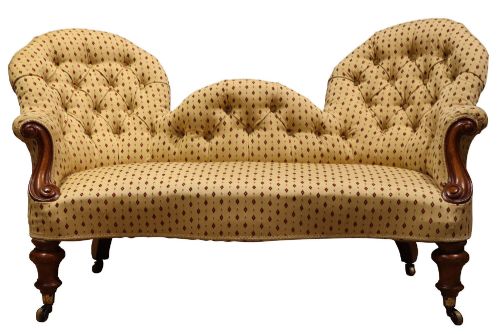
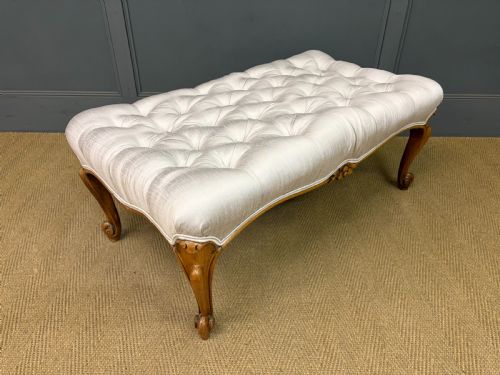
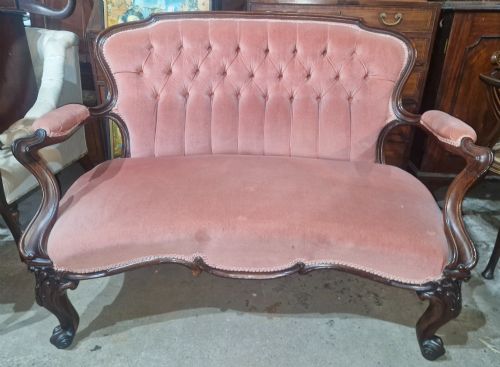
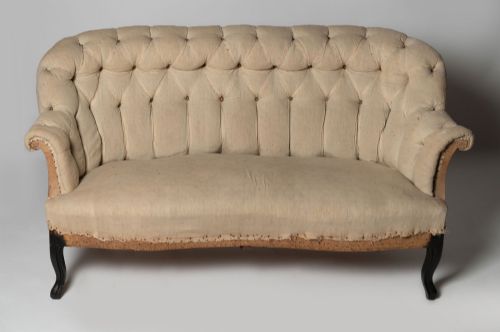
A tufted victorian bench encompasses low stools, ottomans, window seats, and settees built during the Victorian period alongside related nineteenth-century forms. These pieces serve as functional seating or resting places, combining padded surfaces with buttoning or upholstery.
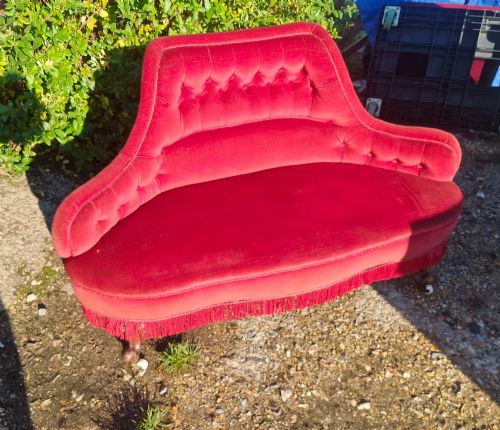
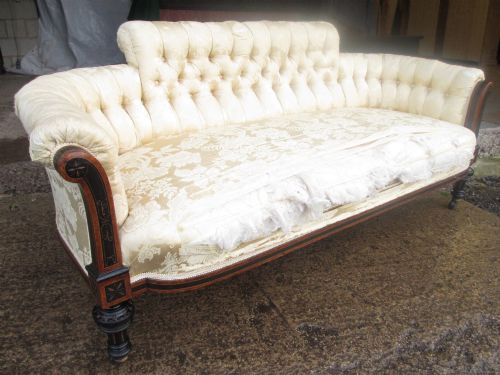
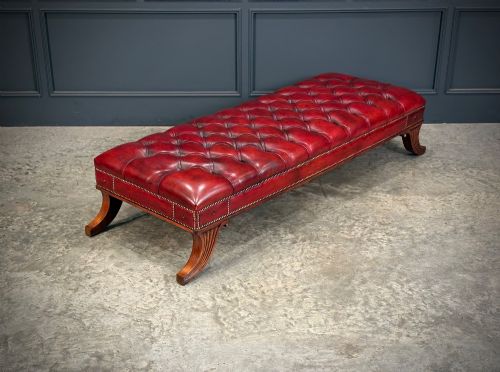
The versions most commonly met on this page include large footstools, salon stools, and double-ended settees spanning the eighteen-fifties through the eighteen-eighties. Walnut, rosewood, mahogany, and hardwood frames support leather, velvet, and fabric coverings.
Makers designed these items for parlours, bedrooms, and halls, resulting in diverse formats ranging from diminutive slipper sofas to expansive club fenders and country house ottomans. The overarching characteristic remains the upholstered form, often elevated on castors or traditional wooden legs.
How They Were Made
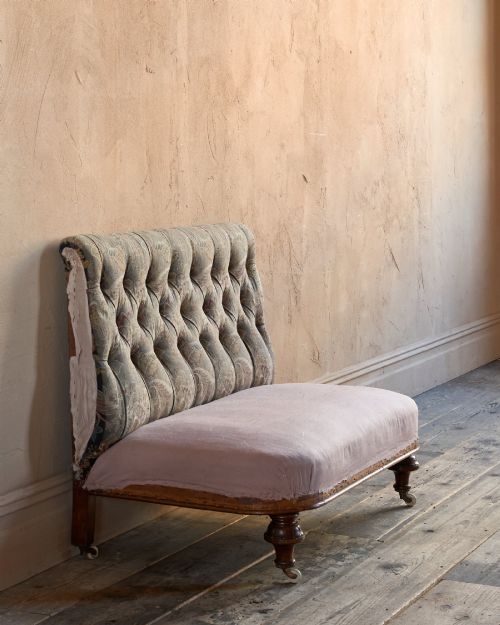
Carpenters constructed structural frames from dense hardwoods like mahogany, walnut, rosewood, and general hardwood, utilising traditional joinery to ensure stability under heavy padding. Turned or carved wooden supports frequently feature castors for mobility.
Upholsterers applied deep buttoning using leather, velvet, or fabric stretched over dense stuffing, securing the tufts to create the signature diamond pattern. Tassel trims and brass details finished the borders on select salon and bedroom pieces.
Tufted Victorian Bench Retail Price Guide 2026
Typical asking prices for tufted victorian bench among the pieces listed under this phrase on Sellingantiques today, from the lower quarter to the upper quarter. They describe what is for sale here now, not the wider market.
What Varies in Quality
The integrity of the timber frame and the depth of the hand-carved detail dictate the standard of the piece, with dense rosewood and walnut frames showing superior execution compared to plain hardwood. Timber selection and joinery robustness set foundational standards.
The tightness of the buttoning and the quality of the leather, velvet, or fabric upholstery determine the finish. Fine examples maintain precise tufting geometry and durable hide or textile integrity across the seat.
James Shoolbred
The Tufted Victorian Bench Glossary
- Button back
- An upholstery technique where buttons are pulled deep into the padding to form a geometric diamond pattern. This method secures the internal stuffing while providing a textured surface.
- Double-ended settee
- A sofa or settee featuring scrolled or raised ends of equal height at both sides. This symmetrical design allows a person to recline comfortably from either direction.
- Club fender
- A low, padded seat structure traditionally placed around a fireplace hearth. It combines a metal frame with leather upholstery to offer fireside seating.
- Window seat
- A long, narrow bench built or placed specifically to fit in a window recess. These pieces often feature carved wooden frames and upholstered tops.
- Slipper sofa
- A low-profile upholstered seat designed without arms, historically used in bedrooms for putting on shoes. They offer compact dimensions and soft cushioning.
Tufted Victorian Bench: Frequently Asked Questions
What is a tufted victorian bench?
A tufted victorian bench is an upholstered nineteenth-century seating form, such as a footstool, ottoman, window seat, or settee, characterised by deep buttoning.
These pieces combine wooden frames in mahogany, walnut, or rosewood with leather, velvet, or fabric coverings to provide practical and decorative seating.
Where were these benches used?
Victorian benches and stools were placed in principal rooms including drawing rooms, parlours, bedrooms, and country house halls. Larger ottomans and club fenders served hearths and grand reception spaces.
Smaller window seats and slipper sofas fitted into private chambers or alcoves where space and comfort mattered.
How do I care for leather upholstery?
Leather-upholstered ottomans and footstools require regular dusting and occasional conditioning to keep the hide supple. Avoiding direct sunlight prevents the leather from drying out and cracking.
Gentle cleaning maintains the natural finish of antique buttoned leather without harming the historical surface.
How do I identify a Victorian piece?
Victorian seating is identified through period timbers like rosewood and walnut, alongside characteristic revival styles and hand-tufted upholstery. Construction methods typically involve traditional joinery and turned wooden legs.
Castors, button backs, and specific Victorian proportions help separate these items from later Edwardian or twentieth-century reproductions.