
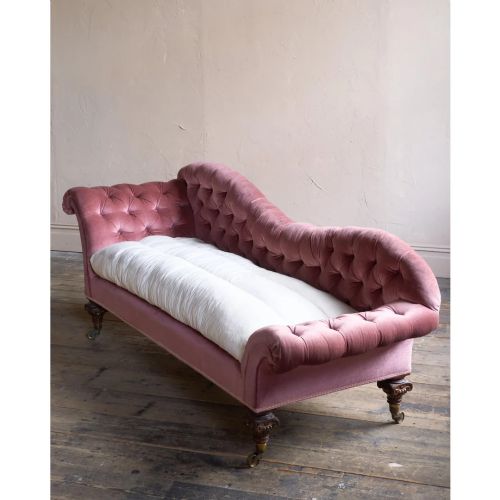
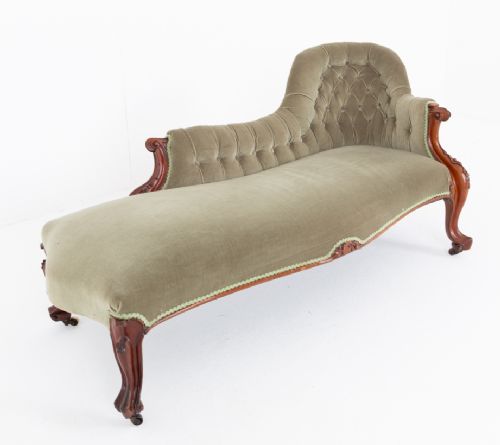
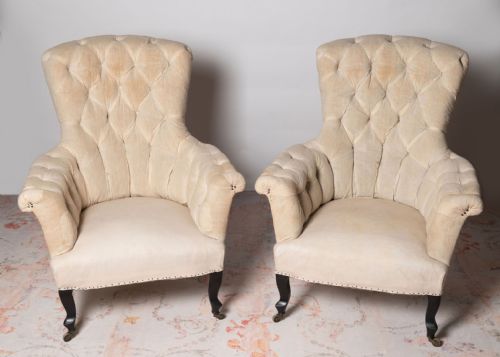


Tufted Velvet Lounge
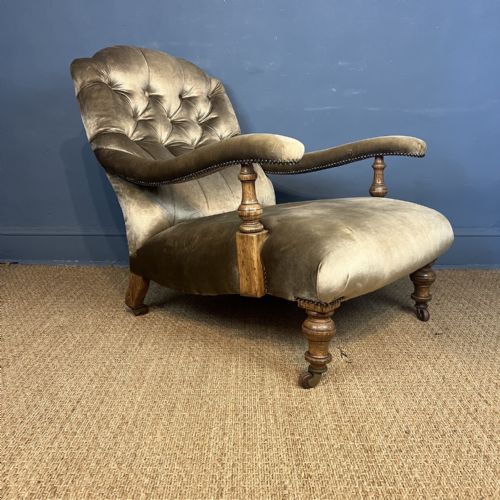
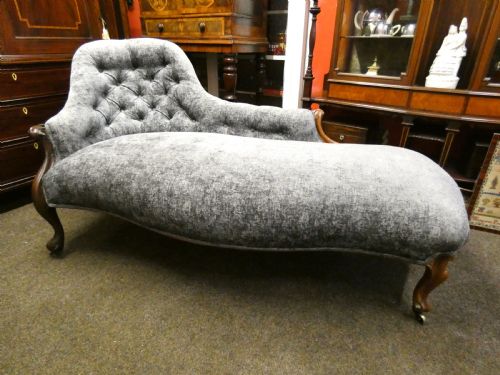
A tufted velvet lounge delivers deep nineteenth-century comfort through plush buttoning and rich textiles.
Materials and construction
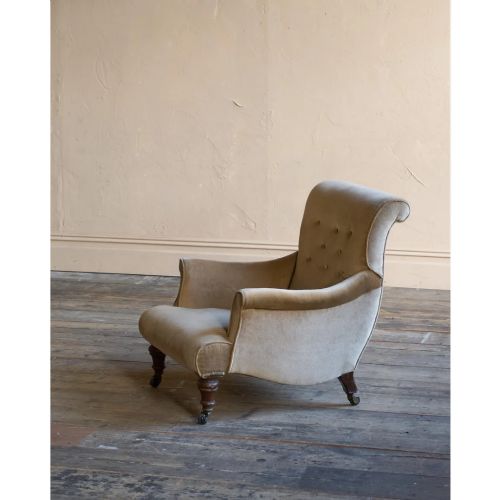
Textiles rely on rich pile velvet for the primary upholstery, frequently finished with deep buttoning techniques that secure the padding to the frame. Fabric covers are then tailored to fit complex curves on spoon backs, scroll sides, and ionic column legs.
Distinguishing quality
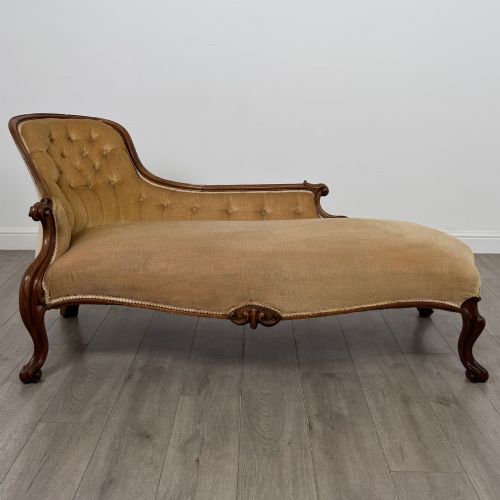
Quality rests in the sculptural integrity of the carved timber frame and the precision of the upholstery work. Pieces attributed to distinguished nineteenth-century makers demonstrate superior joinery and more refined proportions in elements like spoon backs and scroll sides.
The density of the buttoning and the choice of dense hardwoods such as rosewood or walnut separate standard seating from exceptional examples. Finer lounge pieces maintain balanced symmetry in their turned legs, brass castors, and architectural framing.
Some nineteenth-century sitters enjoyed rocking chairs fitted with solid brass framework and plush velvet buttons.
Shoolbred·Holland and Sons·C. Hindley and Sons·Howard and Sons·Hampton and Sons·Foot and Son
The Tufted Velvet Lounge Glossary
- Button back
- An upholstery technique where deep buttons are pulled tight through the padding in a grid pattern. This creates characteristic diamond folds in the velvet.
- Chaise longue
- An elongated upholstered chair designed for reclining. It combines the backrest of a sofa with the extended seat of a day bed.
- Spoon back
- An armchair backrest shaped like the bowl of a spoon. It curves inward to cradle the sitter's spine in Victorian designs.
- Scroll side
- An upholstered arm or frame end rolled outward in a spiral scroll shape. This appears frequently on nineteenth-century day beds and settees.
Tufted Velvet Lounge: Frequently Asked Questions
How do I clean antique velvet upholstery?
Vacuum the velvet gently with a soft brush attachment to remove surface dust without crushing the delicate pile. Professional textile cleaning is recommended for deeper marks.
Avoid applying water or household detergents directly to nineteenth-century velvet fabrics, as moisture can damage the backing and the historic buttoning tension.
Can I use a chaise longue every day?
These nineteenth-century pieces were built to be used in libraries, bedrooms, and drawing rooms. Their hardwood frames and robust interior webbing accommodate daily resting.
Consider the weight capacity and stability of antique castors before placing heavy daily use on delicate rosewood or walnut frames from the 1850s.
How do I date a Victorian velvet lounge?
Examine the timber frame beneath the upholstery for wood types like rosewood and mahogany, which indicate mid-Victorian craftsmanship around 1850 to 1860. Edwardian pieces often incorporate lighter hardwood structures or brass rocking mechanisms.
Stylistic cues such as spoon backs point to early Victorian periods, while Ionic column legs and buttoned velvet span across the latter half of the nineteenth century.