


Carved Frame Chaise
A carved frame chaise offers a singular place to recline, combining solid timber structure with generous upholstery for domestic repose.
Carved Frame Chaise
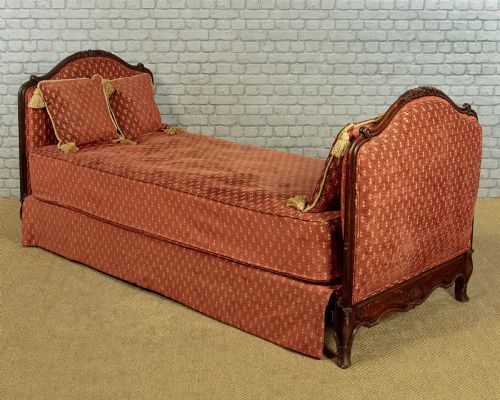
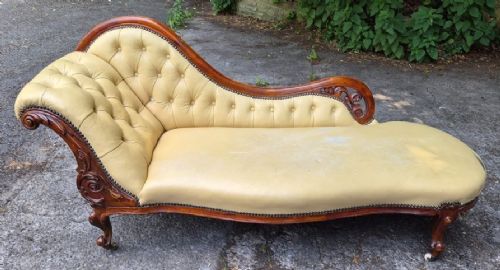
A carved frame chaise takes several distinct forms across the nineteenth and early twentieth centuries, appearing most frequently as Victorian or Edwardian daybeds, reception salon seats, and scroll end settees. These pieces are designed for semi-recumbent resting, featuring an elevated headrest and a long timber body that showcases carved wooden details.
The materials span from rich rosewood and mahogany to solid oak and gilt-decorated timber, often paired with plush coverings in velvet, leather, or patterned fabric. While some listings present complete upholstered day beds, others offer exposed frames waiting for new textiles.
The stylistic influences range from French Provincial and Louis XVI Revival to Regency and classical Victorian designs. Buyers encounter everything from large reception salon chaises to compact corner chairs and conversation seats with barley twist frames.
Materials and Construction
Cabinetmakers utilised heavy timbers such as mahogany, rosewood, and oak to build the structural skeleton of each carved frame chaise. These woods were shaped and joined to support the weight of the sitter while providing a solid canvas for ornamental hand-carving.
Surface decoration frequently involved gilt application or polished timber finishes to highlight the grain and decorative mouldings. Upholstery was traditionally built up using webbing, springs, and stuffing before being secured with velvet, leather, or fabric.
The listings on this site record frames built from mahogany, rosewood, oak, and brass, spanning the Victorian, Edwardian, and Regency eras.
Judging Quality and Execution
The distinction between standard examples and superior pieces rests on the depth and crispness of the timber carving along the show wood frame. Hand-carved elements on Victorian rosewood or mahogany demonstrate greater artistry than simpler mechanical mouldings.
Proportion and structural integrity also dictate worth, as the most accomplished pieces maintain graceful scroll ends and balanced symmetry without timber warping or loose joinery. The quality of the original or replacement upholstery materials further defines the execution.
The Carved Frame Chaise Glossary
- Chaise longue
- An elongated chair for reclining, literally translating from French as long chair. These seating forms typically feature one raised end for supporting the head.
- Scroll end
- A sweeping, curved wooden terminal at the head or foot of a daybed or settee. This architectural feature mimics classical scrollwork.
- Barley twist
- A turning technique that creates a spiral column resembling twisted barley sugar. It appears frequently on Victorian framing.
- Gilt decorated
- Surface ornamentation using gold leaf or gold-coloured paint applied to wood. This finish adds brightness and highlights carved details.
- Rosewood
- A dense, dark timber with distinct figuring utilised in fine nineteenth-century cabinetmaking. It takes a high polish and suits elaborate carving.
Carved Frame Chaise: Frequently Asked Questions
What is a carved frame chaise?
A carved frame chaise is an elongated seating form designed for reclining, featuring an exposed wooden structure with decorative hand-carving. These pieces combine timber frames in mahogany, rosewood, or oak with upholstered sections for domestic comfort.
Originating largely in the nineteenth and early twentieth centuries, they served as prominent furnishings in reception rooms, salons, and large bedrooms.
How do I date a chaise longue?
Dating relies on examining the timber species, joinery methods, and stylistic cues present in the carved woodwork. Victorian examples often feature heavy mahogany or rosewood with deep, ornate relief carving.
Edwardian and later pieces tend to show lighter construction, sometimes utilising oak or gilt decoration following earlier revival styles like Louis XVI.
Where should I place a daybed?
A daybed or chaise works effectively in large reception rooms, quiet studies, or spacious master bedrooms where it can sit away from walls. Because the carved wooden frame and upholstery are finished on all sides, many pieces function well as room dividers.
Sufficient floor clearance allows the sweeping scroll ends and detailed show wood to remain fully visible from every angle.
What is a scroll end settee?
A scroll end settee is a form of seating that incorporates the elongated reclining shape of a chaise with the double-ended structure of a sofa. The timber frame terminates in sweeping, curved scrolls at one or both ends.
These pieces provide versatile seating for sitting upright or resting the feet, often featuring mahogany frames and upholstered backs.
How do I care for antique timber and velvet?
Antique timber frames require regular dusting with a soft cloth and occasional treatment with suitable wax to preserve the polished surface. Velvet and fabric upholstery benefit from gentle vacuuming with a soft brush attachment to lift dust without crushing the pile.
Keeping these materials away from direct sunlight and excessive moisture prevents the wood from drying and the textiles from fading.