


Tufted Velvet Accent Chair
A tufted velvet accent chair brings deep tactile richness and buttoned Victorian presence straight into a modern sitting room.
Tufted Velvet Accent Chair
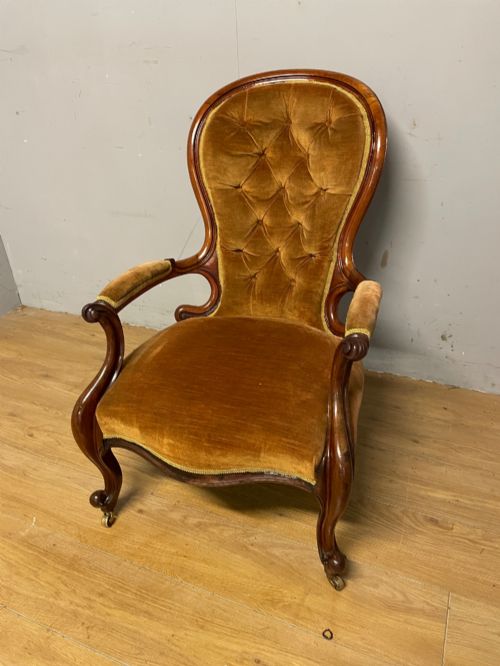
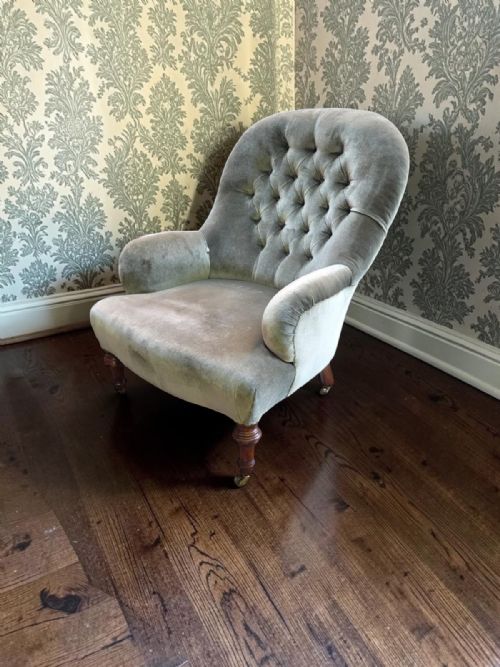
When you search for a tufted velvet accent chair, you encounter a wide selection of nineteenth-century and early twentieth-century seating forms designed for comfort and parlour display. The listings here showcase Victorian, Edwardian, and Regency examples spanning armchairs, nursing chairs, slipper chairs, and salon seating.
You are most likely to meet button-backed armchairs and low-slung nursing seats upholstered in vibrant hues of velvet, resting on turned wood or castored supports. These pieces range from compact boudoir chairs to substantial gentleman's armchairs rooted in revivalist French and English traditions.
Materials and construction methods
Frames rely on dense hardwoods such as mahogany, walnut, rosewood, and beech, providing the robust structural skeleton required for deep button-tufting. Artisans tensioned the upholstery over coiled springs and horsehair stuffing, securing the distinctive diamond patterns through meticulous hand-tacking.
Listings feature hardwood frames in mahogany, walnut, rosewood, and beech, upholstered in velvet and supported by brass, ceramic, and wood components.
Assessing craftsmanship and proportion
Quality reveals itself in the architectural integrity of the hardwood frame and the depth of the hand-carved ornamentation. Superior pieces demonstrate crisp joinery in walnut or mahogany, whereas lesser examples employ simpler timbers or loose framing.
The precision of the button-tufting and the tautness of the velvet application distinguish finer commissions from standard output. Well-proportioned curves, balanced scroll arms, and intact original castors elevate the standing of any given seat.
Howard and Sons·Gillows
The Tufted Velvet Accent Chair Glossary
- Button back
- An upholstery method where deep indentations are formed by pulling strings or twine through the padding and securing them with fabric-covered buttons. This technique creates a distinctive diamond pattern across the inner backrest.
- Nursing chair
- A low-seated chair historically designed for feeding infants or personal grooming near a hearth. They feature generous upholstered backrests and compact frames well-suited to smaller chambers.
- Spoon back
- A padded chair back shaped with a concave oval recess that mirrors the bowl of a spoon. This distinctive Victorian contour offers ergonomic support to the spine.
- Fauteuil
- An open-armed French armchair with exposed wooden framing around the upholstered elements. These decorative seats often display ornate carving and gilding derived from eighteenth-century royal aesthetics.
- Castor
- A small wheel attached to the base of furniture legs to ease movement across carpets and floorboards. They are frequently fashioned from brass, wood, or ceramic.
Tufted Velvet Accent Chair: Frequently Asked Questions
What is a tufted velvet accent chair?
A tufted velvet accent chair is a historical upholstered seat, typically originating from the Victorian or Edwardian eras, featuring plush pile fabric secured with deep buttoning. These pieces serve as decorative focal points while offering padded comfort.
They encompass diverse forms such as low nursing seats, open armchairs, and spoon-backed parlour chairs designed for domestic entertaining and relaxation.
How do I distinguish a Victorian chair from an Edwardian one?
Victorian examples tend to display heavier carved walnut or mahogany frames with ornate spoon backs, deep buttoning, and darker finishes. They prioritise enclosed comfort and elaborate woodwork.
Edwardian pieces often present lighter proportions, simpler barrel or tub backs, and occasionally brighter wood tones or ebonised framing that reflect a shift toward airier interiors.
Where were these chairs used in a historic home?
These seats were positioned across drawing rooms, gentlemen's libraries, and private bedrooms to provide comfortable spots for reading or sewing. Lower nursing chairs found their primary utility beside bedroom hearths.
Larger open armchairs occupied prominent positions in parlours to receive visitors and display the household's refined taste.
How do I care for antique velvet upholstery?
Antique velvet requires gentle maintenance to preserve the integrity of the pile and the tension of the underlying tufting. Regular light dusting with a soft brush prevents dust accumulation.
Avoid direct sunlight to prevent the vibrant orange, gold, red, and coral velvet tones from fading over time.