
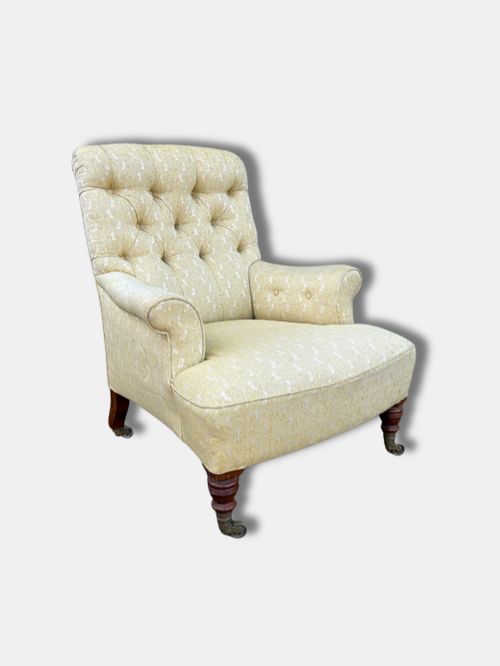
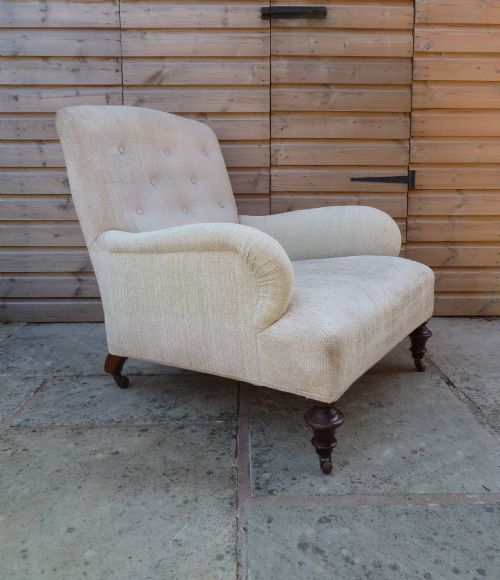
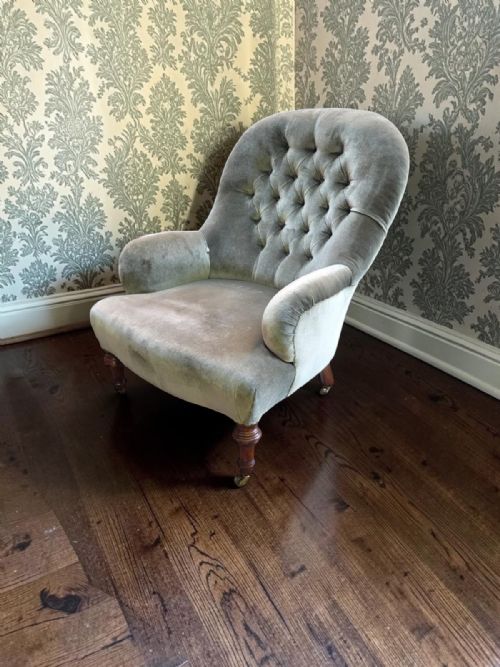
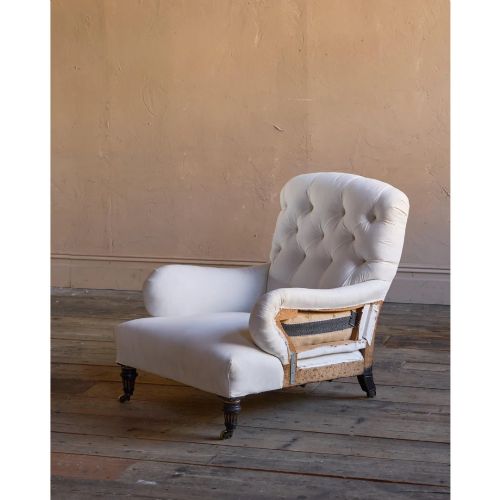


Deep Buttoned Low Chair
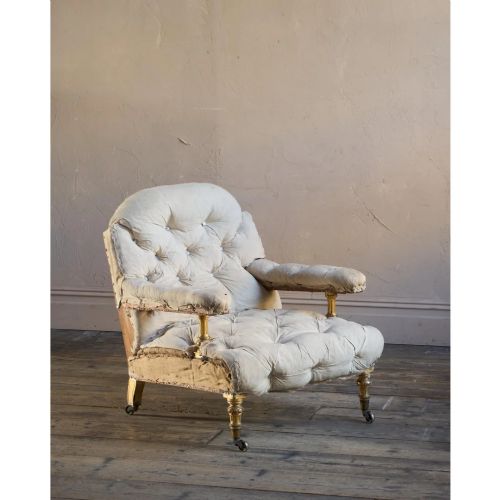
A deep buttoned low chair brings low-slung comfort and Victorian presence to a room, offering a seat designed for the bedroom or drawing room.
Deep Buttoned Low Chair
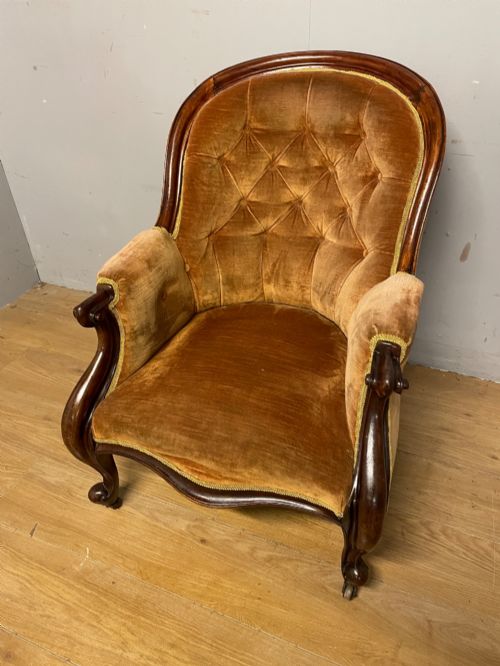
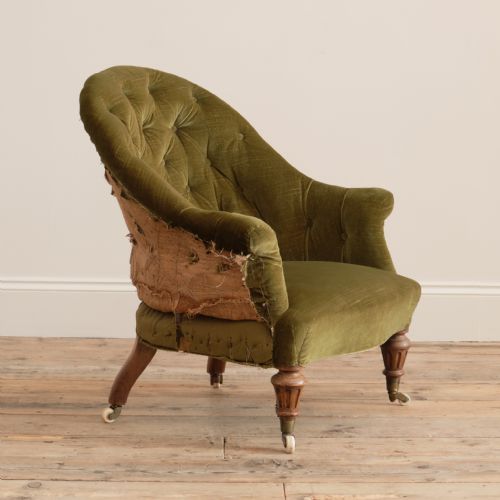
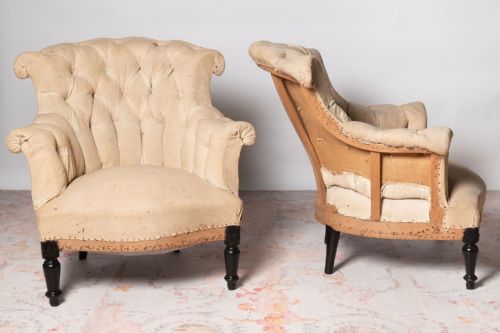
When searching for a deep buttoned low chair, a buyer encounters forms rooted in the nineteenth century, including nursing chairs, slipper chairs, and bedroom chairs. These pieces sit close to the floor, designed originally for dressing rooms or intimate parlours.
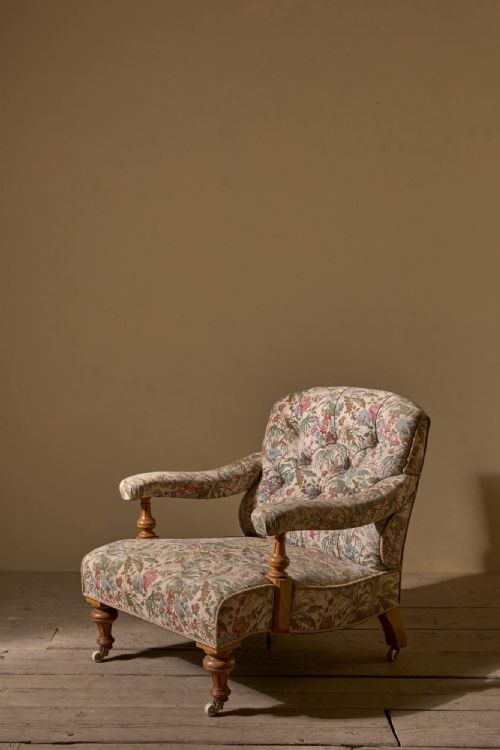
The selection on this page spans the Victorian era through to the Edwardian period, alongside occasional earlier Regency examples. Pieces arrive in various formats, from compact tub backs to open armchairs and balloon back dressing table chairs.
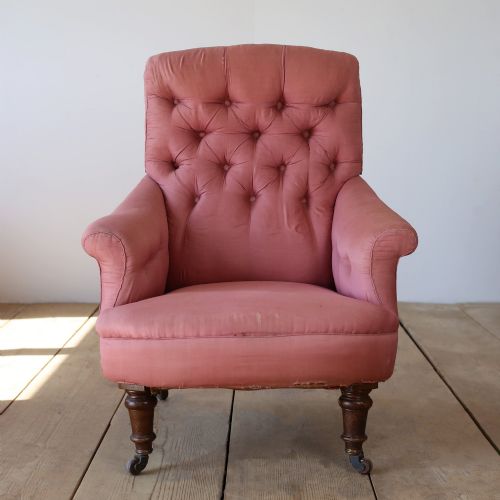
Originating largely from English workshops and country houses, alongside occasional French pairs, these seats display the domestic comfort valued in nineteenth-century interiors. The defining characteristic remains the low profile paired with a tailored, buttoned back.
Materials and construction
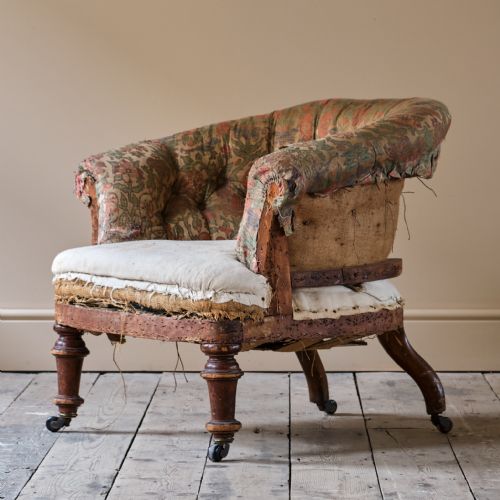
Makers built the frames of these chairs in timber, employing woods such as mahogany, walnut, rosewood, and timber frames with ebonised and gilt finishes. Legs occasionally feature turned elements like barley twists or aesthetic movement details, mounted on brass castors.
Upholstery defines the surface, utilising deep buttoning across velvet, calico, vintage mulberry linen, ticking, and fabric. Interior padding created the sprung, low-slung profiles suited to bedroom and parlour use.
Listings feature frames in mahogany, walnut, rosewood, and timber, upholstered in velvet, calico, ticking, and vintage linen.
Judging quality in upholstery and frame
Quality rests upon the integrity of the underlying timber frame and the execution of the deep buttoning. A superior piece maintains tight, uniform pleats across the upholstery and a sturdy, responsive frame without structural looseness.
The distinction between standard production and fine maker attribution lies in the crispness of the wood carving, the proportion of the low profile, and the quality of the supporting springs and materials beneath the fabric.
Howard and Sons·Gillows
The Deep Buttoned Low Chair Glossary
- Button back
- An upholstery technique where indentations are formed in the padding by pulling thread through to the frame, secured with fabric-covered buttons. This method creates characteristic diamond patterns across the backrest.
- Slipper chair
- An upholstered bedroom chair characterised by its low seat, designed originally for ladies to sit upon while putting on shoes. These pieces typically lack arms and stand close to the floor.
- Nursing chair
- A low-seated Victorian chair intended for comfortable infant feeding or general bedroom use. The low stature allowed the sitter to rest close to a hearth or floor level.
- Tub chair
- An armchair featuring a rounded back enclosing the sides in a continuous curve. This form provides a cocooning seat, often upholstered with deep buttoning.
- Barley twist
- A spiral turning carved into wooden furniture legs or supports. This decorative technique appears frequently on nineteenth-century frames.
Deep Buttoned Low Chair: Frequently Asked Questions
What is a deep buttoned low chair?
A deep buttoned low chair is a nineteenth-century seating form designed to sit close to the floor, featuring a padded back pulled into deep indentations by buttons.
These chairs served primarily in bedrooms, dressing rooms, and drawing rooms as low-slung, comfortable seats for daily use.
How do I identify a Victorian low chair?
Victorian low chairs typically show characteristic proportions with low seats, turned timber legs, and sprung upholstered frames. Examining the wood type, such as walnut or mahogany, helps establish the period.
Details like brass castors, barley twist legs, and traditional buttoning further point toward nineteenth-century manufacture.
Where were these chairs used?
These seats found their place in private chambers, bedrooms, and dressing rooms where low seating suited dressing and nursing tasks. They also stood in parlours as accent or slipper chairs.
Their compact height made them practical for domestic spaces requiring comfortable secondary seating.
How should I live with one?
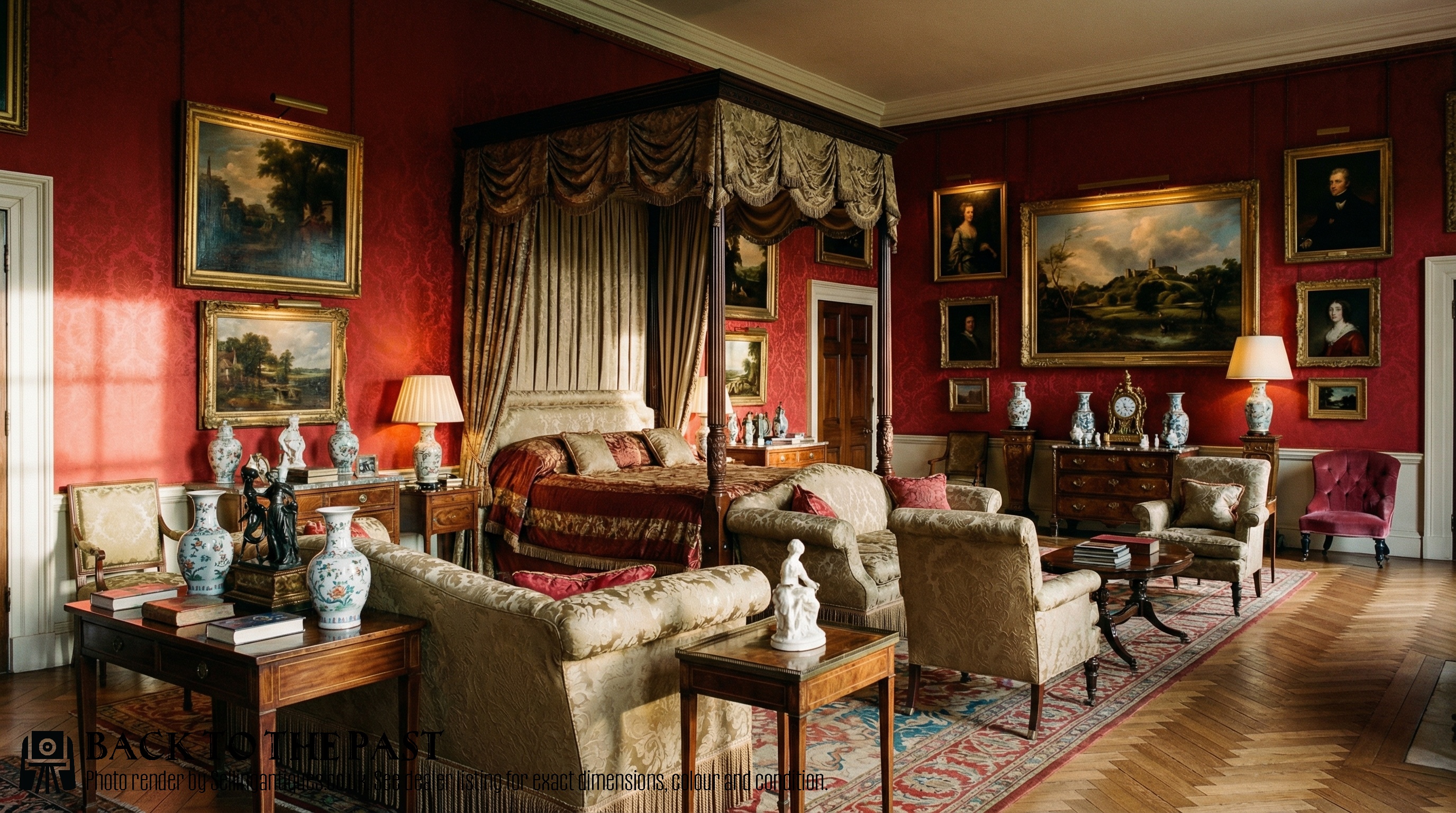
Living with a deep buttoned low chair involves placing it in a bedroom, reading corner, or drawing room where its low profile can be appreciated. Pairing the chair with appropriate period or complementary modern furniture creates a balanced interior.
Care for the piece requires gentle cleaning of the fabric and occasional checking of the frame joints to ensure stability.