


Tufted Leather Wingback
These tufted leather wingback chairs and sofas bring timeless comfort and traditional British presence to any room.
Tufted Leather Wingback
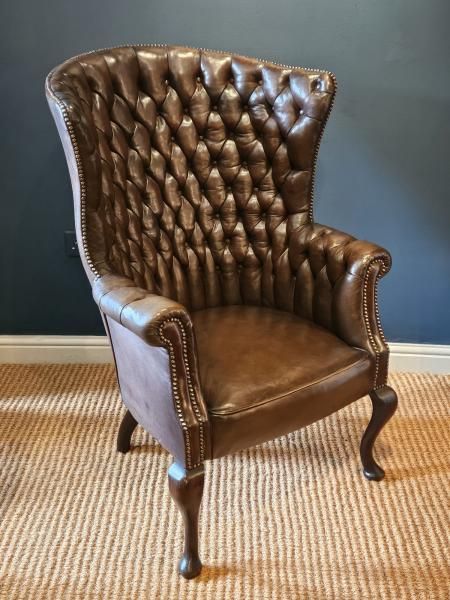
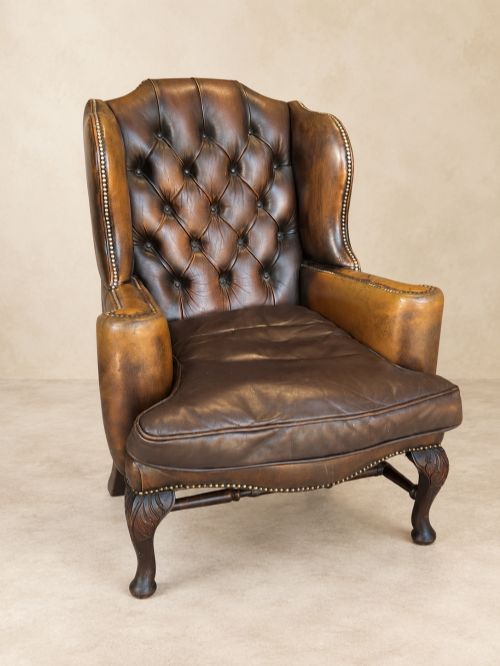
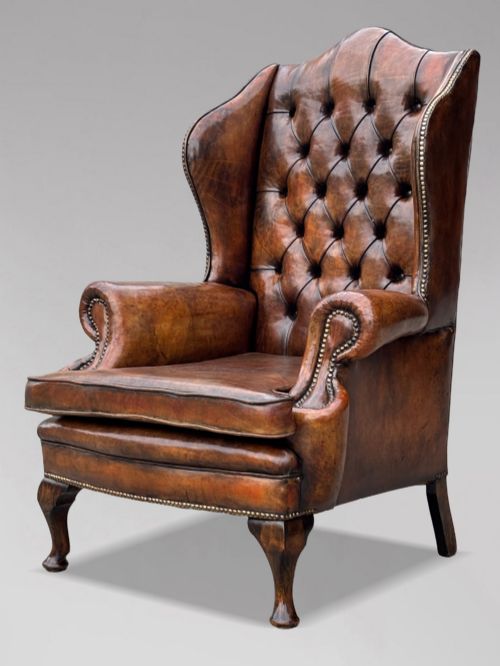
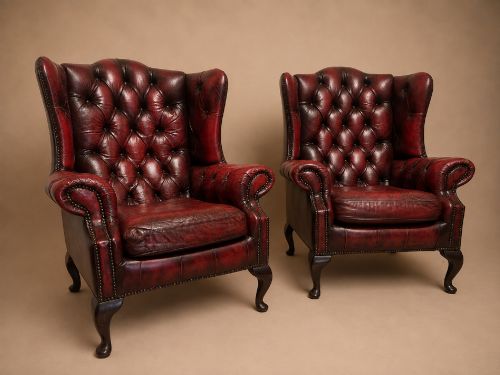
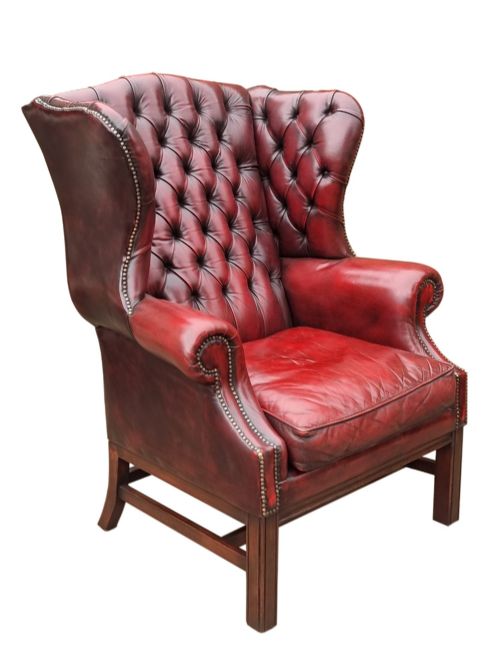
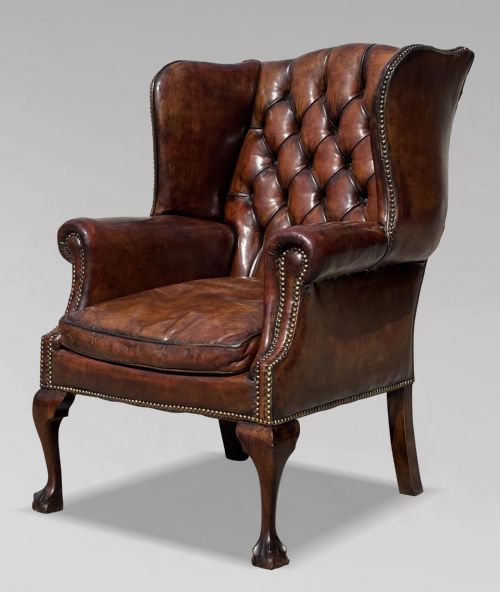
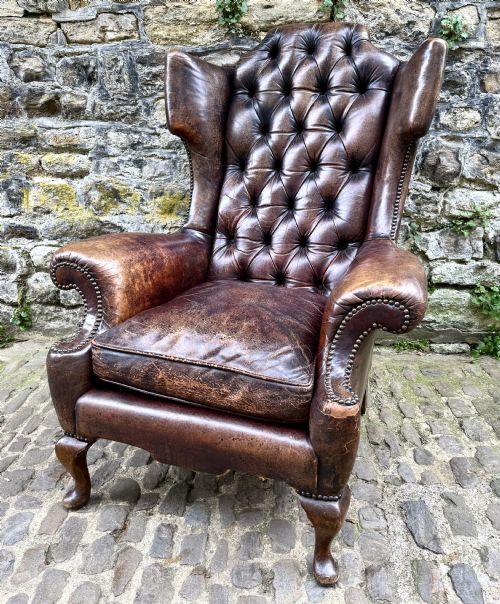
A tufted leather wingback combines high-sided draught protection with deep buttoning, creating a commanding seat designed for firesides and libraries. You will encounter forms ranging from Georgian and Victorian originals to later 20th-century revivals.
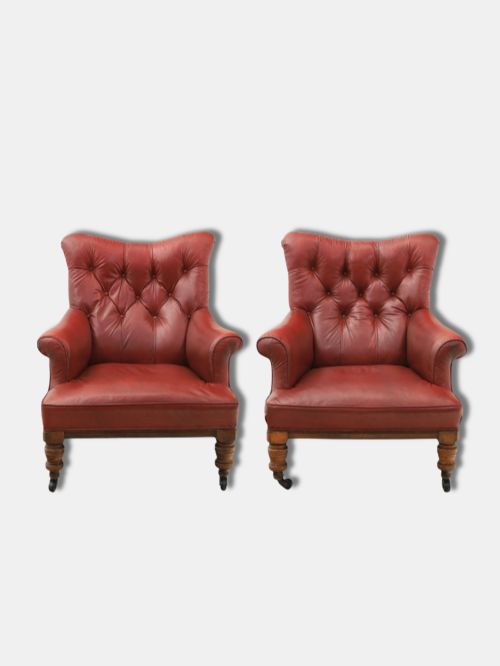
Armchairs dominate the selection, often appearing alongside matching pairs, Chesterfield sofas, and occasional settees. The frames reflect classical proportions, sometimes with carved mahogany underframes or substantial roll arms.
Origins stretch across the 18th, 19th, and early 20th centuries, taking in Edwardian interpretations and later Georgian revivals. This variety allows collectors to choose between genuine period seating and robust early-century craftsmanship.
How they were made
Makers built the structural frames using solid timber such as mahogany, oak, and other hardwoods. These heavy wooden skeletons provided the rigidity necessary to support deep upholstery and continuous daily use.
Upholsters worked leather and rexine over traditional stuffing, securing the hides with individual brass nails or studs. Deep buttoning created the distinctive tufted surface, pulling the leather tight against the internal padding.
Certain Victorian armchairs incorporate carved lions on the woodwork, guarding the occupant from imaginary parlour beasts.
What varies in quality
The refinement of the woodwork dictates much of the distinction, separating simple vernacular frames from finely carved mahogany structures with shaped arm supports and ball-and-claw or bracket feet. Timber selection and joinery execution reveal the original maker's ambition.
Leather treatment and hide thickness alter the character of the surface, ranging from hand-dyed patinated leather to smooth oxblood rexine. The precision of the button tufting and the regularity of the brass nailing further define the standard of the workshop.
The Tufted Leather Wingback Glossary
- Wingback
- An armchair featuring protective side panels attached to the arms to deflect draughts from the occupant's head and shoulders. These wings are a hallmark of fireside seating from the 18th century onward.
- Button-back
- An upholstery method where depressions are formed across the leather surface by securing buttons deep into the padding. This technique keeps the internal filling evenly distributed.
- Rexine
- A durable leathercloth material manufactured as an alternative to natural hide during the early 20th century. It offers a washable, uniform surface found on several period chairs and suites.
- Chesterfield
- A deep-buttoned upholstered sofa or armchair tradition typically characterised by arms and back of the same height. The style remains a staple of British library and parlour seating.
Tufted Leather Wingback: Frequently Asked Questions
How do I identify a Georgian wing chair?
Look for hand-carved mahogany legs, traditional stretcher bases, and proportions suited to 18th-century domestic spaces. Genuine examples often display subtle tool marks and period joinery.
Upholstery may have been updated over time, but the underlying timber frame retains the characteristic lightness and elegance associated with George III design.
What is the difference between leather and rexine?
Natural leather develops a distinct patina through handling and age, showing grain variations and natural markings. Rexine is a coated fabric introduced later as a hard-wearing substitute.
Chairs upholstered in rexine maintain a more uniform colour and texture, offering resilience in high-traffic settings.
Are tufted wingbacks comfortable for daily use?
The deep springing and substantial padding provide robust support designed for long periods of sitting. The high back and wings offer natural head support and screen out ambient room draughts.
Seat firmness varies depending on whether the internal webbing and stuffing have been restored or left in original condition.
How do I care for antique leather upholstery?
Keep leather away from direct heat sources and strong sunlight to prevent the hide from drying out. Periodic application of suitable specialist leather balms helps maintain suppleness.
Avoid excessive moisture during cleaning and dust the deep button folds regularly to prevent grit accumulation.