



Trumpet Flower Epergne
A trumpet flower epergne is a striking centrepiece designed to hold blooms aloft, bringing height and colour to a dining table.
Trumpet Flower Epergne
A trumpet flower epergne is a table centrepiece that displays multiple glass flutes or vases radiating from a central mount. When you search for this phrase, you are looking at dramatic dining table ornaments designed to hold cut flowers at varying heights. The pieces listed here span the nineteenth century into the twentieth century, encompassing Victorian, Edwardian, and Art Deco designs.
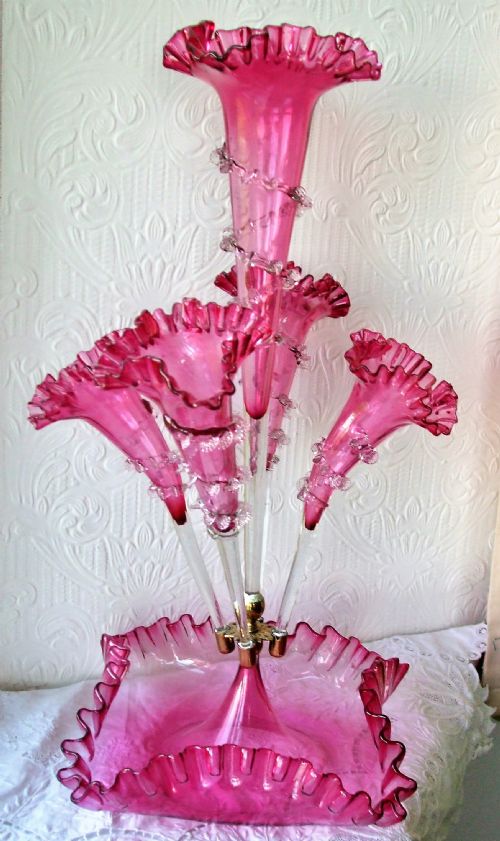
You are most likely to meet Victorian examples fashioned from cranberry glass or vaseline glass, often paired with silver plated or sterling silver bases. These multi-trumpet arrangements create a tiered effect that towers above formal dining spreads. Alongside complete epergnes, the selection includes individual trumpet vases and twin fluted glass pieces.
How they were made
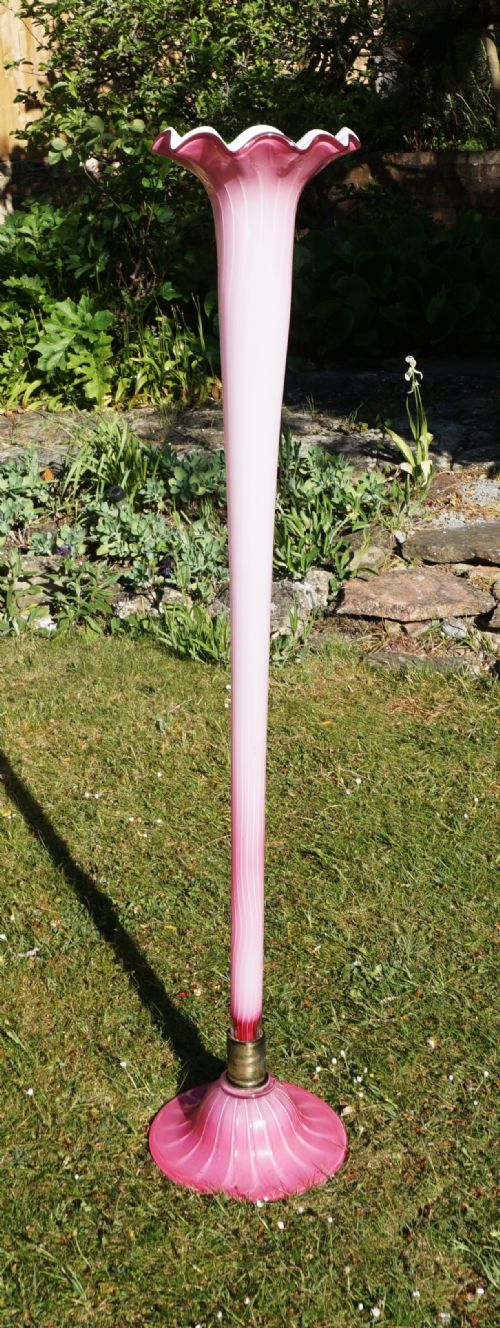
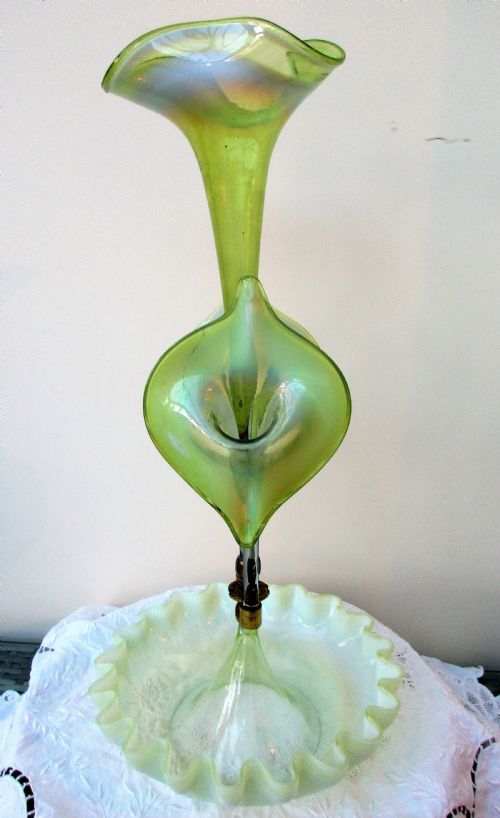
The glass elements of a trumpet flower epergne are typically mouth-blown, utilising techniques such as cased glass to layer contrasting colours like pink and white or deep cranberry. Makers also shaped transparent green glass and vaseline glass into slender, fluted trumpet profiles. The resulting vessels display delicate ribbed or ruffled rims achieved while the material remained pliable.
Metal mounts provide the structural support, utilising silver plate, sterling silver, brass, or gilt bronze. These bases range from simple collars fitted to individual glass flutes to substantial multi-armed frames that hold several trumpets securely. French crystal examples integrate gilt bronze mounts, combining cast metalwork with heavy cut crystal bodies.
Vaseline glass trumpets glow an eerie yellow-green under ultraviolet light, thanks to the uranium content prized by Victorian hosts.
What varies in quality
Quality in a trumpet flower epergne rests upon the balance and ambition of the overall design, particularly how the glass flutes interact with the metal base. Finer examples feature deeply saturated cranberry or vaseline glass with clean, unblemished surfaces and crisply formed ruffled edges. The metalwork displays heavier gauge silver plating or substantial sterling silver and gilt bronze components rather than thin, pressed alternatives.
The complexity of the arrangement dictates distinction, moving from single trumpet vases to large proportions with four or more flutes. Pieces that retain their matching set of original glass trumpets without replacement elements sit firmly at the upper end of the scale. Craftsmanship in the glassblowing and the precision of the metal fittings ultimately separate standard domestic wares from exhibition-worthy centrepieces.
Julien Glass France
The Trumpet Flower Epergne Glossary
- Epergne
- A large table centrepiece featuring multiple horns, baskets, or vases used for holding fruit, sweetmeats, or flowers. In this category, the form is dominated by upward-reaching glass trumpets.
- Cranberry glass
- A transparent, pinkish-red glass coloured by the addition of gold chloride into the molten batch. It is a defining material of Victorian decorative tableware.
- Vaseline glass
- A transparent yellow-green glass that contains uranium dioxide, producing a characteristic greenish-yellow glow under ultraviolet light. It appears frequently in nineteenth-century decorative pieces.
- Cased glass
- Glass composed of two or more distinct layers of different colours, often blown together and then cut away to reveal the contrasting underlayer. This technique creates rich visual depth in lily vases.
- Flute
- A tall, slender glass vase with a narrow base and a flared rim. Flutes form the primary vertical elements of a multi-trumpet epergne.
Trumpet Flower Epergne: Frequently Asked Questions
What is a trumpet flower epergne?
A trumpet flower epergne is a decorative table centrepiece featuring a central stand that supports multiple detachable glass vases or flutes. These pieces were created to hold elaborate floral displays in the middle of a dining table.
They combine blown glass elements in colours like cranberry or vaseline with metal mounts made from silver plate or sterling silver.
How were epergnes used historically?
During the Victorian and Edwardian periods, these centrepieces occupied the middle of the dining table during formal meals. They elevated floral arrangements so guests could converse beneath or around the blooms.
Some iterations also served to hold fruit or sweetmeats in lower dishes while the upper trumpets displayed cut flowers.
How do I clean a glass epergne?
Cleaning requires warm soapy water and a soft cloth, taking care with fragile ruffled rims and narrow trumpet bases. Metal mounts should be wiped gently to preserve silver plating or gilt bronze patination.
Because many epergnes comprise separate removable flutes, dismantling the arrangement simplifies safe washing of each glass component.
How do I date a Victorian epergne?
Dating relies on stylistic markers, glass colours, and any accompanying hallmarks on silver bases. Victorian examples often feature intense cranberry glass and ornate silver plated frames.
Later pieces from the Edwardian era or the 1930s introduce different aesthetics, such as Art Deco geometric forms or distinct French crystal and gilt bronze combinations.