
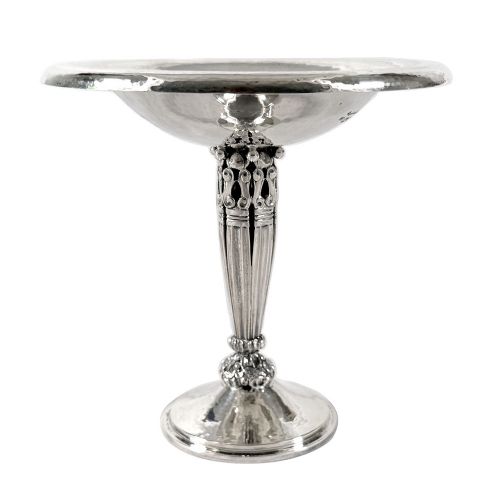


Art Deco Table Centrepiece
These art deco table centrepiece examples bring the distinct geometry and polished surface of the period straight to the dining table.
Art Deco Table Centrepiece
An art deco table centrepiece serves as the focal point of a dining table or sideboard, drawing the eye with geometric forms and reflective surfaces. These objects take many shapes, including decorative bowls, tazzas, glass vessels, and mirror plateaus that catch the light.
The versions most commonly met on this page date from the nineteen thirties, capturing the height of the modernist aesthetic. Alongside dedicated centrepieces, buyers frequently encounter related serving dishes, dessert dishes, comports, and pairs of candlesticks.
Origins span British workshops, French makers, and Belgian glasshouses, reflecting a broad European appetite for stylish tableware. The materials range from polished chrome and silver plate to sterling silver, bronze, brass, and coloured glass.
What varies in quality
Quality rests on the weight of the metal, the clarity and depth of the glass, and the crispness of any applied maker marks. Heavier gauge silver, substantial bronze castings, and thick cut lead crystal distinguish superior examples from lighter commercial wares.
The finesse of the finishing also sets pieces apart, seen in the smoothness of silver plating, the tightness of hand wrought joints, and the precision of etched or moulded decorative details.
Listings feature items from the nineteen tens through the nineteen fifties, with the nineteen thirties forming the largest group of pieces.
Charles Boyton·Val St Lambert·Viners·Monart·Brille Paris·Robert Edgar Stone·Elkington
The Art Deco Table Centrepiece Glossary
- Tazza
- A shallow ornamental bowl raised on a slender stem and foot. This traditional form was frequently reinterpreted with geometric motifs during the modernist era.
- Comport
- A large standing dish used for serving fruit or sweets at the centre of a table. These pieces often feature chrome or silver plated frames paired with glass liners.
- Mirror Plateau
- A mirrored tray placed on a table to hold centrepieces and reflect candlelight. These items expand the visual presence of displayed objects through their reflective surfaces.
- Epergne
- An ornate table centrepiece featuring multiple branching dishes or holders for fruit and flowers. Examples from this era combine coloured glass horns with metal frames.
- Bonbon dish
- A small shallow dish designed for holding sweets or small confectionery. These are frequently found in matched pairs alongside larger serving vessels.
Art Deco Table Centrepiece: Frequently Asked Questions
How were art deco table centrepieces used?
These pieces sat at the middle of dining tables and sideboards to hold fruit, bread, or decorative displays. They were designed to catch the light and anchor the decorative scheme of the room.
Many incorporated glass liners or mirror plateaus to enhance their reflective qualities during evening meals and formal gatherings.
What materials are most common?
Silver plate and sterling silver appear frequently alongside polished chrome, brass, and bronze. These metals offered the bright, reflective surfaces favoured by designers of the period.
Glass is equally prominent, ranging from clear cut lead crystal to green over crystal and specialised coloured glass vessels.
How do I clean silver plated items?
Silver plated surfaces require gentle cleaning with a soft cloth and a dedicated silver polish to avoid wearing through the thin metal layer. Avoid abrasive pads or harsh chemical dips that can damage the underlying base metal.
Pieces with integrated glass liners benefit from removing the glass before cleaning the metal frame.
How can I tell French pieces apart?
French examples often lean towards bolder modernist forms, utilising heavy chrome, specialised glassware from makers like Julien, or distinctive basket designs. Foundry marks and maker stamps on the base often indicate Parisian origin.
British pieces from the same era frequently make greater use of sterling silver and traditional silversmithing techniques marked by provincial assay offices.