


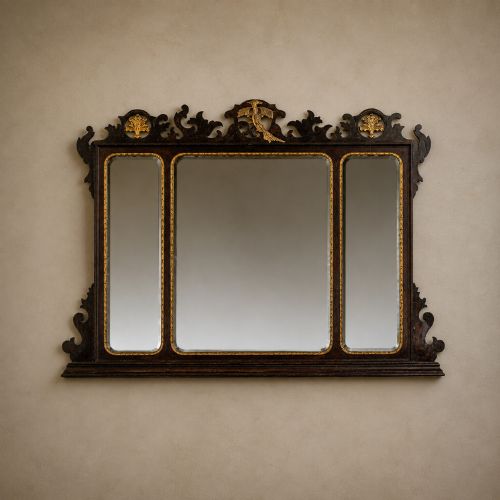


Triptych Mantel Mirror
These triptych mantel mirror pieces bring three-panel symmetry and period weight to a fireplace.
Triptych Mantel Mirror
A triptych mantel mirror divides its reflective glass into three vertical or horizontal sections, most often found sitting upon an overmantel in the nineteenth century. These pieces span the Regency, Victorian, and later revival styles, bringing tripartite width to a chimney breast.
You will encounter large proportions alongside neat-sized examples, framed in giltwood, carved gesso, or dark timbers like mahogany, walnut, and oak. The three-panel division uses side plates to angle light and broaden the perceived room.
The form developed across the nineteenth century from Regency neoclassical elegance into heavier Victorian Gothic and ornate Rococo revival expressions. Surviving examples carry the marks of diverse periods, from 1870 and 1880 creations up to 1920 revivals.
Materials and construction
Giltwood and gesso form the primary decorative surface for formal examples, where gold leaf is laid over a prepared chalk and glue ground on wood. Carved wooden frames utilise oak, walnut, mahogany, and rosewood to provide robust structural backing.
The three glass plates are typically set into individual rebates within the main frame or divided by applied moulding slips. Traditional silvering methods on the glass interact with age to produce distinct foxing and oxidation patterns.
Triptych Mantel Mirror Retail Price Guide 2026
Typical asking prices for triptych mantel mirror among the pieces listed under this phrase on Sellingantiques today, from the lower quarter to the upper quarter. They describe what is for sale here now, not the wider market.
Listings feature periods spanning Regency, Victorian, 1870, 1880, 1920, and the wider nineteenth century.
Distinctions in quality
Quality rests upon the crispness of the carved details within the gesso or timber, particularly on crestings and friezes. Fine examples exhibit sharp relief work and well-proportioned architectural framing rather than soft, moulded resin or heavy-handed recasting.
The integrity of the original gilding and the depth of the timber grain separate superior pieces from standard later work. Original three-part glass plates with appropriate bevelling and uniform silver deterioration hold greater historical coherence.
The Triptych Mantel Mirror Glossary
- Triptych
- A mirror constructed with three distinct glass plates, usually arranged side by side in a shared frame. This layout widens the reflective surface and creates architectural rhythm above a fireplace.
- Gesso
- A plaster-like mixture applied to wood and carved before gilding. It provides the smooth, raised surface necessary for intricate nineteenth-century frame ornaments.
- Giltwood
- Timber covered with a thin layer of gold leaf. It reflects natural candlelight and daylight with a warm metallic glow.
- Frieze
- The flat or decorated horizontal band situated above the main mirror plates. It frequently displays neoclassical motifs or decorative relief carving.
Triptych Mantel Mirror: Frequently Asked Questions
How do I style a triptych mantel mirror?
Place the mirror centrally on the chimney breast, allowing the three panels to anchor the room's proportions and reflect light across the space. Keep the mantel shelf beneath relatively uncluttered to let the frame's tripartite division remain the primary focal point.
Pair the piece with period furnishings that echo the timber or gilt finish of the frame. The side plates naturally bounce light at oblique angles, so position lamps or windows opposite to maximise the luminous effect.
Can these mirrors hang on a normal wall?
While designed primarily as overmantels to sit upon a shelf, many examples possess sufficient structural hanging brackets for wall mounting. Ensure the wall fixings engage directly with studs or masonry to support the substantial weight of timber and glass.
Heavier Victorian and Regency models require professional installation due to their dense construction of wood and gesso. Check the original backing boards and frame joints before committing to wall suspension without mantel support.
How do I distinguish Regency from Victorian examples?
Regency pieces lean towards neoclassical restraint, featuring clean architectural lines, ball-accented friezes, and delicate giltwood frames. The motifs draw upon classical antiquity with pilasters and formal urn or leaf crestings.
Victorian variants tend towards heavier proportions, embracing Gothic revival oak, Chippendale Revival fretwork, or ornate Rococo curves. The carving deepens and the crests become more elaborate, as seen with ho-ho bird motifs.
What causes foxing on the glass?
Foxing appears as small dark spots or cloudy patches where the silver backing behind the glass has degraded over decades of exposure to atmospheric moisture. This natural oxidation process confirms the age of the mirror plate.
Many collectors prize genuine foxing for the authentic antique character it imparts to the reflection. It distinguishes vintage glass from modern replacements.