
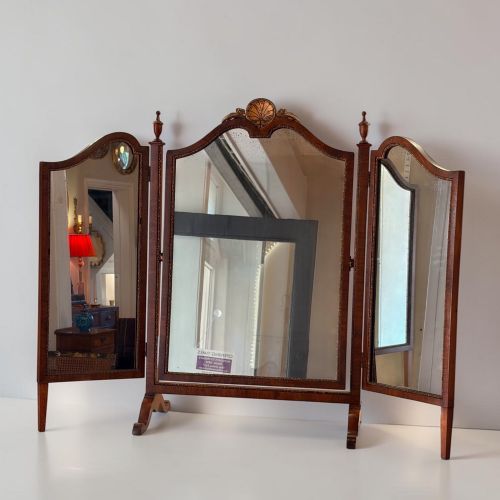
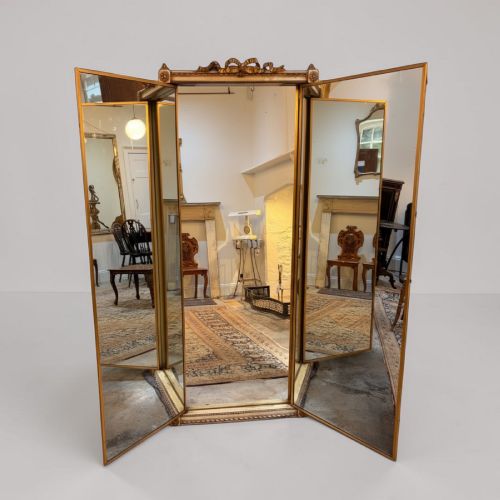
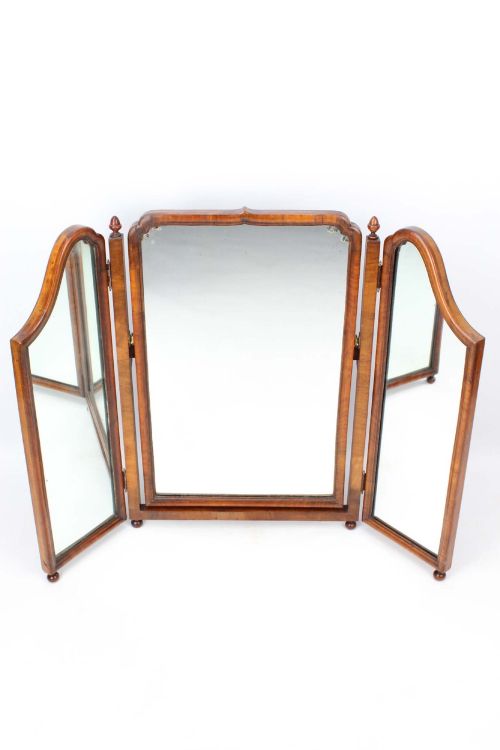
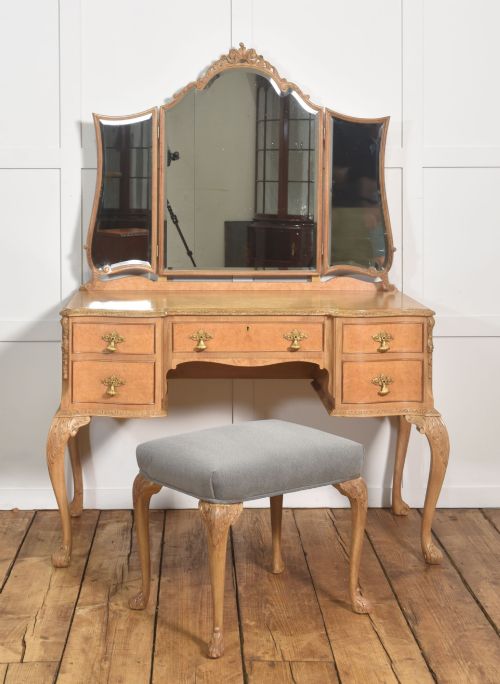
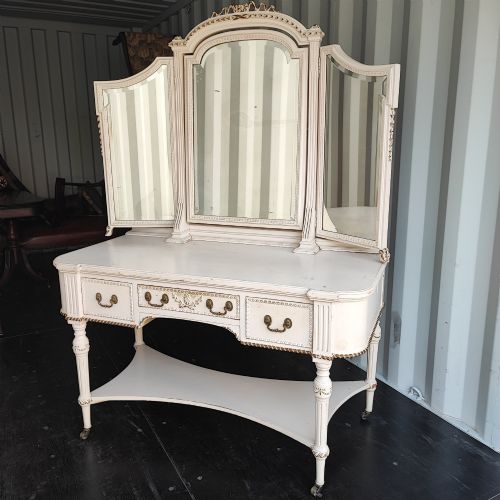
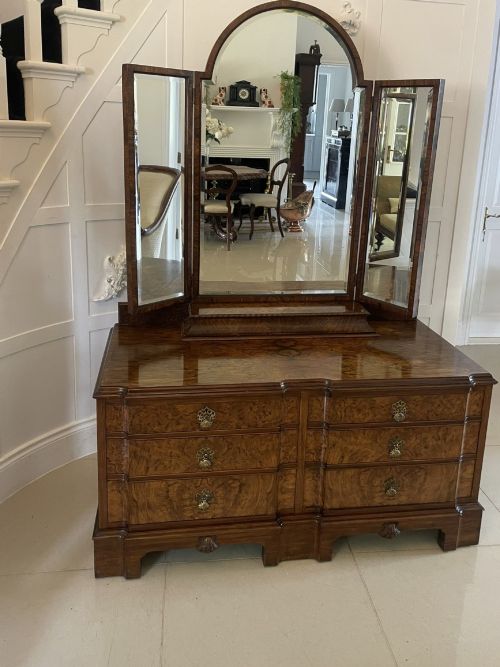
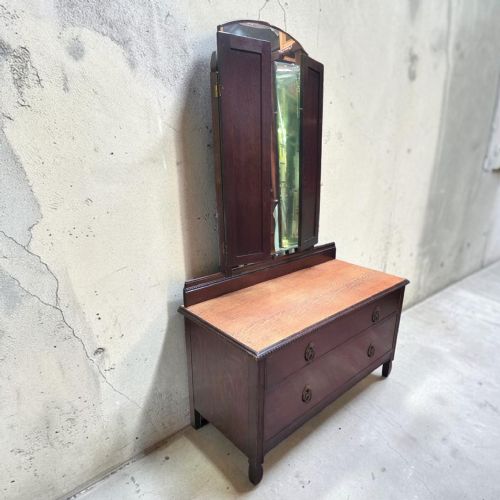
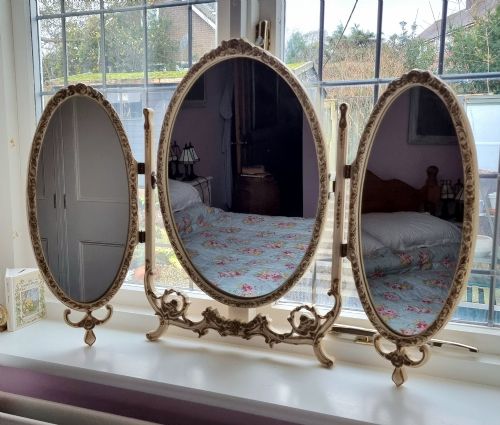


Triptych Dressing Mirror
A triptych dressing mirror offers adjustable angled reflection through hinged side panels, bringing practical elegance to a vanity.
Triptych Dressing Mirror
A triptych dressing mirror comprises three hinged reflective panels designed to sit upon dressing tables, chests, or vanity surfaces. These mirrors emerge across the nineteenth and twentieth centuries in Edwardian, Art Deco, and revival styles.
The pieces appearing most frequently take the form of freestanding table mirrors or integrated components of dressing tables and chests. Walnut, burr walnut, mahogany, and oak form the primary wooden frames, alongside gilt, brass, and painted wood.
Origin points span English cabinetmakers and French workshops, with specific examples drawing on Chinoiserie, Queen Anne, and Louis XVI revivals. Buyers encounter everything from simple folding brass frames to elaborate suites featuring inlaid satinwood and marble tops.
Materials and Technique
Frames rely upon cabinet timbers including solid oak, mahogany, and walnut, frequently enhanced by figured burr walnut veneers or delicate satinwood inlay. Brass hinges and swing arms connect the adjustable side wings to the central plate, allowing smooth articulation.
Surface finishes range from French polish and limed oak treatments to hand-painted Chinoiserie and gilt moulding. Bevelled mirror glass is set securely into rebated wooden frames or held by brass brackets and finials.
Materials span walnut, burr walnut, oak, brass, and painted wood across Edwardian and Art Deco periods.
Distinctions in Quality
The refinement of cabinetwork and timber selection dictate the standing of a triptych dressing mirror. Richly figured burr walnut or meticulously executed Chinoiserie decoration distinguish finer pieces from standard production.
The robustness of the brass hinges and the clarity of the bevelled glass plates determine the durability and visual fidelity of the reflection. Integrated dressing tables demonstrate quality through matching grain alignment and secondary woods.
Maples of London and Paris·Heals·Maurice Adams·Rowley Gallery
The Triptych Dressing Mirror Glossary
- Triptych dressing mirror
- A three-panel folding mirror used for personal grooming and dressing. The hinged side wings angle inwards to provide multidirectional reflections.
- Swing mirror
- A plate mounted on pivots or trunnions that tilts back and forth within a static frame. This mechanism allows the user to adjust the vertical angle of reflection.
- Burr walnut
- A highly prized wood veneer taken from the burl growths of walnut trees. It exhibits dense, swirling grain patterns across the surface of the frame.
- Bevelled glass
- Mirror glass with edges cut and polished at an oblique angle. This technique creates a decorative framing effect around the perimeter of the reflection.
Triptych Dressing Mirror: Frequently Asked Questions
How do I place a triptych mirror?
Position the mirror on a sturdy dressing chest or table with adequate natural light from a window.
Adjust the hinged side panels to angle the reflection and illuminate your workspace effectively.
Are these mirrors attached to tables?
Some examples sit independently on rubber or felt feet as tabletop pieces.
Others bolt directly into the backboards of antique dressing chests and vanity tables.
How do I date an antique mirror?
Examine the timber species, framing style, and the construction of the joints and hinges.
Edwardian and Art Deco pieces display distinct decorative motifs that separate them from nineteenth-century work.
How should I clean the glass?
Apply a mild glass cleaner to a soft cloth rather than spraying directly onto the frame.
Keep moisture away from the wooden joints and the silvered backing behind the glass plates.