
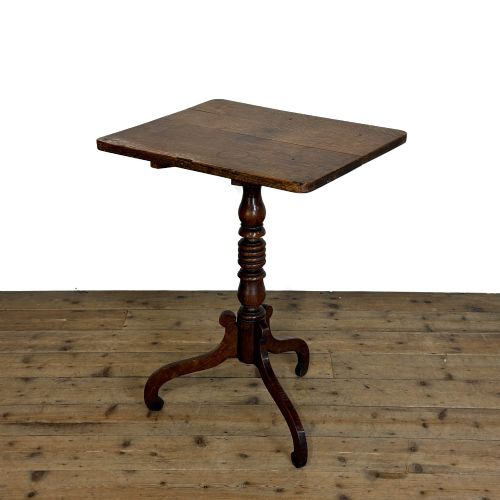
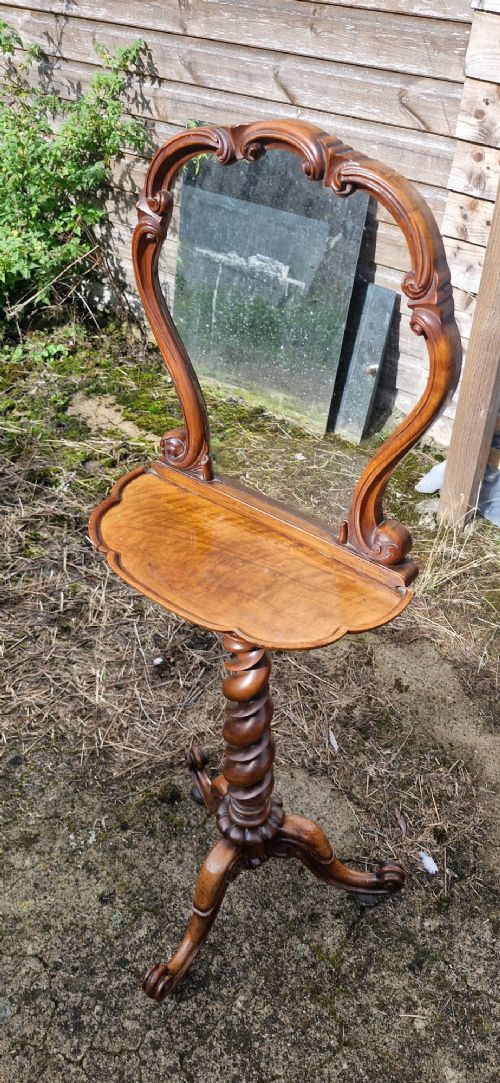
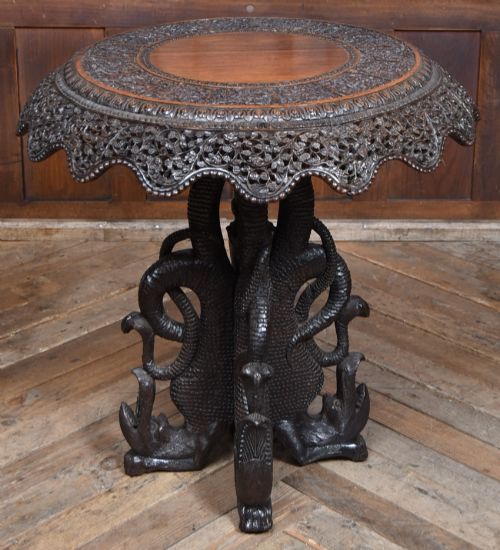
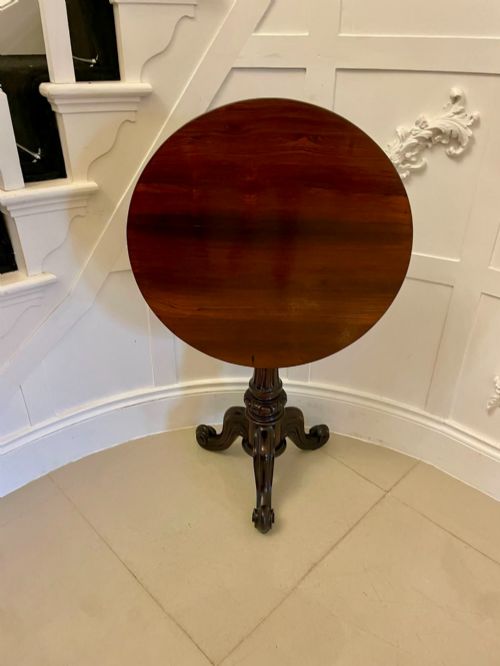


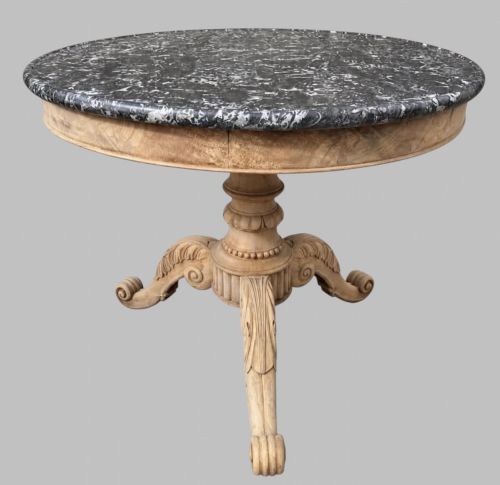
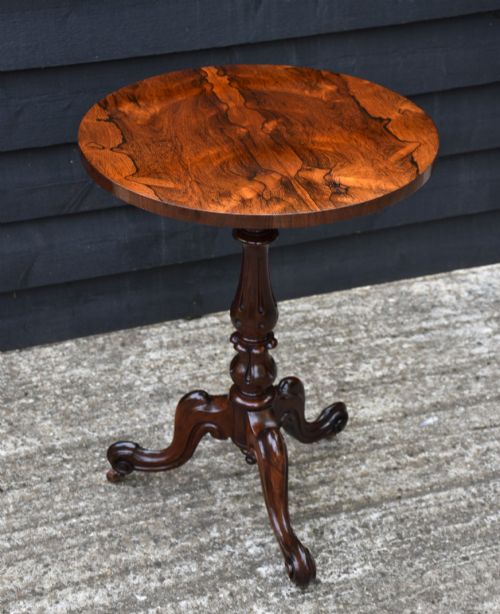
Tripod Pedestal Side Table
A tripod pedestal side table offers a sturdy pillar and three-legged base to hold a lamp, drink or book without crowding a room.
Tripod Pedestal Side Table
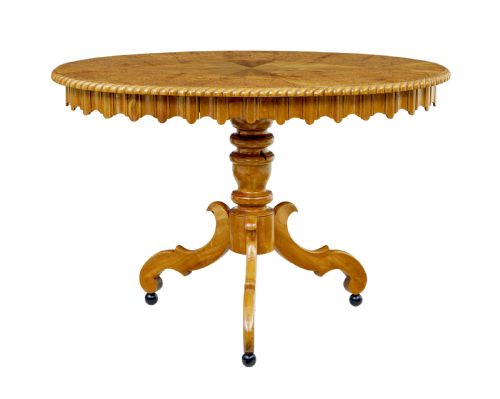
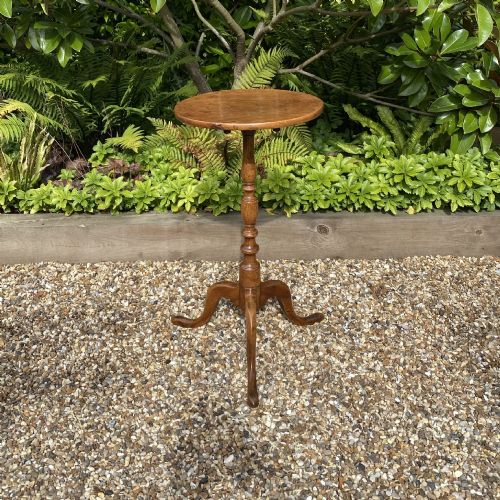
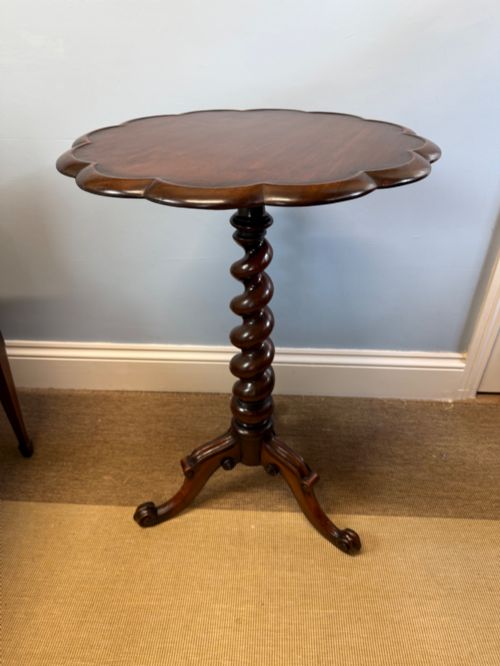
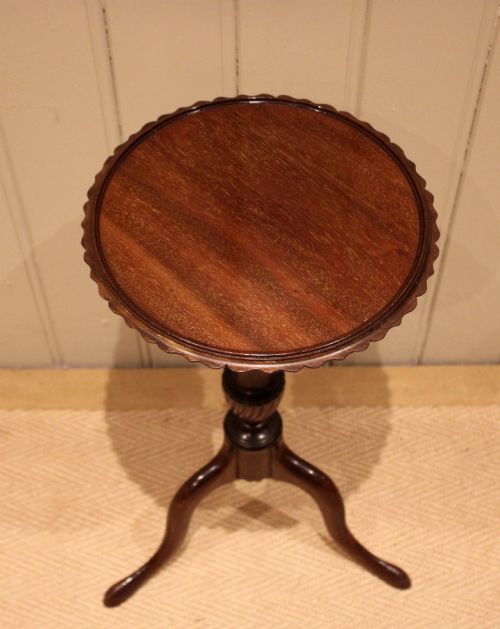
A tripod pedestal side table brings compact utility and balanced design to domestic spaces through a central support column resting on three splayed feet. Buyers exploring this category encounter a variety of forms designed for specific tasks, including wine tables, lamp tables, and candle stands.
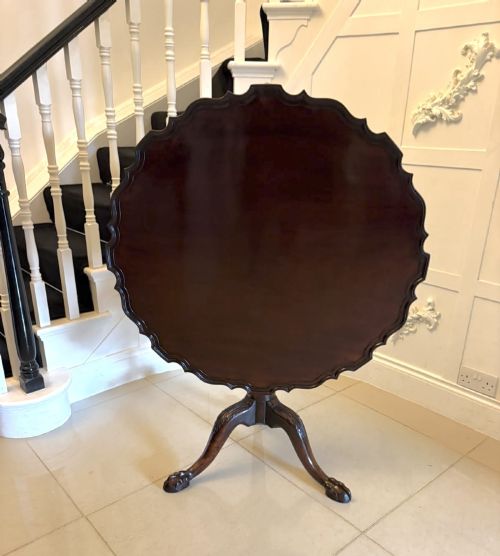
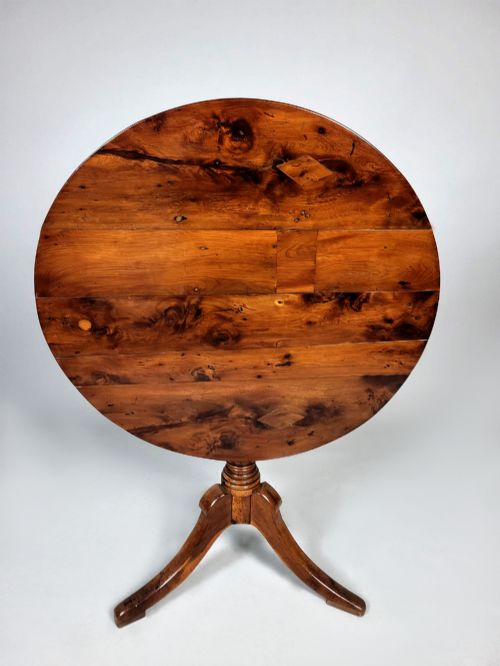
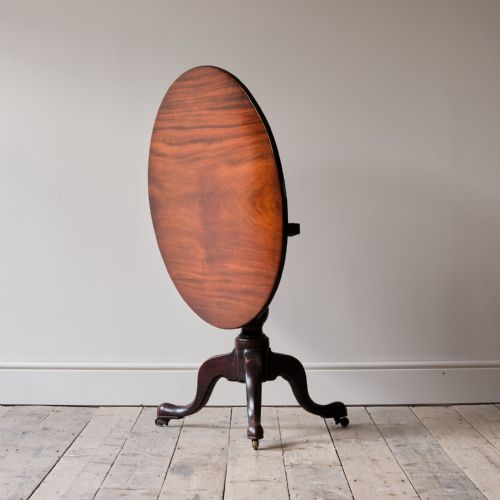
The pieces appearing on this page span several centuries of craftsmanship, with notable representation from the Georgian, Victorian, and Edwardian eras. These surfaces often feature circular, oval, or octagonal tops, and many examples include the practical feature of a tilt-top mechanism for easy storage.
Materials and construction methods
Cabinetmakers relied heavily on dense hardwoods such as mahogany, walnut, and rosewood, frequently selecting figured veneers like burr wood to add visual depth to the surface. Oak, elm, and exotic timbers such as ebony also appear, sometimes paired with brass mounts, leather inserts, or marble tops.
Construction typically involved turning the central pedestal on a lathe and joining it firmly to three shaped legs, often terminating in pad, claw and ball, or spade feet. Tilt-top variants utilised a clever catch mechanism allowing the tabletop to pivot vertically when not in use.
Listings feature mahogany, walnut, rosewood, and oak alongside specialised variations in burr birch and ebony.
Distinguishing quality across examples
Quality reveals itself in the selection of timber and the precision of the joinery connecting the pillar to the legs and the tabletop. Superior examples display thoughtful grain matching on the surface and tight, stable joints that prevent the wobble common in heavily used tripod bases.
Refinement in carved details, such as subtle fluting on the pedestal column or clean lines on the legs, separates master craftsmanship from standard workshop production. The integrity of mechanical elements, particularly the tilt-top catch or adjustable display fittings, further indicates the standard of manufacture.
Gillow
The Tripod Pedestal Side Table Glossary
- Tilt-top
- A hinged tabletop mechanism that allows the surface to pivot into a vertical position for compact storage against a wall.
- Pedestal
- The central upright column that supports the tabletop and distributes weight down to the three-legged base.
- Gueridon
- A small French occasional table or stand, often supported by a central column or figures.
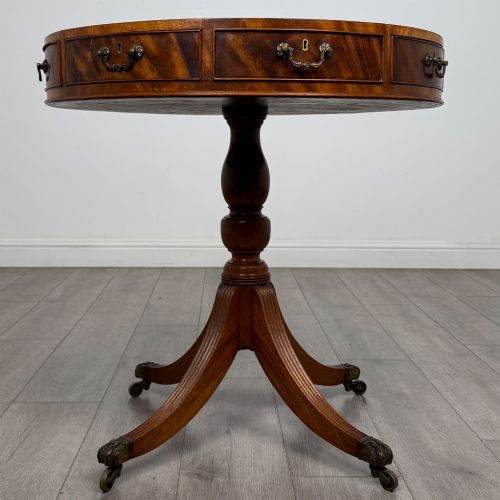
- Drum table
- A circular library or side table with a deep cabinet frieze resembling the shape of a drum.
- Marquetry
- Decorative veneer work arranged in intricate patterns using various coloured woods.
Tripod Pedestal Side Table: Frequently Asked Questions
What was a tripod pedestal side table originally used for?
These versatile pieces served various domestic functions throughout the home, primarily holding candles, wine glasses, or reading materials beside seating furniture.
Smaller versions functioned easily as portable lamp stands or display surfaces that could be moved around a parlor as needed.
Where should I place a tripod table in a modern room?
The compact footprint makes these tables ideal for tucking beside an armchair, sofa, or in an empty corner that requires a surface for a lamp.
Because the three splayed feet extend outward, ensure the table sits in a spot where the legs will not present a tripping hazard.
How can I tell a Georgian table from a Victorian one?
Georgian examples often favor restrained lines, simpler mahogany timbers, and functional tilt-top designs intended for dining or evening socializing.
Victorian pieces frequently display heavier proportions, richer burr veneers, marquetry inlay, or dedicated adaptations for oil lamps and display stands.