
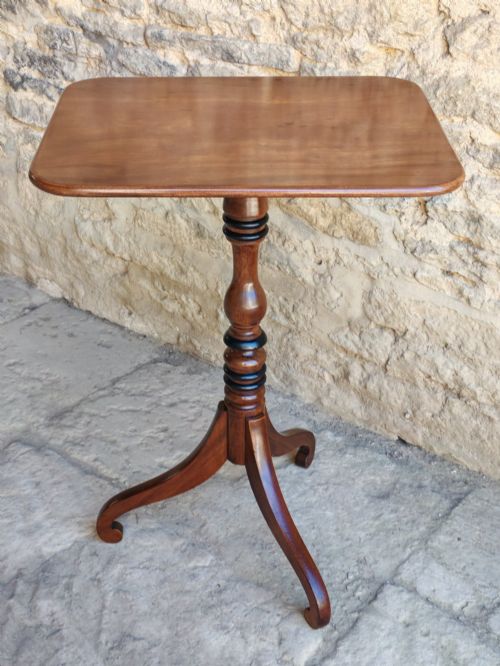
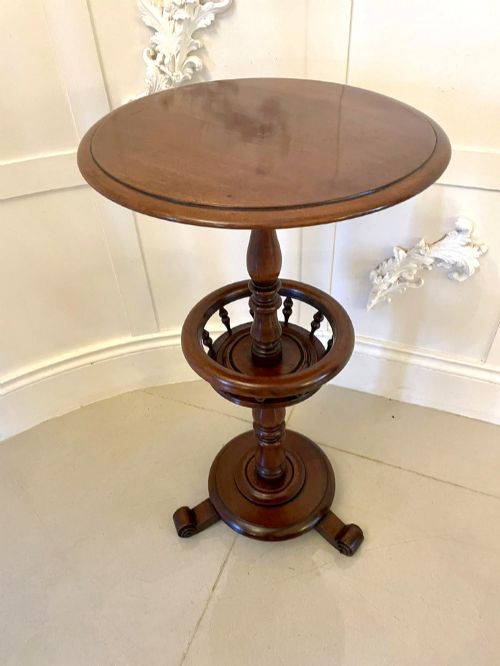
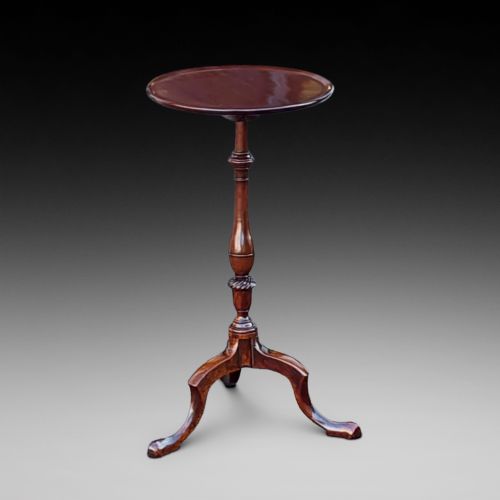
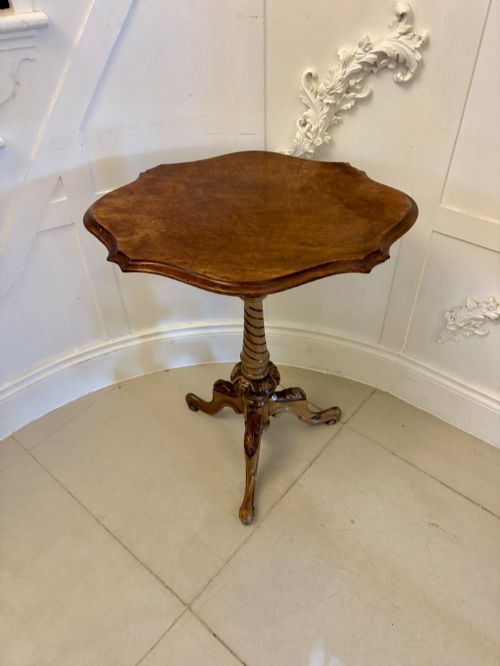
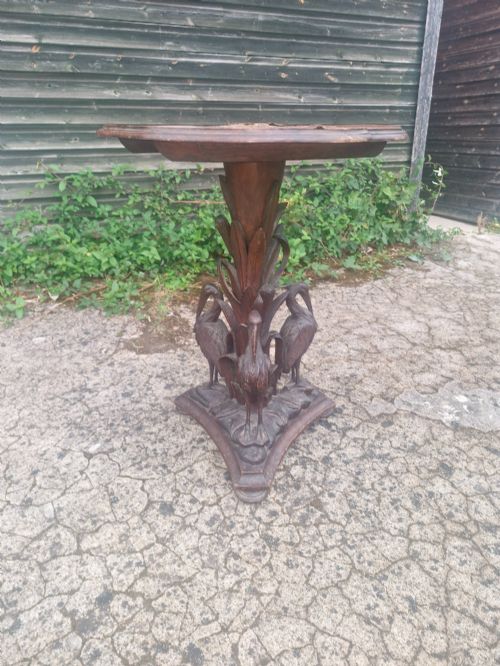
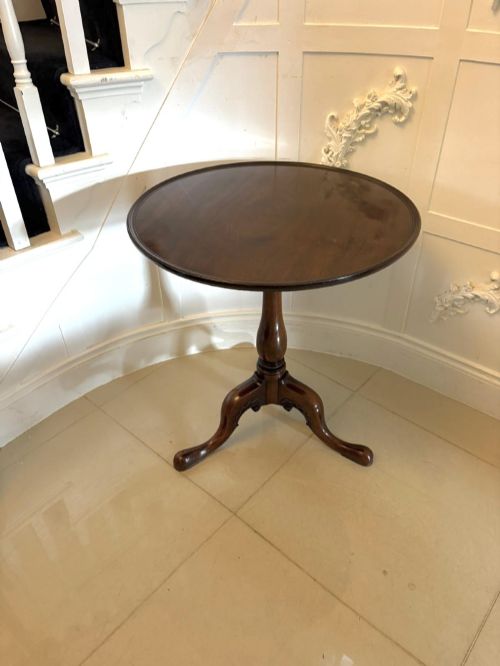
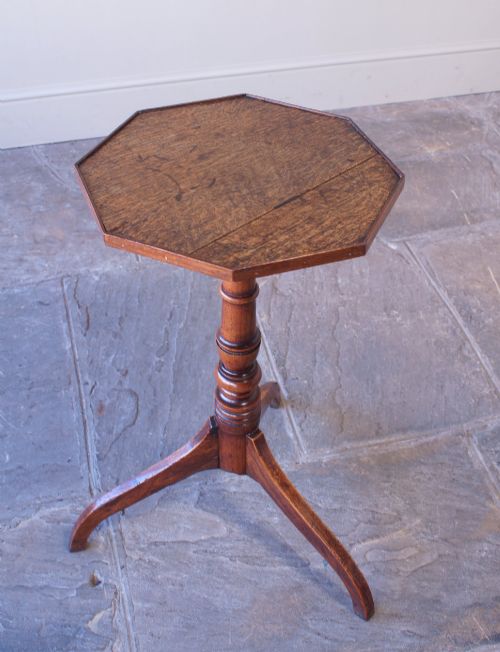
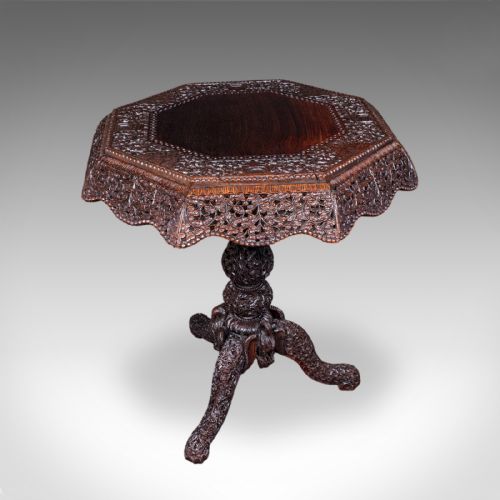
Tripod Pedestal Lamp Table
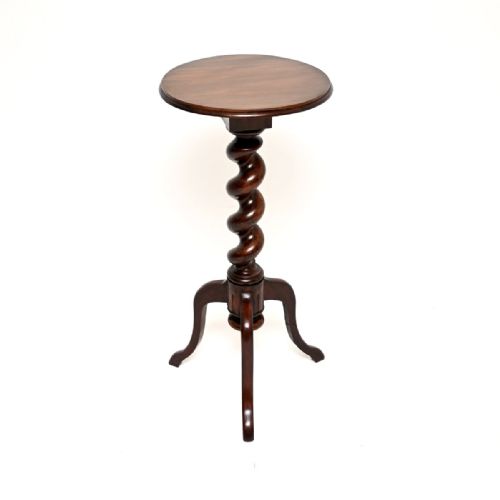
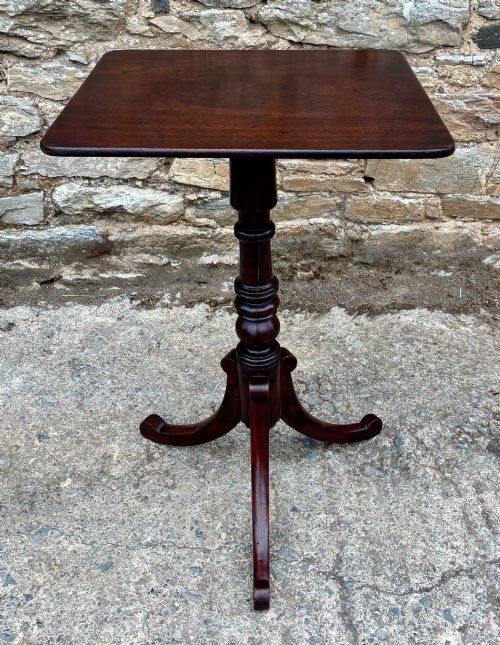
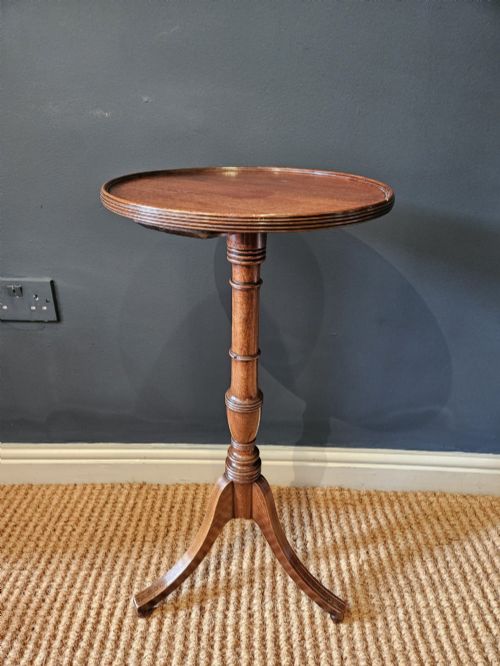
These tripod pedestal lamp table pieces offer steady circular surfaces on three-legged supports, ideal for holding a lamp beside a chair.
Tripod Pedestal Lamp Table
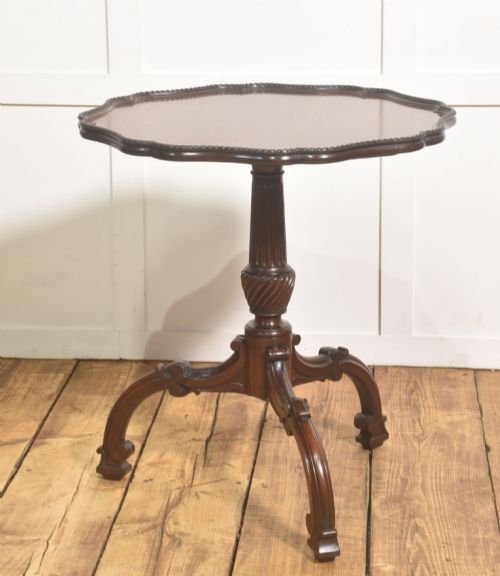
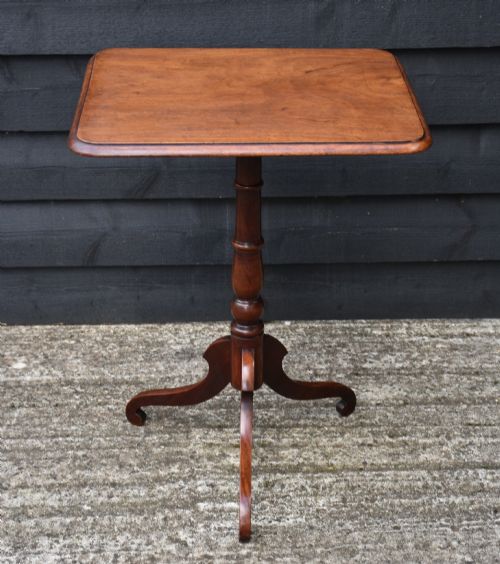
When you search for a tripod pedestal lamp table, you find compact occasional tables designed with a central pillar rising from three splayed legs. These useful pieces appear primarily across Victorian, Georgian, and Regency periods, serving historically as wine tables, candle stands, or small lamp surfaces.
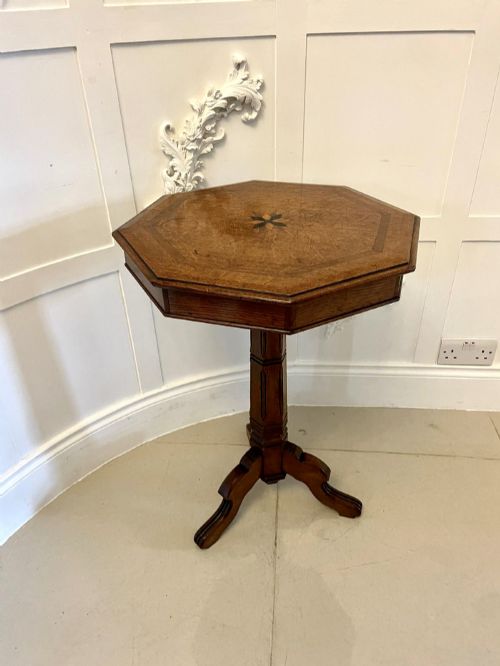
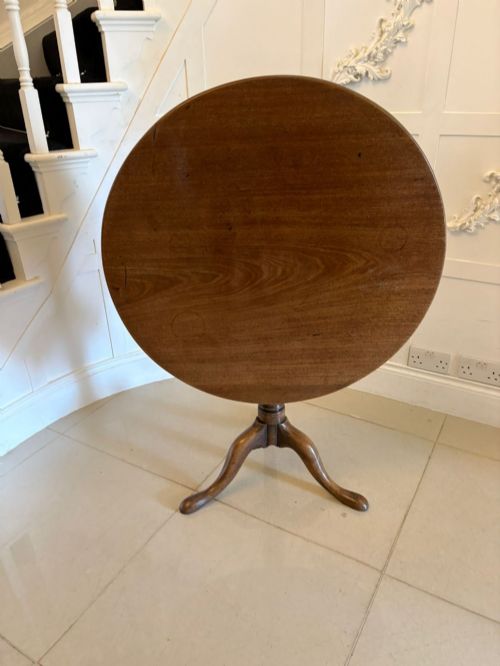
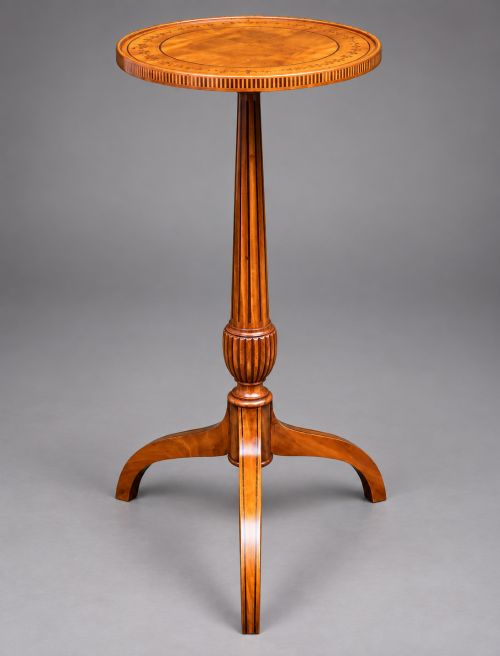
Mahogany forms the dominant timber on this page, alongside walnut, rosewood, oak, and painted pine. You will frequently encounter circular tops, sometimes featuring tilt mechanisms, snap tops, or inlaid marquetry details.
The domestic forms range from small wine tables to larger occasional and centre tables. Edwardian and Georgian examples sit alongside 19th-century iterations, offering versatile proportions for modern interior settings.
Materials and construction
Cabinet makers utilised dense hardwoods like mahogany, walnut, and rosewood, often turning the central pedestal from a single billet of timber. The three legs join the central shaft using robust tenon or dovetail joints to ensure stability.
Surfaces frequently showcase decorative veneers, including burr wood or satinwood, laid over solid secondary woods. Brass fittings, leather inserts, and hand-applied marquetry inlay appear on finer examples from the 19th century.
Swedish country makers produced cheerful painted lamp tables, proving that not every antique table took itself terribly seriously.
Quality variations
The distinction between ordinary and superior pieces rests upon timber selection and the crispness of the turned pillar and carved legs. Dense grain figures in mahogany and burr walnut elevate a table's visual weight.
Joinery execution at the critical juncture where the pillar meets the tripod base determines structural longevity. Hand-cut dovetails and precise turning demonstrate the maker's competence during the Georgian and Victorian eras.
Gillows
The Tripod Pedestal Lamp Table Glossary
- Tripod base
- A support structure consisting of three distinct legs radiating from a central pillar. This design provides steady balance on uneven floors.
- Tilt top
- A tabletop hinged to the pedestal top, allowing the surface to fold vertically when not in use. This clever mechanism saved valuable floor space in period homes.
- Snap top
- A specific tabletop mechanism secured with a brass catch or spring lock to prevent accidental tipping. It holds the circular surface firmly horizontal during daily use.
- Gueridon
- A small ornamental stand or table, frequently round and supported by a central column. French examples often feature bleached walnut or decorative paint finishes.
- Pie crust rim
- A carved, raised tabletop edge shaped with undulating curves resembling pastry work. This decorative detail prevents small items from rolling off the surface.
Tripod Pedestal Lamp Table: Frequently Asked Questions
What is a tripod pedestal lamp table?
A tripod pedestal lamp table is a compact circular piece of furniture raised on a central column supported by three splayed feet. These tables provide a convenient surface for lighting or drinks beside seating.
Most surviving examples date from the Georgian, Regency, and Victorian periods. Their small footprint makes them adaptable for modern living spaces.
How were these tables used originally?
Historically, these small stands functioned as wine tables, candle stands, or portable lamp surfaces in reception rooms. People moved them easily around the room as needed for evening gatherings.
Tilt-top variants allowed servants to store the tables flat against walls when rooms required open floor space.
How do I identify a Georgian table?
Georgian tables typically display simpler, robust timber construction with clean lines and understated tripod legs. Mahogany and oak dominate this earlier era.
Later Victorian versions often introduce heavier carving, burr wood veneers, and marquetry inlay. The transition from simple utility to decorative display marks the progression between these periods.
Where should I place one at home?
These tables fit naturally beside armchairs, sofas, or empty corners where a small surface is useful. Their circular tops accommodate a reading lamp or small decorative objects without crowding a room.
Tilt-top models can also stand flat against a wall as decorative vertical panels when not holding items.