
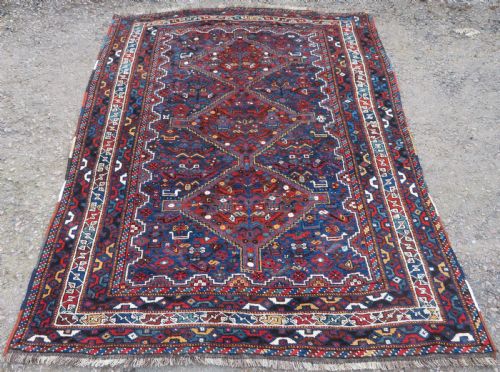


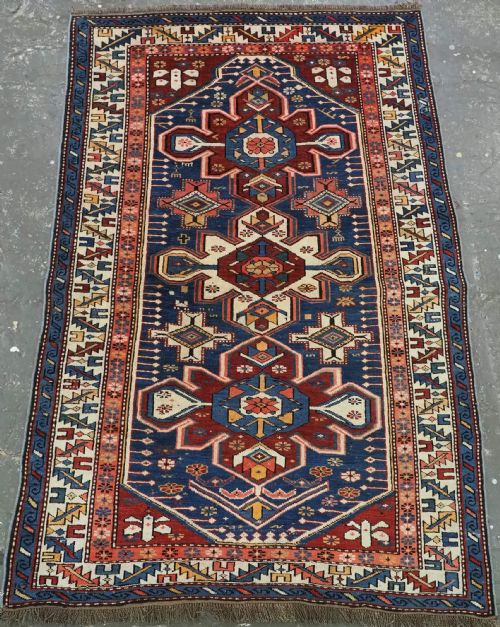


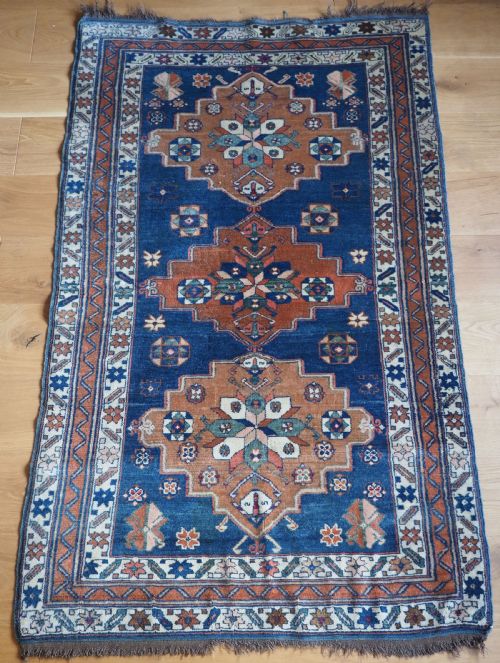


Triple Medallion Wool Carpet
A triple medallion wool carpet brings structured tribal geometry into a room through hand-knotted wool and cotton foundations.
Triple Medallion Wool Carpet
A triple medallion wool carpet displays a distinct arrangement of three central motifs set against patterned fields. These floor coverings emerge from various regional traditions including Persian tribal workshops and Caucasian weaving centres.
The pieces available here primarily span the late nineteenth century through to the early decades of the twentieth century. Buyers encounter forms such as area rugs, long rugs, and carpets featuring regional designs like Kazak, Khamseh, Qashqai, Karaja, and Soumak.
The format relies on the repetition of three medallions aligned along the vertical axis of the rug. This specific layout organises the geometric or stylized floral elements that define the visual character of the piece.
How they were made
Makers constructed these textiles using hand-knotted wool pile secured to foundational warps and wefts of wool or cotton. The density of the knots and the quality of the spinning determine the structural integrity of the floor covering.
Dyes derived from natural sources provide the palette for these carpets, yielding soft colours that age with depth. The weaving techniques reflect regional methods handed down through generations of tribal and village artisans.
Weavers occasionally added small rogue animal motifs or stray geometry into the borders, capturing an artisan's quiet moment of improvisation.
What varies in quality
The distinction between standard examples and superior ones rests on the crispness of the geometric drawing and the saturation of the wool. Finer pieces maintain precise lines within the three medallions and balanced proportions across the entire field.
Pile retention and the integrity of the original selvedges and ends influence the overall condition of the rug. Better examples preserve the intended scale of the Heratti or tribal motifs without awkward compression at the borders.
The Triple Medallion Wool Carpet Glossary
- Medallion
- A central decorative motif placed within the field of a carpet. In these pieces, three such shapes align centrally.
- Pile
- The upright loops or cut strands of wool that form the usable surface of the rug. This soft layer absorbs wear and displays the pattern.
- Warp
- The stationary vertical threads stretched on the loom that carry the structural load of the textile. Weavers tie the wool knots directly onto these foundational cords.
- Weft
- The horizontal threads passed alternately over and under the warp strings to lock the knots in place. This technique secures the rows of pile across the width of the carpet.
- Selvedge
- The reinforced edge binding running along the long sides of a rug. This finishing protects the structure from fraying.
Triple Medallion Wool Carpet: Frequently Asked Questions
Where were triple medallion carpets made?
These textiles originate from regions associated with tribal and village weaving traditions in the Caucasus and Persia. Specific styles link them to groups such as the Qashqai, Khamseh, and various Caucasian districts.
The makers worked within local aesthetic frameworks, passing down specific medallion layouts and geometric vocabulary through generations of workshops and nomadic communities.
How do I care for an antique wool carpet?
Place the rug in areas with moderate foot traffic and protect it from prolonged direct sunlight to preserve the natural wool dyes. Regular gentle vacuuming without a rotating brush roll prevents dust accumulation in the pile.
Rotating the carpet periodically ensures even wear across the surface, maintaining the balance of the wool fibres and the foundation over decades of domestic use.
What is a Soumak weave?
Soumak refers to a flat-weave technique where coloured wool strands wrap intricately around the warp threads. This method creates a sturdy textile without a traditional cut pile.
Carpets utilising this construction often display crisp geometric medallions with textured surfaces that differ from standard knotted pile rugs.
How are different regional types told apart?
Distinctions rely on the specific drawing of the medallions, the colour combinations, and the structure of the border guards. Caucasian pieces often exhibit sharper polygons and primary colours, whereas Persian tribal examples tend toward softer palettes and complex Heratti infill.
Examining the materials used in the foundation threads and the handling of the wool also provides clues to the specific regional origin.