
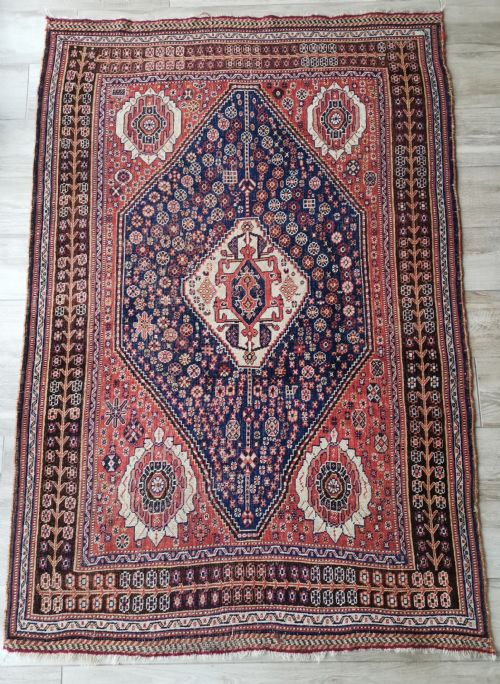


Nomadic Persian Floor Rug
When you search for a nomadic persian floor rug, you are looking at hand-knotted tribal textiles made for utility and shelter.
Nomadic Persian Floor Rug
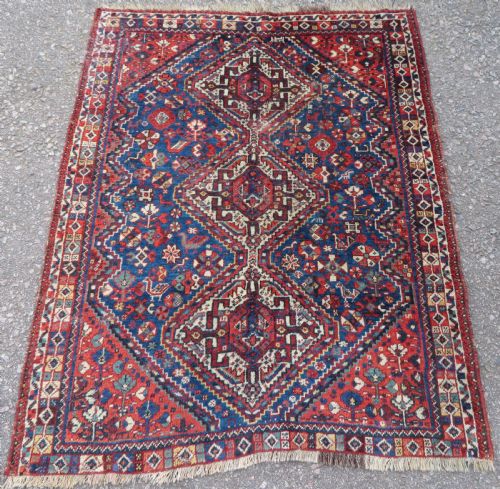
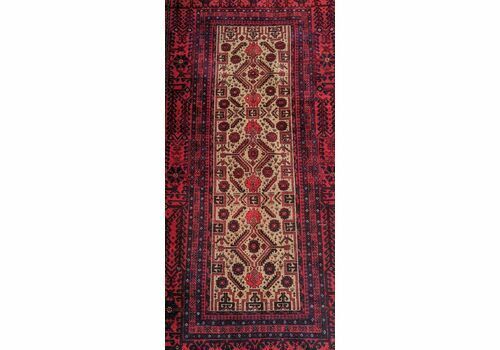
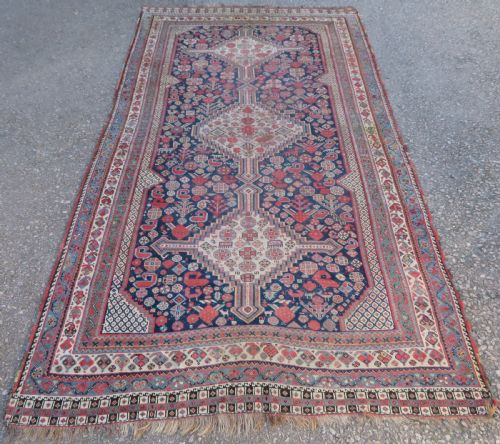
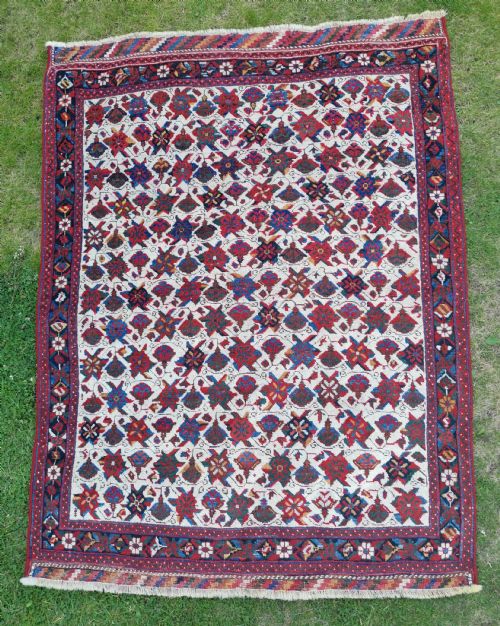
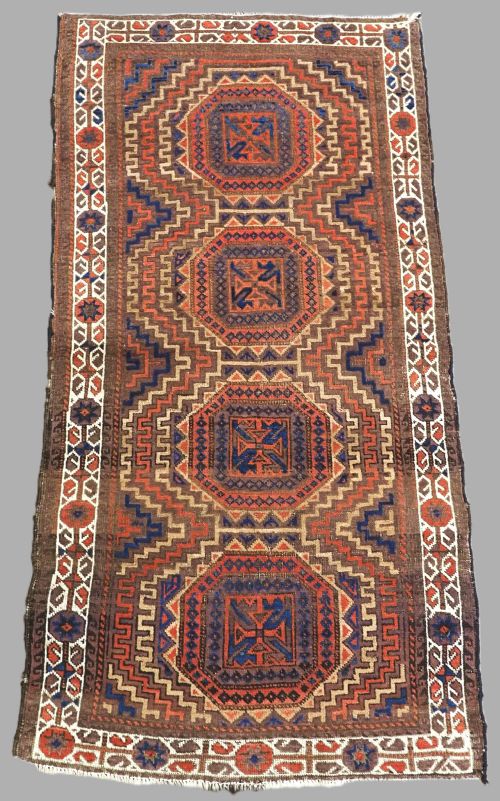
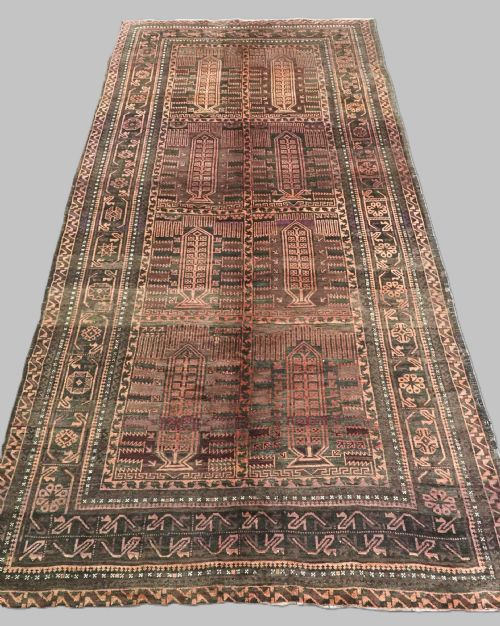
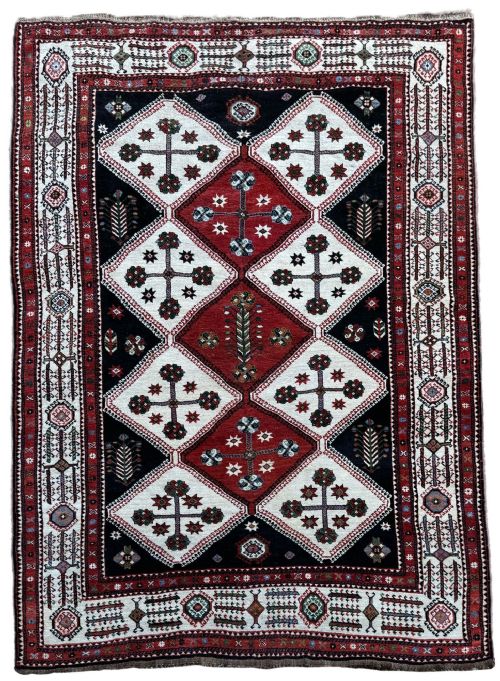
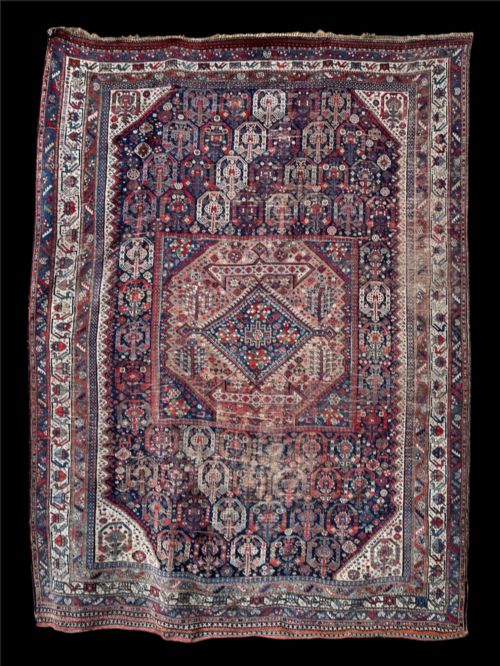
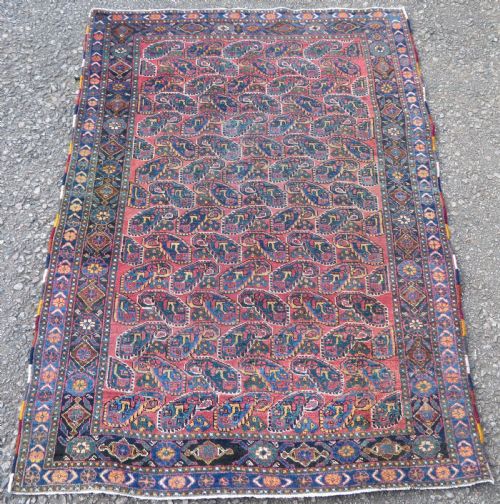
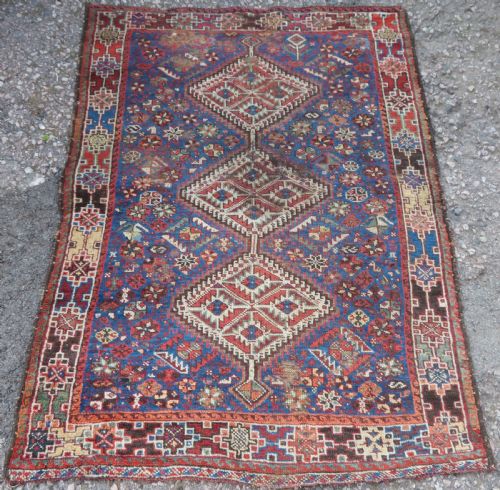
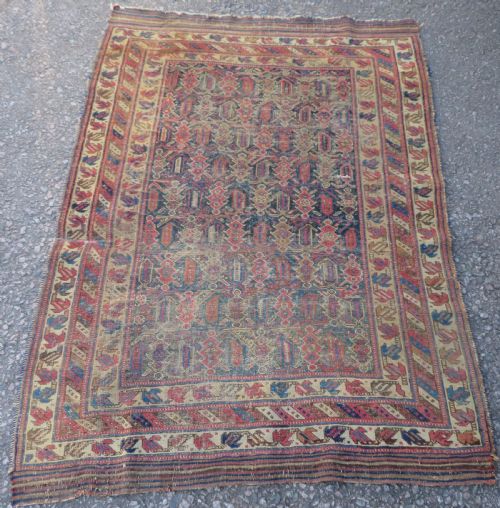
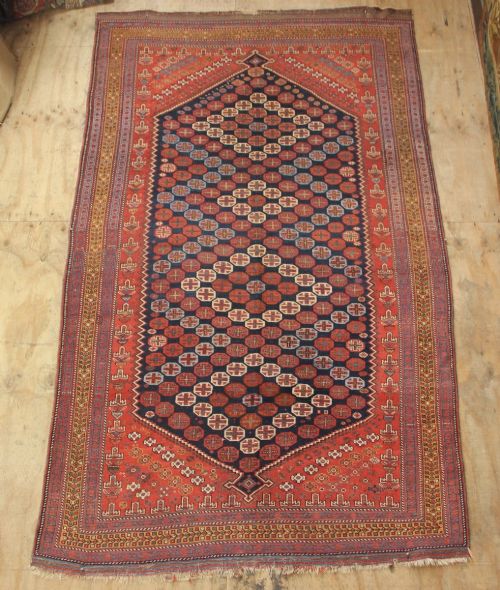
A nomadic persian floor rug is a utilitarian woven textile created by tribal groups and village weavers across Persia and neighbouring regions. These pieces include formats such as area rugs, runners, saddlebags, and larger carpets designed for daily domestic use in nomadic camps or permanent dwellings.
The selections encountered here span styles associated with tribes such as the Afshar, Baluch, Qashqai, Khamseh, and Bakhtiar. Pieces frequently display geometric motifs, medallion patterns, and traditional tribal iconography woven by hand on portable or stationary looms.
Materials and Construction
Weavers relied principally on hand-spun wool for the pile, utilising cotton or wool for foundations, and occasionally incorporating goat hair or camel wool for added durability in borders and selvedges. These natural fibres were worked by hand into dense warp and weft structures suited to heavy floor traffic.
Colour comes from natural dyes applied to the fleece, producing organic variations across the surface of each textile. The handling of these dyestuffs results in the rich, muted tones characteristic of late nineteenth and early twentieth-century tribal weaving.
Listings span the nineteenth century through the 1940s, featuring wool, cotton, and natural dyes across tribal styles.
Standards of Execution
Quality in these textiles rests upon the density of the knotting and the precision of the wool preparation. Finer hand-spun yarns and tighter knot counts allow for sharper geometric detail and greater structural longevity underfoot.
The nuance of the natural dye palette and the deliberate balance of tribal motifs further separate standard village work from superior examples. Master weavers achieved harmonious colour saturation and proportion that elevate individual carpets above routine utility items.
The Nomadic Persian Floor Rug Glossary
- Warp
- The vertical foundation threads stretched lengthwise on the loom before knotting begins. These underlying cords carry the structural tension of the rug.
- Weft
- The horizontal threads passed alternately over and under the warp strings to bind the rows of knots in place. Proper beat-down of the weft creates a firm cloth.
- Pile
- The durable surface of cut yarn ends that forms the visible and tactile face of the textile. This dense layer protects the structural foundation from wear.
- Gul
- A repeating medallion motif often found in tribal and nomadic carpets. These octagonal or polygonal designs frequently identify specific weaving groups.
- Selvedge
- The reinforced finishing edges along the longitudinal sides of a rug. This binding prevents the outermost warps from fraying during use.
Nomadic Persian Floor Rug: Frequently Asked Questions
What is a nomadic persian floor rug?
These are hand-knotted textiles produced by tribal and village weavers for practical use in domestic settings. They reflect the cultural iconography and weaving traditions of specific regional groups.
Such floor coverings served as functional furnishings in tents and homes, providing insulation and decoration. Their designs utilise traditional motifs passed down through generations of makers.
How do I identify different tribal styles?
Distinguishing between styles relies on observing specific structural traits, colour combinations, and recurring motifs such as medallions or repeat patterns. Afshar and Qashqai pieces often display distinct geometric layouts.
Examining the materials used in the foundation and pile also aids attribution. Regional preferences in wool preparation and natural dye palettes provide further clues to origin.
How were these rugs used originally?
Nomadic and village weavers created these textiles primarily as floor coverings, bedding, and storage containers like saddlebags. They formed essential elements of daily nomadic life.
Because they were made for utility rather than display, the materials were chosen for resilience against heavy wear. Their portability suited the seasonal migration patterns of the tribes.
How should I care for an antique rug?
Maintenance requires gentle vacuuming without a rotating brush bar to protect the wool pile and fringe. Professional cleaning tailored to antique textiles preserves the natural dye stability.
Keeping the textile out of direct, harsh sunlight prevents premature fading of the natural colours. Using a breathable underlay protects the foundation fibres from friction against hard floors.