
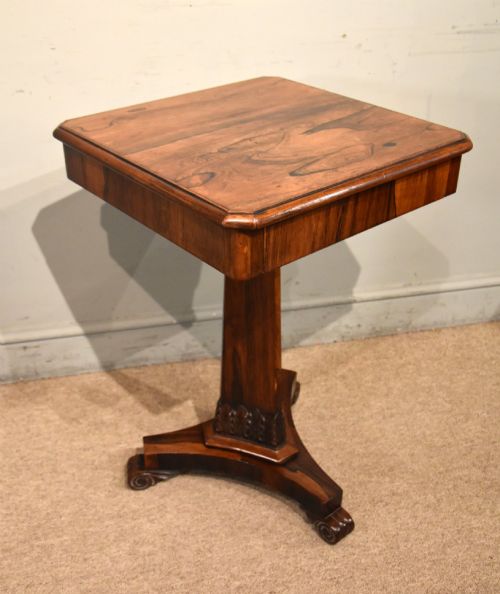
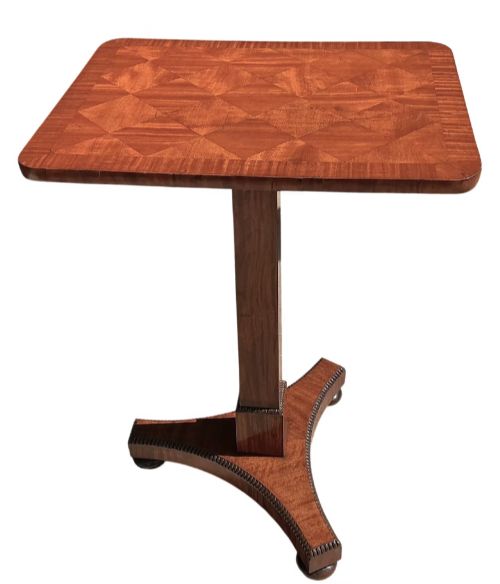
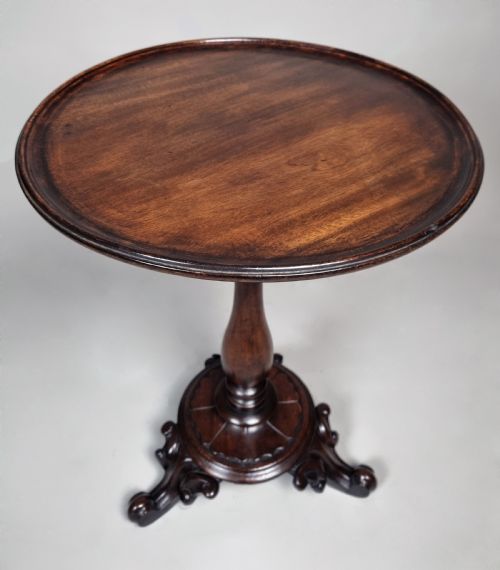
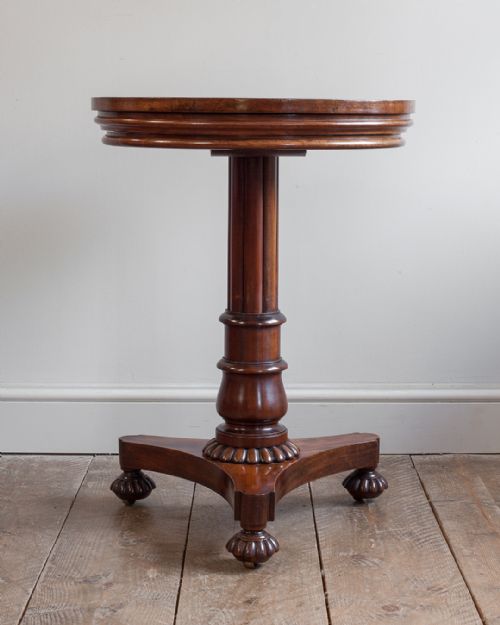

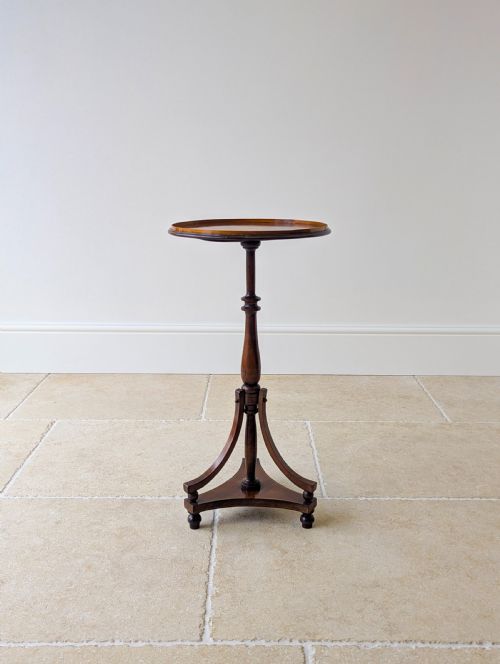

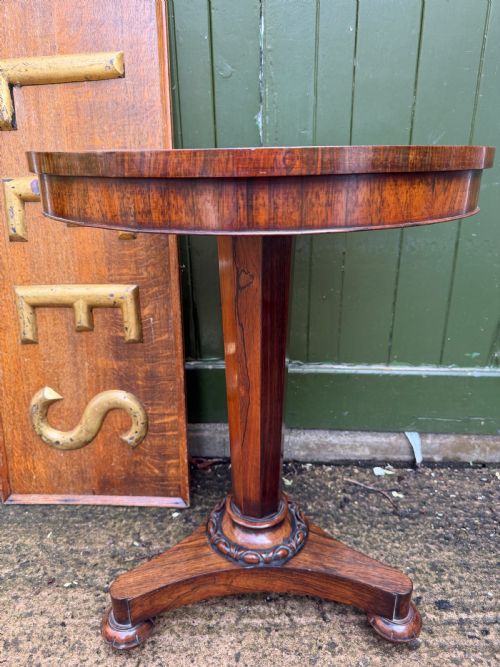


Triform Base Wine Table
A triform base wine table offers a sturdy three-legged pedestal support, combining elegance and stability for holding drinks or lamps.
Triform Base Wine Table
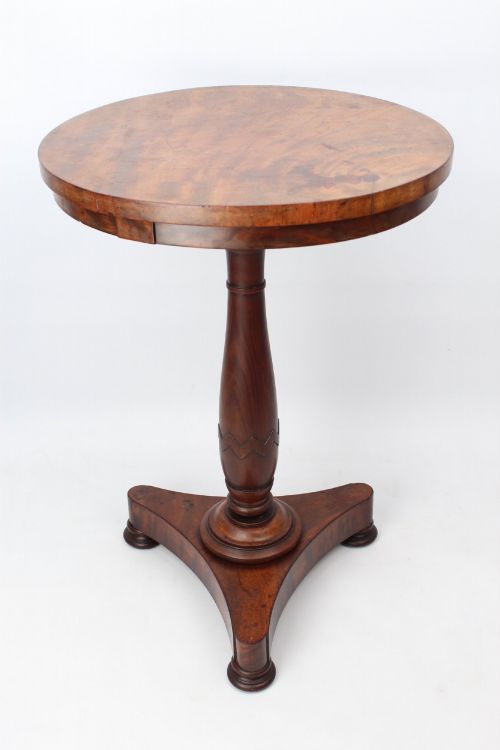
A triform base wine table stands on three distinct feet or a tripartite pedestal, typically holding a circular or square top designed to serve small items in reception rooms. You meet these pieces mostly from the Regency, William IV, and Victorian periods, alongside continental examples.
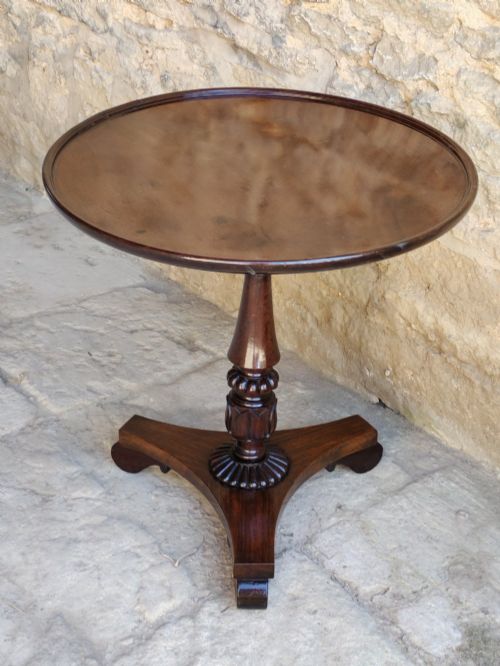
The form spans centuries of cabinet making, appearing in Georgian, Edwardian, and later iterations while retaining its characteristic three-way footprint. Variations include dish tops, tilt tops, and inset marble surfaces, often categorised under occasional or guéridon tables.
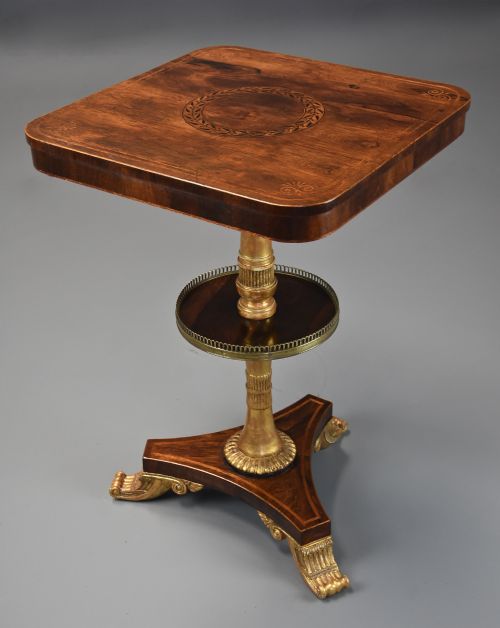
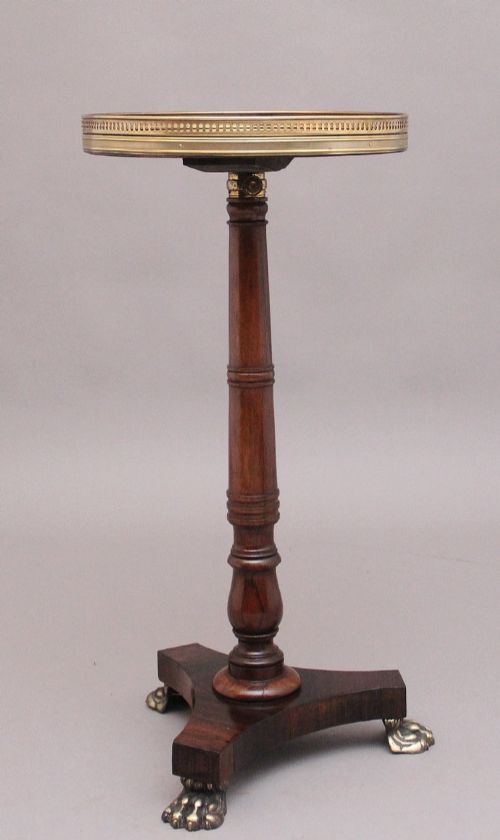
Makers utilised various formats, from miniature tables to two-tier lamp tables, adapting the triform support for domestic convenience. The selection here reflects diverse stylistic influences such as French Empire and George IV designs.
Materials and construction
Cabinet makers constructed these tables primarily from solid timber and rich veneers, frequently employing mahogany, rosewood, and burr elm. Flame mahogany veneer and figured rosewood provide distinct grain patterns across the table tops.
Giltwood, brass mounts, and inset marble tops appear on French Empire and guéridon variations, adding textural contrast to the wooden structures. Turned pedestals branch out into tripartite or triform bases to balance the weight above.
Listings feature mahogany, rosewood, burr elm, and marble across 19th-century, Regency, and Victorian periods.
Assessing quality in construction
Quality rests in the choice of timber and the precision of the veneer work, where figured rosewood or burr elm displays deliberate grain matching. Heavier, denser woods provide stable foundations for the central pedestal and its three supporting feet.
The refinement of the turning on the pedestal and the crispness of any applied brass or carved detail distinguish finer workshop output from standard production. Joinery at the junction of the column and the triform base dictates long-term stability.
The Triform Base Wine Table Glossary
- Triform base
- A support structure featuring three distinct feet or a tripartite pedestal radiating from a central column. This arrangement provides stability on uneven floors.
- Guéridon
- A small French table, often with a round top supported by a central pillar. These pieces frequently feature marble inserts or giltwood details.
- Tilt top
- A table mechanism allowing the surface to pivot to a vertical position for storage. This feature saves space when the table is not in use.
- Specimen table
- A tabletop composed of various wood types or marbles arranged in geometric patterns. These showcase the maker's skill in material selection.
- Metamorphic table
- Furniture designed to transform into another form or serve multiple functions. These pieces adapt to changing domestic requirements.
Triform Base Wine Table: Frequently Asked Questions
What is a triform base wine table?
A triform base wine table is a small pedestal table supported by three feet, designed for holding drinks, lamps, or decorative objects.
These pieces date primarily from the nineteenth and early twentieth centuries, spanning Regency, William IV, and Victorian styles.
How do I use a wine table today?
These tables fit easily beside armchairs or sofas to hold glasses, books, or small lamps without occupying much floor space.
Their compact proportions make them versatile additions to drawing rooms, studies, or hallways.
What materials are common on these tables?
Mahogany and rosewood dominate the English examples, often enhanced by flame mahogany veneer, burr elm, or yew wood.
Continental guéridons frequently incorporate inset marble tops and giltwood accents for a distinct decorative finish.
How do I tell Regency from Victorian tables?
Regency and William IV pieces tend to show cleaner classical lines, bold rosewood grains, and crisper pedestal turnings.
Victorian examples often feature heavier proportions, tilt-top mechanisms, and darker mahogany timbers.