
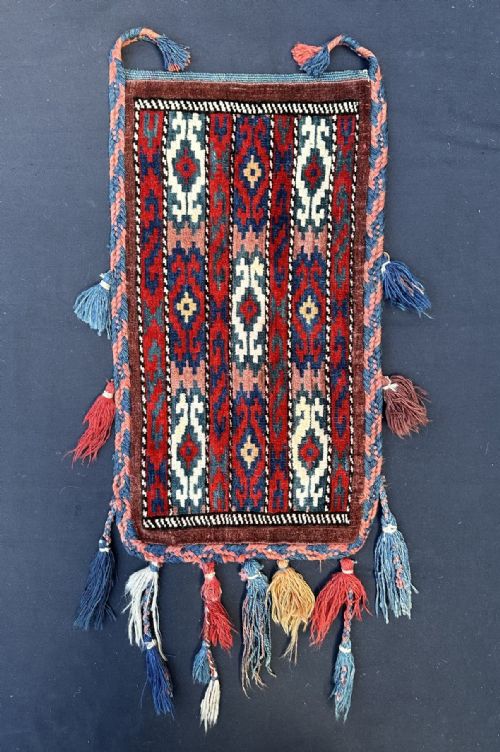
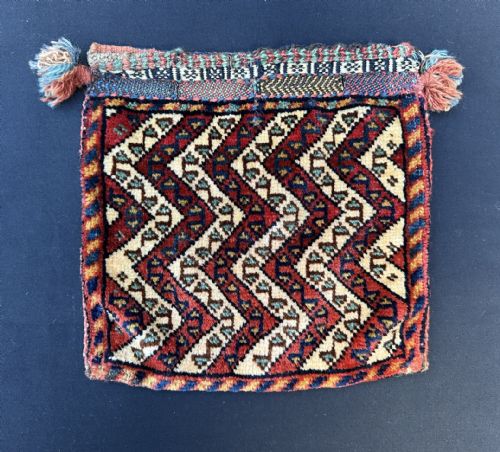
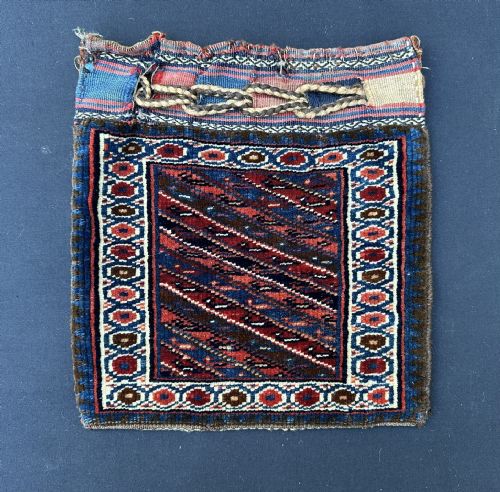
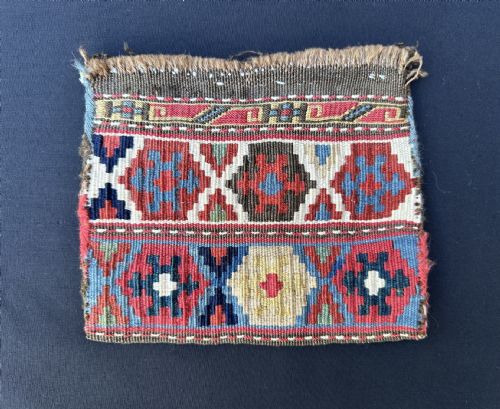





Tribal Woven Pouch
When you handle a tribal woven pouch, you hold a piece of nomadic life shaped by skilled hands across Persia, Afghanistan, and Central Asia.
Tribal Woven Pouch
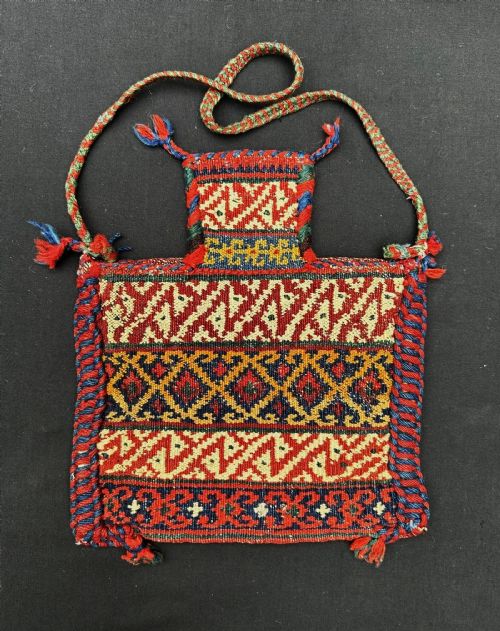
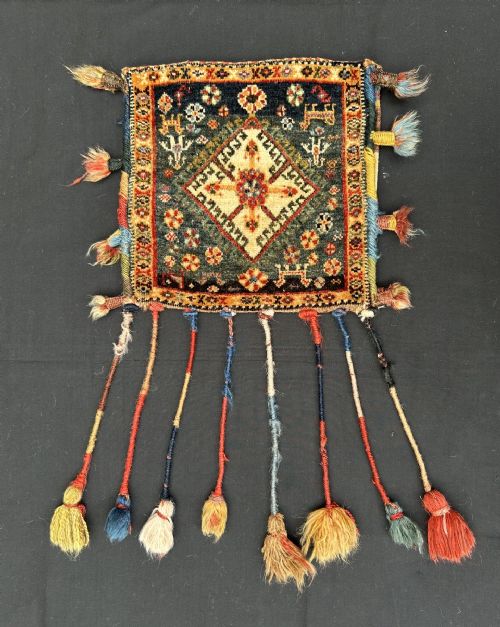
The objects originate from distinct tribal confederacies and groups, including the Qashqa'i, Afshar, Baluch, Shahsevan, and Yomut Turkmen. These pieces date from the mid-nineteenth century through the early twentieth century, reflecting the traditional weaving output of regions like Fars, Khorassan, and the Trans-Caspian steppes.
Most examples manifest as flat-woven or piled containers intended for hanging inside a tent or loading onto pack animals. Their survival intact with original backs demonstrates their continued appreciation as textile art.
Materials and Construction
Weavers utilised hand-spun wool and dyed yarn, often integrating cotton for structural support and foundation warps. Natural dyes provide the underlying palette, yielding rich hues that age gracefully over decades of exposure.
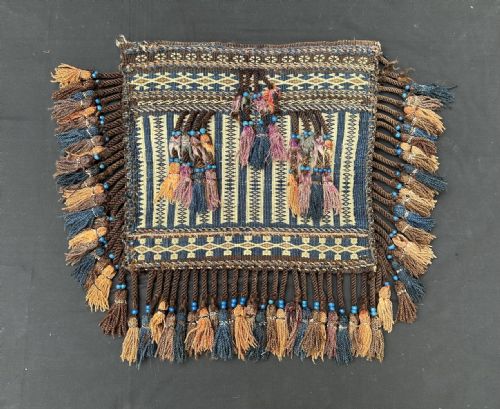
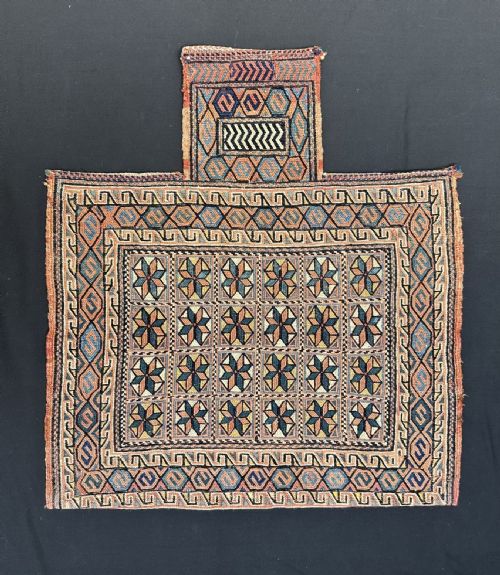
Techniques vary from pile weaving to intricate flat-weaves like Soumak work, where supplementary weft wrappings create textured geometric surfaces. Artisans occasionally embellished these containers with glass beads and cowrie shells to complete the textile composition.
Materials documented across the inventory include hand-spun wool, cotton, glass beads, and cowrie shells.
Assessing Quality and Execution
Quality rests in the tightness of the knotting or the precision of the flat-weave structure, alongside the clarity and complexity of the tribal motifs. Finer examples display high knot densities and deeply saturated natural dye palettes that create striking visual contrast.
The preservation of original elements, such as plain-weave backs, hanging loops, and complete closure systems, elevates an example significantly. Integrity of the wool and the crispness of the geometric design work separate ordinary utilitarian containers from exceptional artistic survivals.
The Tribal Woven Pouch Glossary
- Chanteh
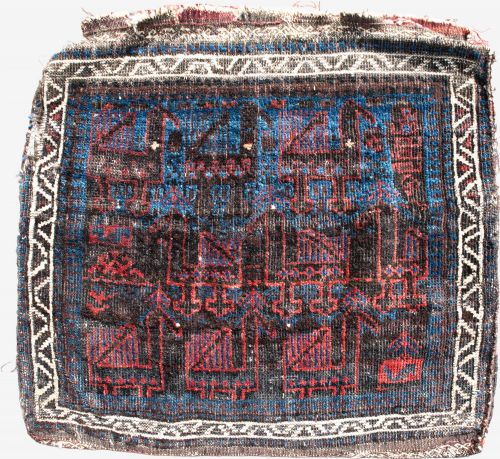
- A small personal bag or pouch woven by tribal groups, typically utilised for carrying personal items or documents. These pieces showcase the weaver's skill on an intimate scale.
- Torba
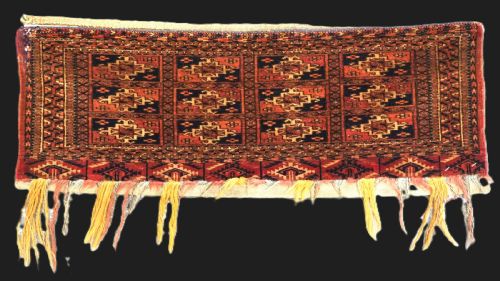
- A wide tribal bag traditionally used for storage inside a tent, often featuring prominent guls or medallion designs. They display the distinctive heraldry of Turkmen and related groups.
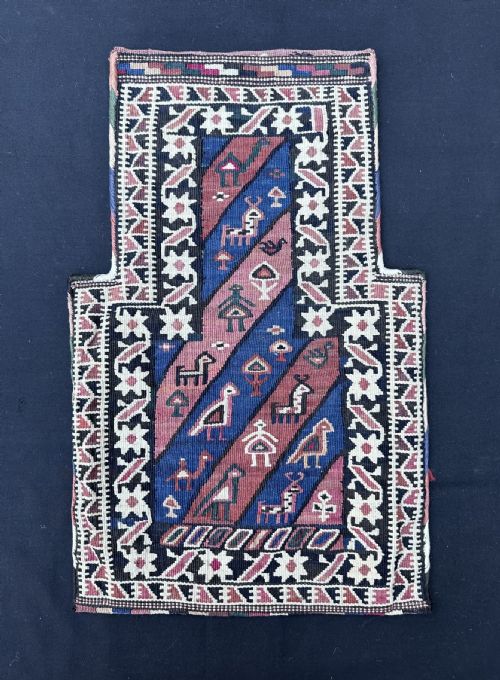
- Namakdan
- A specialised salt bag characterised by a narrow neck and bottle-like shape designed to prevent rock salt from spilling during nomad transit. They represent some of the most structurally inventive tribal weaving.
- Soumak
- A flat-weave technique where coloured weft threads wrap over and under the warp threads in a continuous motion. This method produces a durable, textured surface resembling embroidery.
- Gul
- A medallion or repeating octagonal motif used extensively in Turkmen and Central Asian carpet and bag design. Each pattern often identifies a specific tribe or clan.
Tribal Woven Pouch: Frequently Asked Questions
How do I identify which tribe made a pouch?
Attribution relies on specific structural traits, colour palettes, and distinct geometric motifs unique to each region. For instance, Afshar pieces often emerge from Kerman province, while Yomut examples originate from Central Asian steppes.
Examining the weave structure and secondary colours helps link the pouch to confederacies like the Qashqa'i or Shahsevan.
How should I display a textile bag at home?
These pouches hang successfully on walls using a padded dowel or custom mount that distributes the weight evenly across the upper edge. Keeping them away from direct sunlight protects the natural wool dyes from fading.
Allowing the textile to breathe ensures the historical fibres remain stable in a domestic environment.
What does complete with back mean?
Many antique bags lost their original plain-weave back panels over decades of heavy use or separation from their pairing. Finding a specimen retaining its original back confirms its structural integrity and historical completeness.
This preservation is particularly valued by collectors of Turkmen torbas and storage bags.