



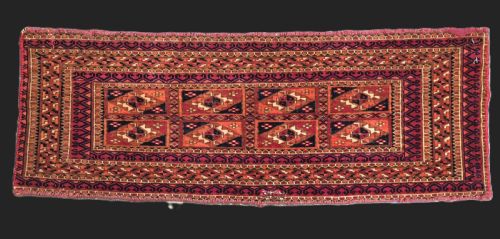
Tribal Wool Face
When searching for a tribal wool face, collectors look at authentic nomadic and village bag fronts from Central Asia and Persia.
Tribal Wool Face
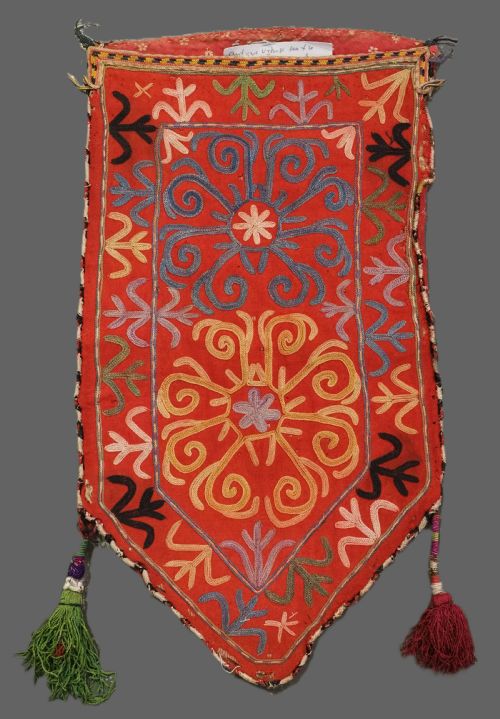
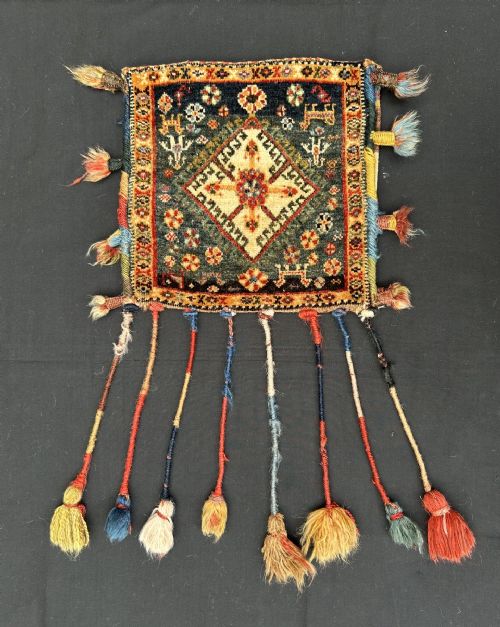
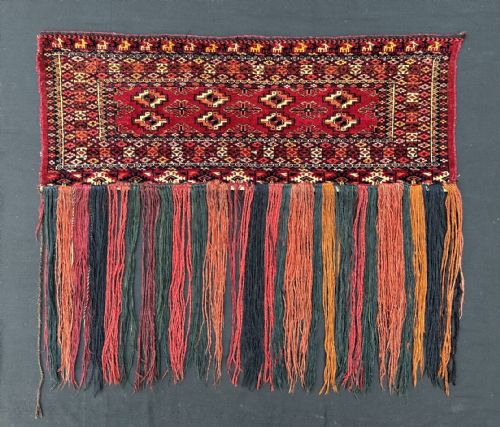
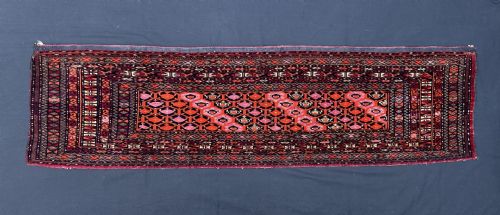
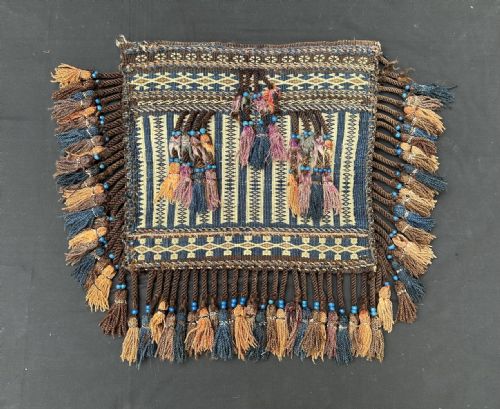
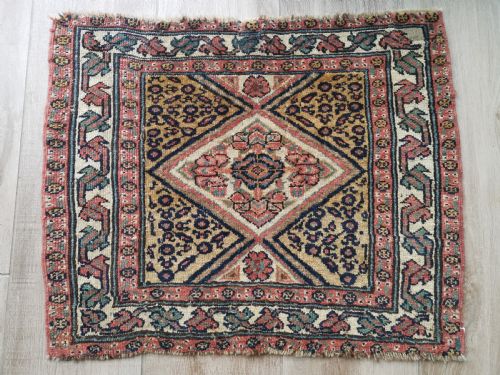
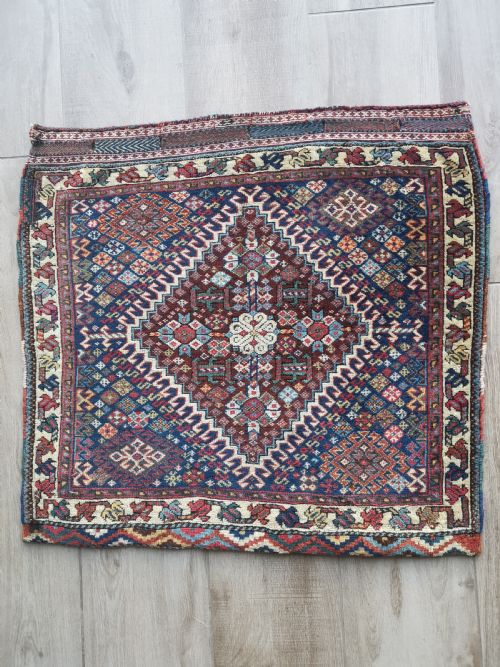
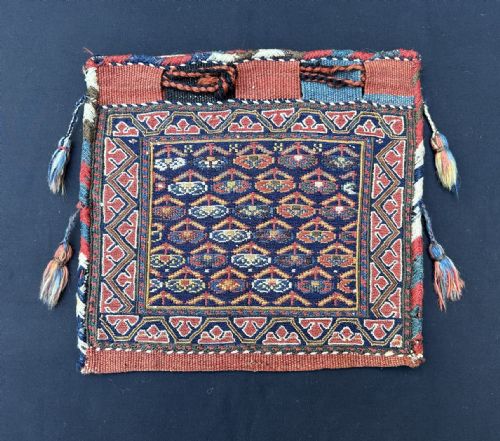
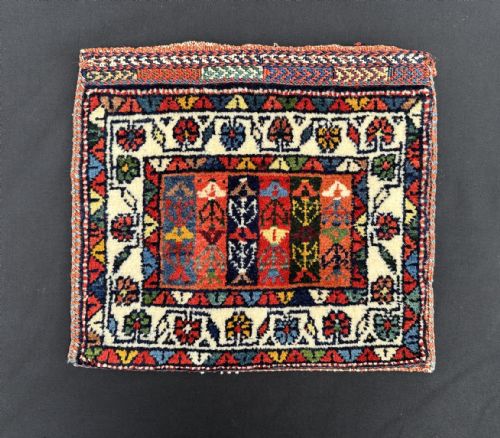
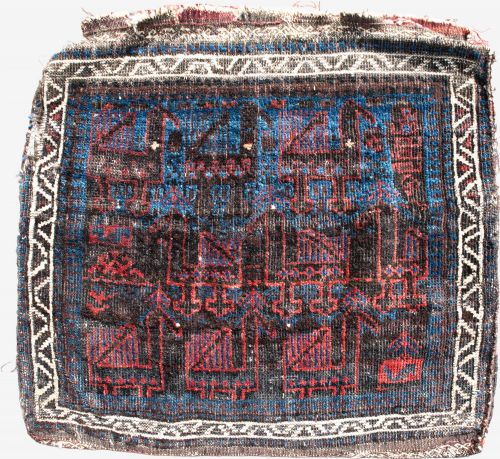
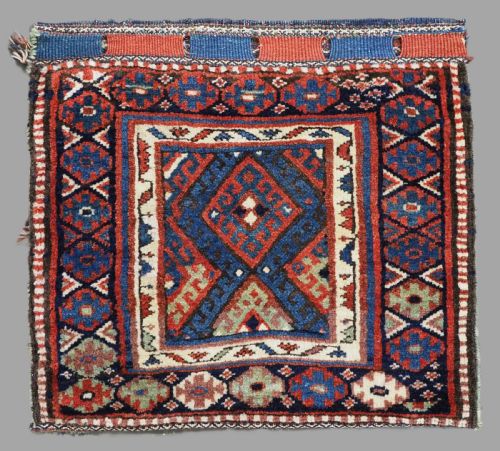
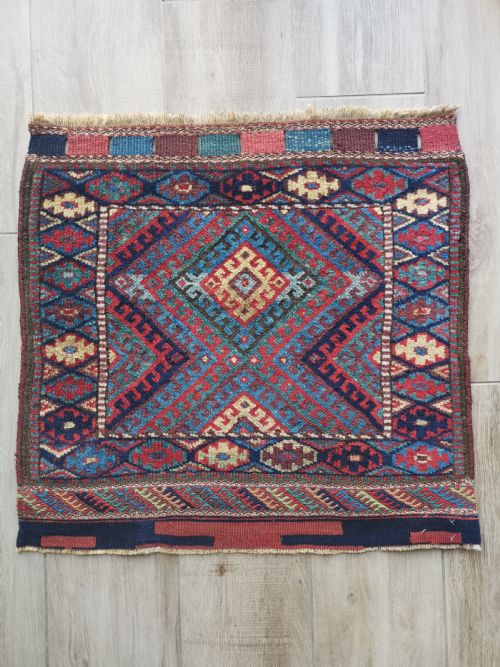
A tribal wool face is the decorative front panel of a utilitarian nomadic container, such as a storage bag, grain sack, or bedding bag. These textiles originated among pastoral and tribal groups across Central Asia and Persia, including Turkmen, Baluch, Kurdish, and Qashqai confederacies.
The selections available on this page consist predominantly of antique bag faces, torbas, chuvals, and half-khorjins originating from the nineteenth and early twentieth centuries. They function today primarily as wall hangings and small decorative textile fragments.
Makers utilised traditional tribal weaving formats designed for daily nomadic life, transforming functional items into expressive cultural artefacts with distinctive regional motifs and formats.
How they were made
The foundation of a tribal wool face relies on hand-spun wool, often combined with cotton or silk highlights and occasionally embellished with glass beads. Natural dyes provide the palette, yielding deep madder reds, indigos, and ivory grounds that patinate gracefully over time.
Weaving techniques range from fine pile knots to flatweave structures, depending on the specific tribal group and the intended function of the original storage piece.
Some Yomut spindle bags come with their original plain weave backs still attached, surviving a century of nomadic travel intact.
What varies in quality
Quality in these textiles depends on the density of the weave, the clarity and saturation of the natural dyes, and the crispness of the tribal guls or geometric motifs. Pieces with exceptionally fine pile, balanced proportions, and complete borders command greater attention from experienced collectors.
The condition of the wool, the integrity of the remaining structure, and the retention of original plain weave backs or side finishes also influence the overall character of an individual textile.
The Tribal Wool Face Glossary
- Torba
- A small Turkmen storage bag, typically wider than it is tall, used for household possessions inside the yurt. These bag faces are widely collected for their intricate guls.
- Chuval
- A large Turkmen tent storage bag designed for bedding and clothing. The faces frequently display repeating rows of primary guls.
- Gul
- A medallion or repeated octagonal motif characteristic of Turkmen and Central Asian tribal weaving. Each pattern often identifies a specific tribe or sub-group.
- Khorjin
- A traditional double saddlebag used for transport on animals. Surviving examples are often found separated into individual half-faces.
- Flatweave
- A textile constructed without pile by interlacing warp and weft threads together. Examples include plain weave and banded designs found on nomadic bags.
Tribal Wool Face: Frequently Asked Questions
What is a tribal wool face?
A tribal wool face is the front panel of an antique nomadic storage bag or saddlebag. These panels were separated from their original utility backs over time to be preserved and displayed as textile art.
They represent the domestic artistry and weaving traditions of pastoral groups from Persia and Central Asia.
How should I display a bag face?
Most collectors mount these textile panels on conservation-grade fabric or display them flat as wall hangings to protect the historical wool fibres. Direct strong sunlight should be avoided to prevent fading of the natural dyes.
Allowing the textile to breathe in a stable indoor environment ensures its preservation.
How do I identify different tribal designs?
Different tribal groups such as the Tekke, Yomut, Saryq, and Baluch utilised specific geometric motifs, border arrangements, and primary guls. Comparing the structural weave and colour palette helps attribute a piece to a particular region or confederacy.
Reference literature on oriental rugs and tribal textiles provides detailed guides for specific tribal iconography.