






Tribal Weaving Bag
When searching for a tribal weaving bag, collectors examine woven storage containers made by nomadic groups for daily domestic and transport use.
Tribal Weaving Bag
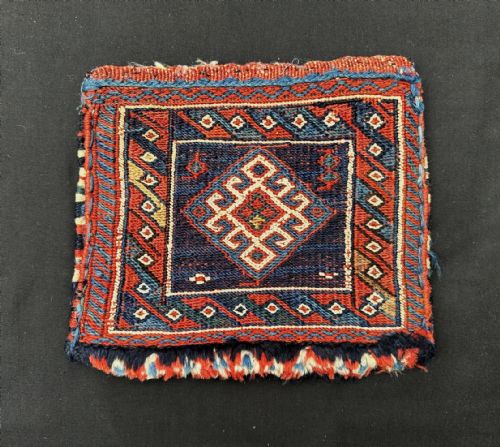
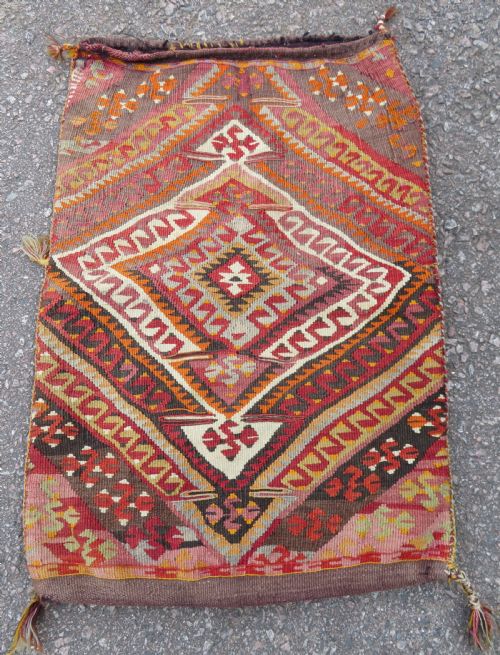
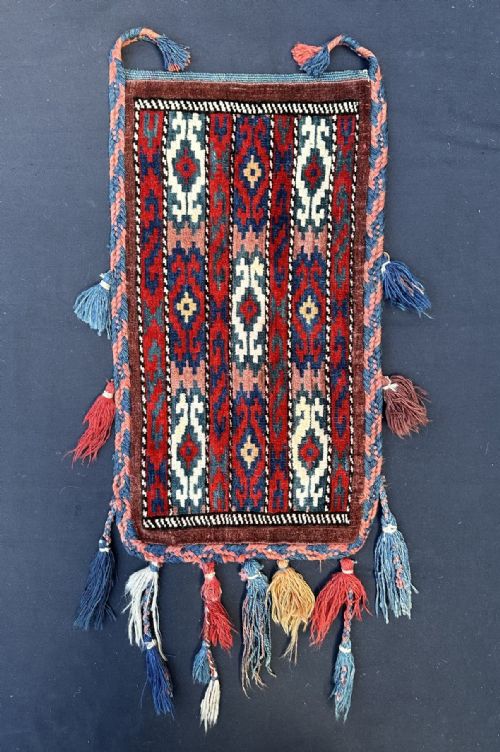
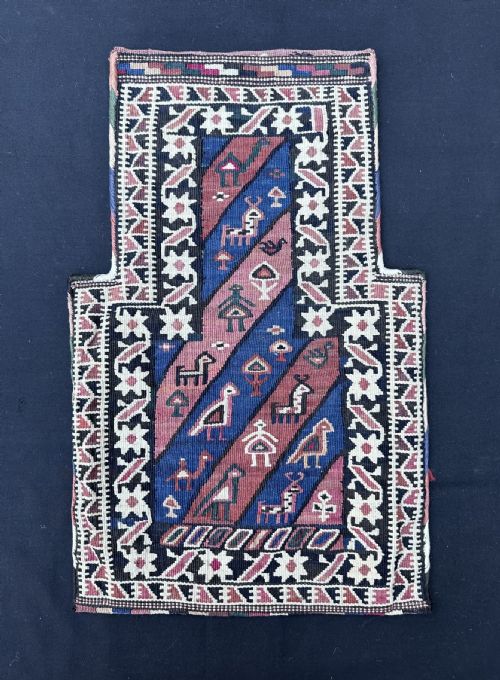
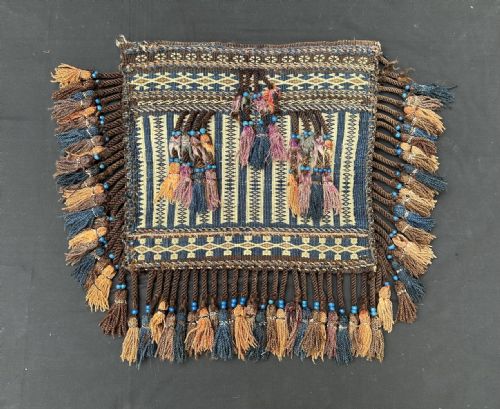
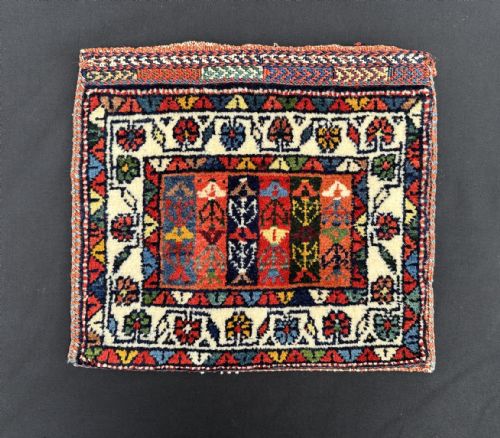
A tribal weaving bag encompasses various utilitarian containers created by nomadic and village weavers across Persia, Central Asia, and Anatolia. These pieces served practical functions in nomadic camps, ranging from vanity bags and salt bags to larger storage sacks and saddle bags.
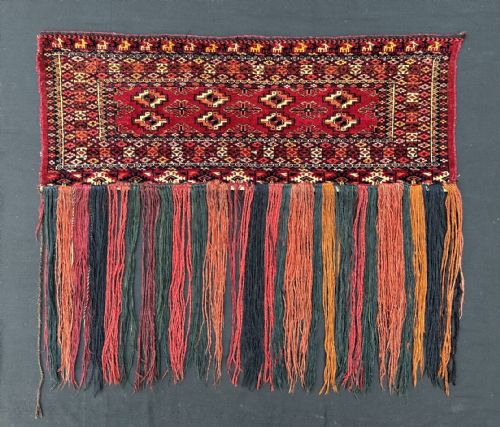
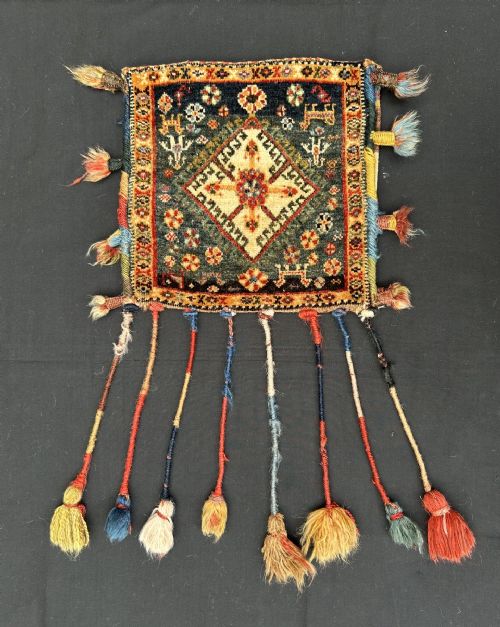
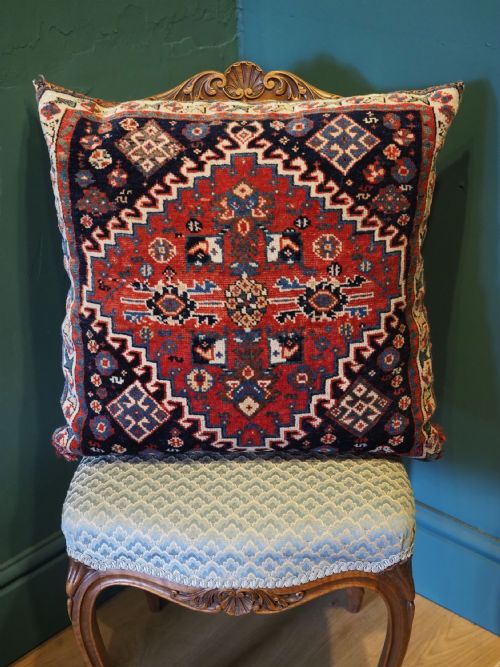
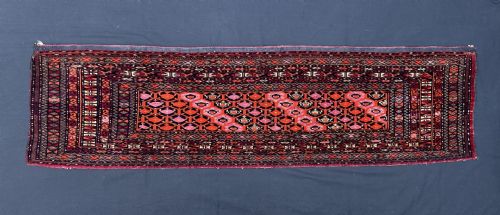
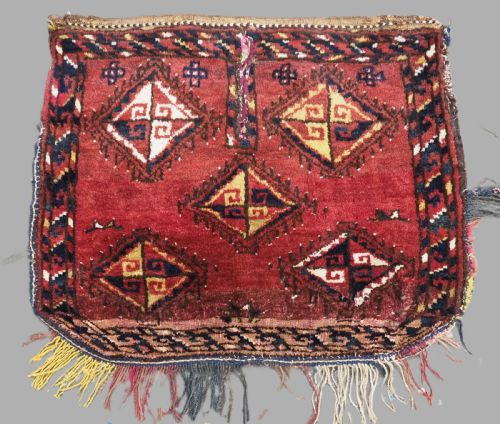
The selections available here heavily feature Persian and Turkmen examples, including vanity bags, storage bags, and saddle bags produced by tribal confederacies such as the Qashqai, Afshar, Bakhtiari, and various Turkmen tribes. Many of these items survive as bag faces or complete small pouches rather than intact utilitarian containers.
Origins span regions from the Fars province and Khorassan to the Turkmen steppes and Western Persia, dating primarily from the late nineteenth century into the early twentieth century. Each piece reflects the specific weaving vocabulary of the tribe or sub-tribe that made it.
Materials and Construction
Makers relied primarily on wool and hand-spun wool for the foundation and pile of these textiles, utilising cotton occasionally for structural elements. Natural dyes provided the deep reds, blues, and earth tones characteristic of the period.
Additional ornamentation occasionally incorporated glass beads and cowrie shells, alongside silk highlights in specific regional pieces. Artisans employed pile weaving and flatweave techniques like kilim to construct durable containers suited for nomadic life.
Tribal Weaving Bag Retail Price Guide 2026
Typical asking prices for tribal weaving bag among the pieces listed under this phrase on Sellingantiques today, from the lower quarter to the upper quarter. They describe what is for sale here now, not the wider market.
Listings span production dates from eighteen-sixty through nineteen-thirty, utilising wool, hand-spun wool, cotton, silk, natural dyes, glass beads, and cowrie shells.
Assessing Weaving Quality
Quality rests in the precision of the weave and the clarity of the tribal motifs. Tighter knots and finer structures separate superior pieces from simpler utilitarian work.
The richness and depth of the natural dyes significantly influence the visual impact of a piece. Well-balanced palettes and well-executed secondary details indicate skilled village or nomadic production.
The Tribal Weaving Bag Glossary
- Chanteh
- A small tribal vanity bag or container used by nomads for personal items. These pieces often display intricate face designs reflecting specific tribal origins.
- Chuval
- A large Turkmen storage bag traditionally used inside a yurt for household possessions. They frequently survive as decorative bag faces.
- Torba
- A smaller Turkmen bag utilised for utility storage within the tent. These rectangular formats often display repeated primary gul motifs.
- Kap
- A general Turkmen term for a bag or sack used in nomadic transport and storage. Examples include specialised variations like spindle bags and tent-band bags.
- Gul
- A medallion-like primary motif repeated across Turkmen and tribal weaving. Different tribes utilised distinct gul designs to signal identity and heritage.
Tribal Weaving Bag: Frequently Asked Questions
What is a tribal weaving bag?
These textiles are small woven containers and pouches made by nomadic tribes for storage and transport. They include vanity bags, salt bags, and saddle bags.
Nomads used them inside tents and on animals for practical storage before they entered the collector market as decorative objects.
How were these bags used?
Nomadic families used them to hold salt, grain, personal items, spindle tools, and household gear. Their durable construction suited daily camp life.
Many survived because families prized the intricate weaving and preserved them long after their original utilitarian function ended.
How do I identify tribal origins?
Origin is determined by specific colour palettes, structural materials, and repeating motifs unique to groups like the Qashqai, Afshar, or Turkmen tribes. Regional weaving traditions govern the patterns.
Consulting reference details helps connect a bag face to specific tribal confederacies in Persia or Central Asia.
Can I hang them on the wall?
Many collectors mount bag faces and complete pouches on walls to display the textile artistry. Their compact sizes suit interior display spaces.
Ensuring proper support prevents strain on the historical wool and cotton foundations during exhibition.