


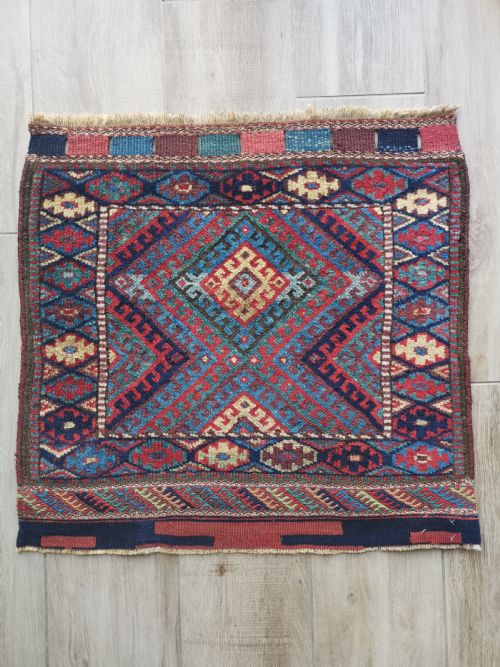


Tribal Khorjin Rug
A tribal khorjin rug is a woven storage bag or face originating from nomadic weavers, sought after for its rich traditional patterns and robust craftsmanship.
Tribal Khorjin Rug
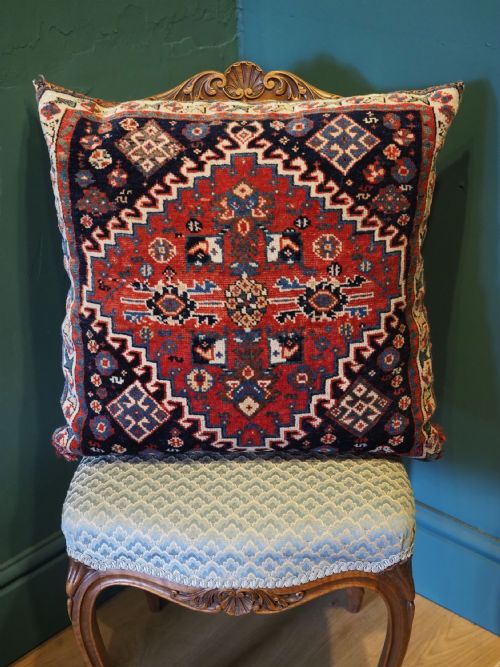
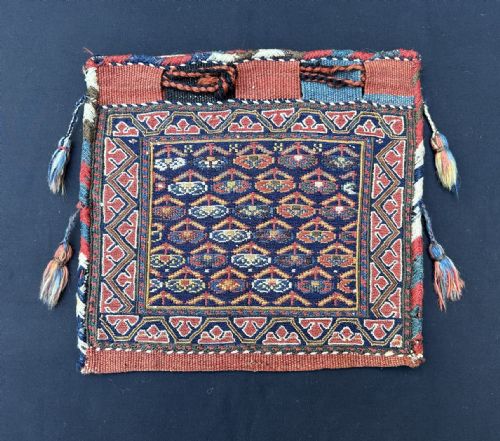
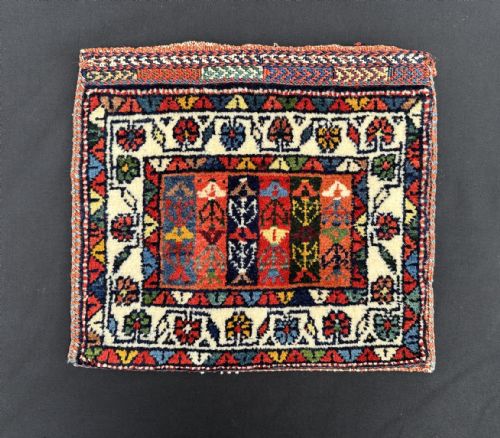
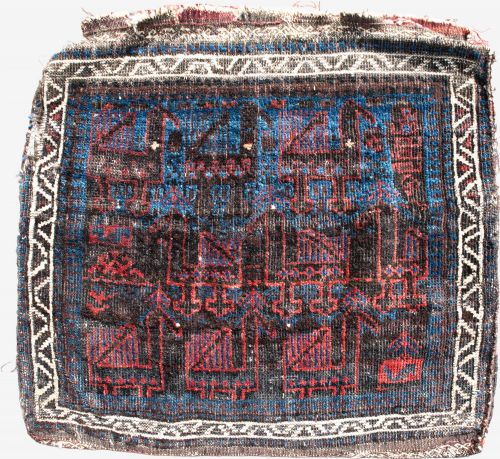
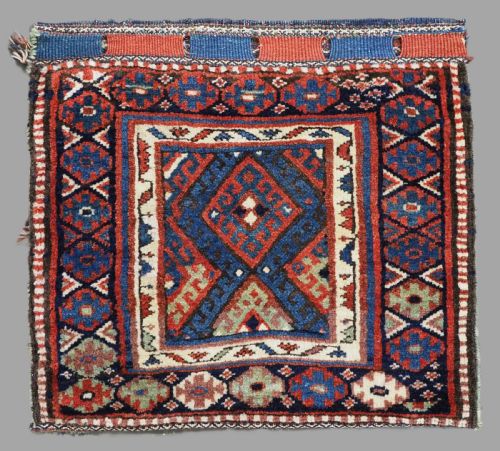
When searching for a tribal khorjin rug, a buyer encounters authentic saddle bags, storage sacks, and individual bag faces created by nomadic and village weavers across Persia and the Caucasus. These textiles served practical purposes for transport and storage before being repurposed or preserved as decorative cushions and wall hangings.
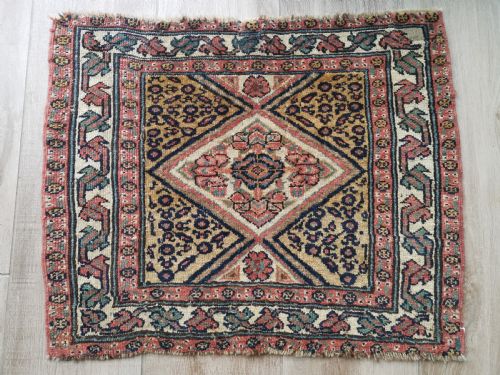
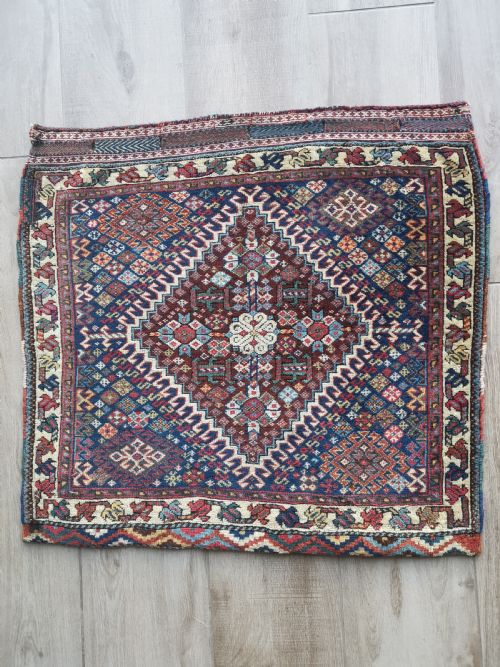
The pieces on this page span the nineteenth and early twentieth centuries, reflecting the distinct tribal identities of groups such as the Qashqai, Afshar, Shahsavan, Baluch, and Jaf Kurd. Most items appear as complete double saddle bags, half-khorjins, or single bag faces displaying central medallions, boteh motifs, and tile designs.
Materials and Construction Techniques
Weavers constructed these utilitarian objects using hand-spun wool for both the pile and the foundational warps and wefts, occasionally incorporating goat hair for added durability along the edges and backing. Natural dyes provided a stable palette of rich tones that mellow gracefully over decades of exposure and use.
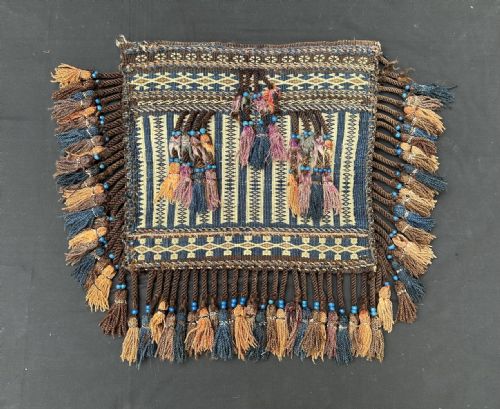
Structural variety includes pile-woven sections combined with flat-woven plain weave backs or intricate Soumac wrapping techniques. Certain examples incorporate tactile embellishments such as glass beads and cowrie shells into the textile structure.
Some surviving bags retain their original coin-sized cowrie shells, stitched on by nomadic makers to ward off the evil eye during desert travels.
Assessing Quality and Execution
Quality in these nomadic textiles rests upon the density of the knotting, the precision of the tribal geometry, and the depth of the natural dye palette. Finer examples display meticulous control over complex repeating patterns and intricate field designs.
The survival of original plain weave backs or complete construction adds significantly to the integrity of the piece. Superior specimens maintain structural soundness alongside crisp drawing and harmonious colour saturation.
The Tribal Khorjin Rug Glossary
- Khorjin
- A traditional nomadic double saddle bag used for transport and household storage. These bags were joined by a central slit and slung across pack animals.
- Bagface
- The decorative front panel of a storage sack or saddle bag, often preserved independently as a small rug or cushion after the back wore away.
- Soumac
- A flat-weave technique utilising wrapping threads over the warp to create a textured, durable surface with a braided appearance on the face.
- Boteh
- A traditional teardrop or almond-shaped motif representing a floral spray or cypress tree, frequently utilised in Persian and tribal weaving.
- Chanteh
- A small personal bag or vanity pouch woven by nomadic groups for carrying small items and personal belongings.
Tribal Khorjin Rug: Frequently Asked Questions
How do I use a bag face at home?
Bag faces make striking small wall hangings, table mats, or decorative cushion covers in traditional and contemporary interiors.
Their manageable dimensions allow them to introduce nomadic pattern and texture into smaller spaces.
Which tribes made these rugs?
Nomadic confederations and regional tribes such as the Qashqai, Afshar, Shahsavan, Baluch, and Luri produced these distinctive textiles.
Each group utilised specific palettes, structural techniques, and symbolic motifs particular to their geographic region.
How can I tell the age of a tribal bag?
Age is determined by observing the wool quality, the organic composition of the natural dyes, and the traditional tribal structures.
Nineteenth-century examples typically show softer hand-spun wool textures and patination consistent with age and nomadic utility.