



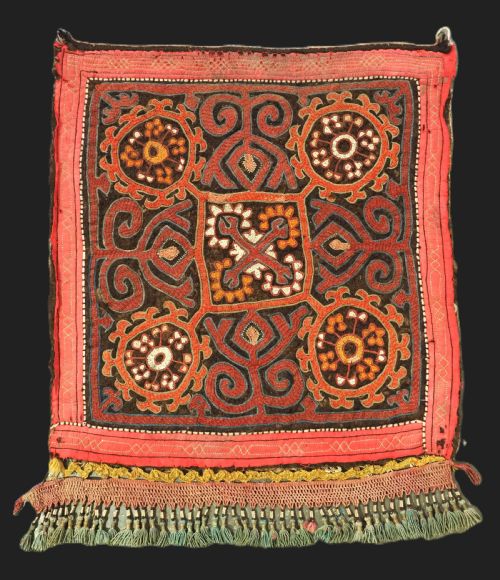


Tribal Fringe Wall Hanging
A tribal fringe wall hanging brings intense pattern, rich wool and textile history from Central Asia and Persia straight to an interior.
Tribal Fringe Wall Hanging
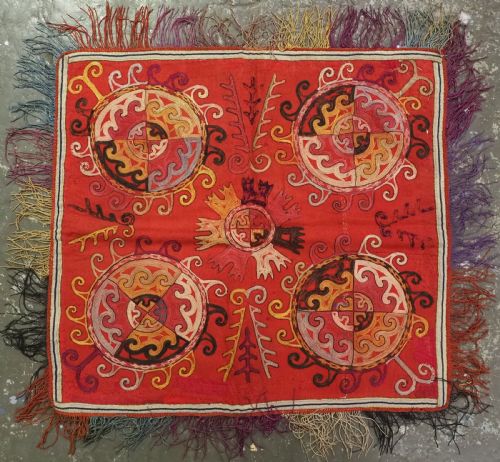
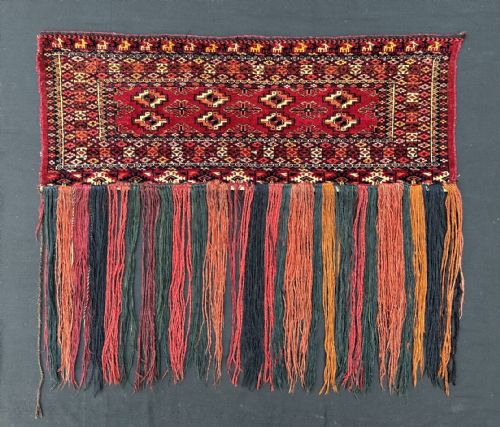
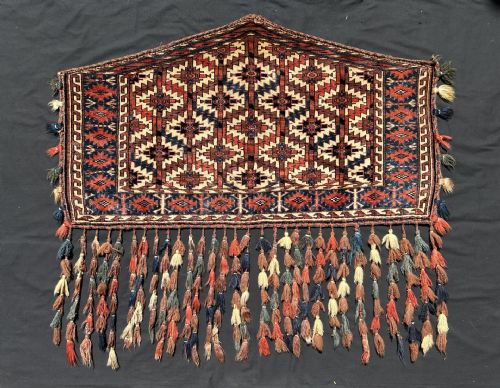
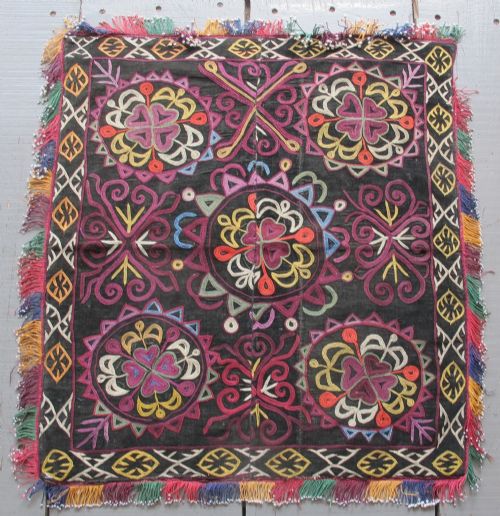
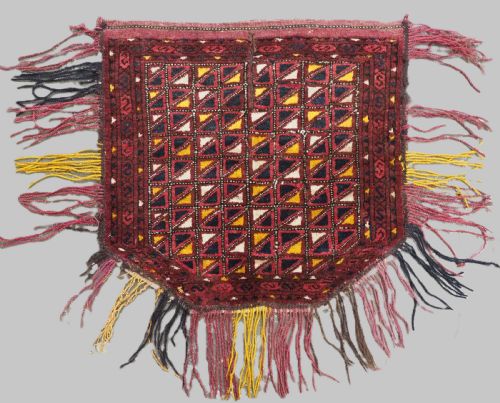
A tribal fringe wall hanging encompasses antique dowry embroideries, tent trappings, bags and saddle covers originating from nomadic groups across Central Asia and Persia. These textiles include pieces produced by the Lakai, Tekke, Yomut, Ersari and Saryk tribes during the nineteenth and early twentieth centuries. When searching this phrase, a buyer meets decorative panels, torbas and asmalyks adapted from their original nomadic functions to serve as wall art.
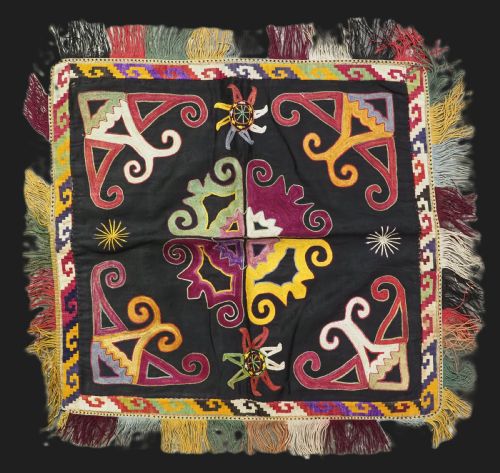
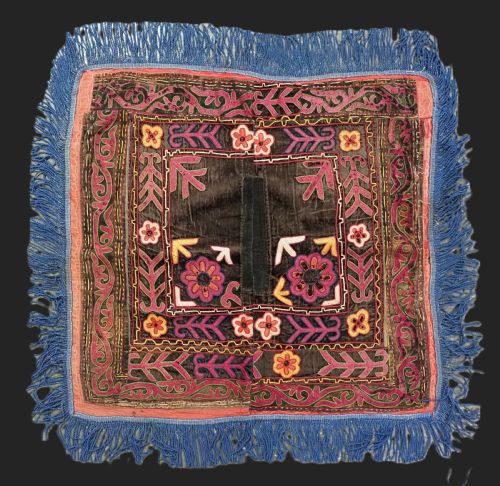
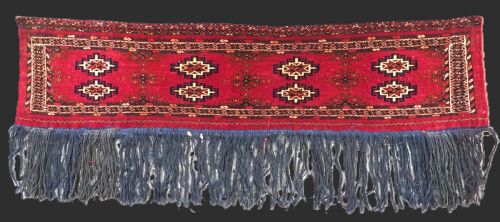
The selection here draws heavily on Central Asian nomadic traditions, featuring formats such as the Uzbek ilgich, the Turkmen torba and embroidered felt panels. Many examples retain their original tassels, fringe or plain weave backs, preserving the physical integrity of the original tribal artefact. These wall hangings provide distinct textural variety through flat weaves, pile carpets and silk embroidery on wool or cotton foundations.
How they were made
These textiles rely on natural materials harvested and spun by hand, predominantly wool, cotton and silk. Artisans applied natural dyes to achieve deep colour palettes across backgrounds of ivory, madder red and indigo. Surface decoration often incorporates intricate embroidery, felt applique and structured flat weave techniques.
Many pieces feature structural additions including glass beads, cowrie shells and velvet borders to enhance the visual weight of the textile. Fringe and tassels are integrated directly into the construction or attached as finishing elements, utilising the surplus warp threads or separate braided cords.
The inventory spans the nineteenth and early twentieth centuries, featuring wool, cotton, silk, felt, glass beads and cowrie shells.
What varies in quality
Quality rests upon the precision of the drawing, the crispness of the tribal design motifs and the saturation of the natural dyes. Superior examples display balanced proportions, meticulous needlework and harmonious colour transitions across the field.
The survival of original structural elements such as tassels, fringe, and complete borders dictates the integrity of the piece. Finer textiles exhibit tighter knotting or denser embroidery stitches, reflecting the time and skill invested by the maker.
The Tribal Fringe Wall Hanging Glossary
- Torba
- A small Turkmen storage bag traditionally hung inside a yurt. These faces and complete bags display characteristic tribal guls and border patterns.
- Asmalyk
- A triangular or pentagonal trapping used during wedding processions on the flanks of a camel. They exhibit bold designs intended to ward off evil.
- Ilgich
- An Uzbek dowry embroidery created by Lakai women. These silk-stitched panels often feature dynamic, curvilinear motifs on a dark ground.
- Gul
- A medallion or repeating primary motif found in Turkmen carpet and trapping design. Each tribal group utilises distinct variations to denote lineage.
- Kapunuk
- A decorative doorway hanging or portiere placed at the entrance of a nomadic tent. They frame the opening with structured horizontal and vertical bands.
Tribal Fringe Wall Hanging: Frequently Asked Questions
How do I hang a textile safely?
Mount the textile using a fabric sleeve stitched to the reverse, through which a flat wooden batten or padded rod is slid. This distributes the weight evenly across the entire upper edge without puncturing the fabric.
Keep the hanging away from direct sunlight and heat sources to protect the natural dyes and organic fibres from fading or drying out over time.
How do I identify a Lakai embroidery?
Lakai embroideries from Uzbekistan are distinguished by energetic, abstracted silk stitchery on wool or cotton foundations. They frequently employ vibrant pinks, oranges and greens against a darker background.
These pieces were made as dowry items and bed decorations, showing asymmetric, organic shapes rather than the rigid geometric symmetry of Turkmen weaving.
Are these pieces cleaned or restored?
Many antique nomadic textiles arrive with minor signs of tribal use, such as small repairs or localized wear accumulated during their working life. Professional conservation focuses on gentle cleaning and securing loose threads rather than rebuilding lost areas.
Examining the reverse reveals the original weave structure, backing materials and the historical integrity of the stitching.