

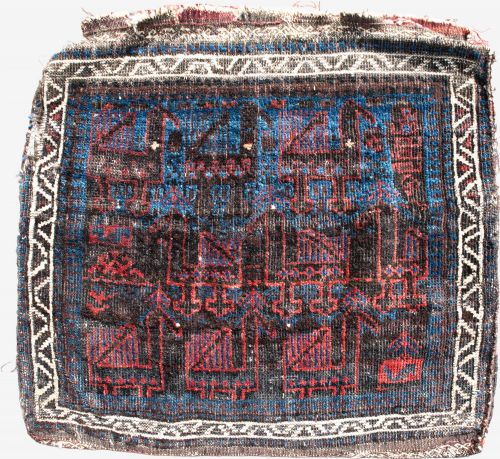
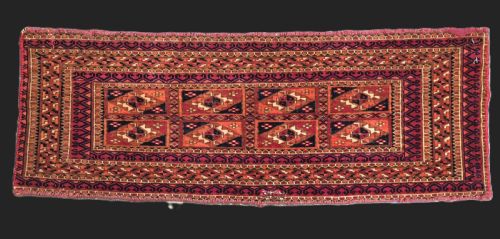
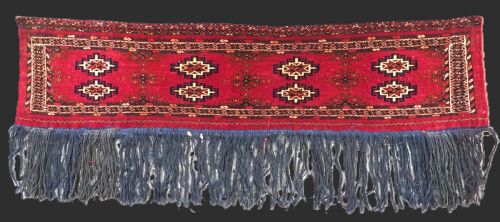
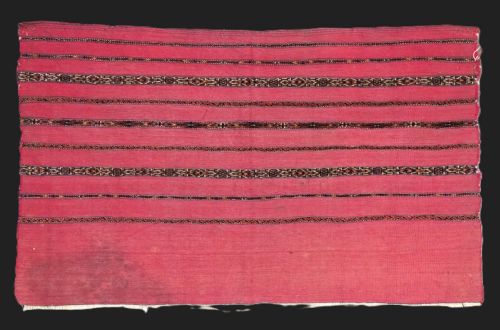
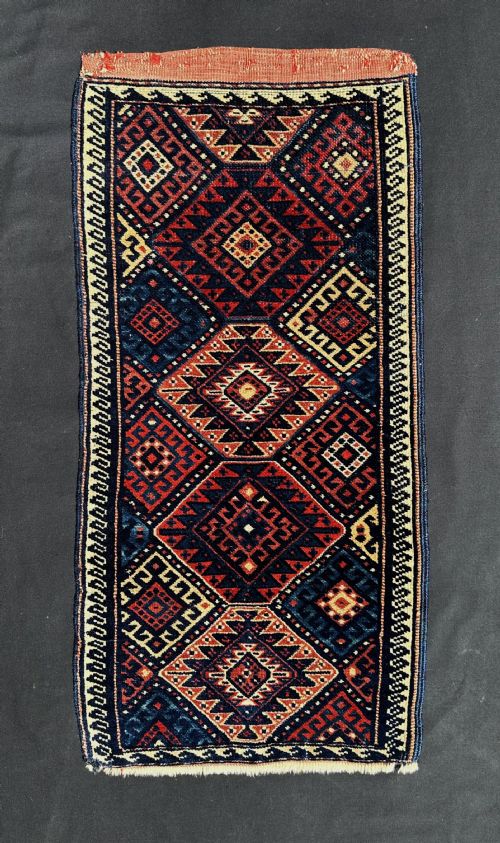


Tribal Bag Face Textile
A tribal bag face textile represents the nomadic weaving traditions of Central Asia and Persia, prized for rich tribal motifs and structure.
Tribal Bag Face Textile
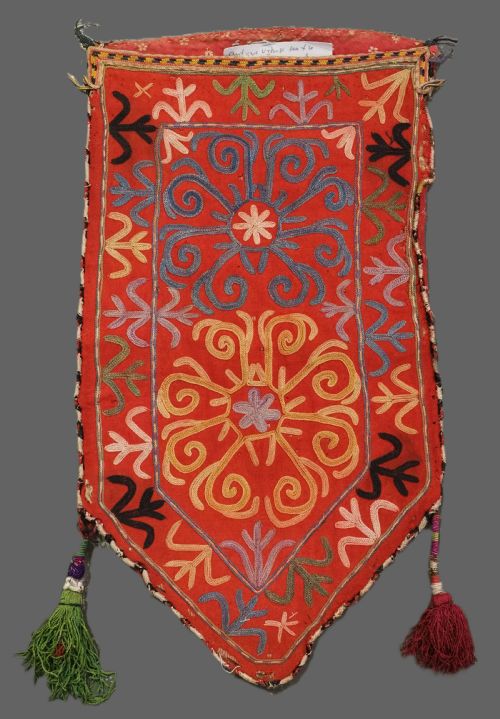
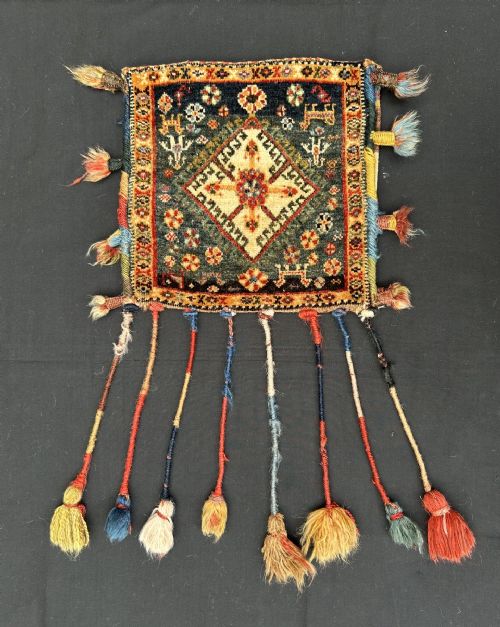
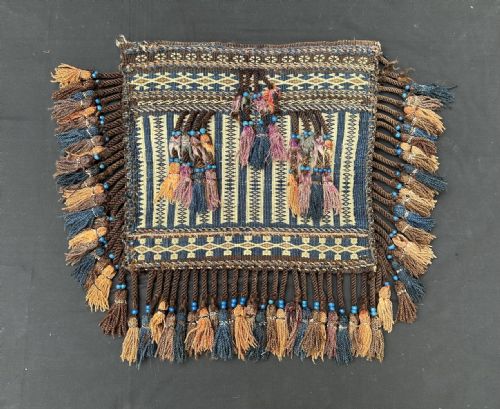
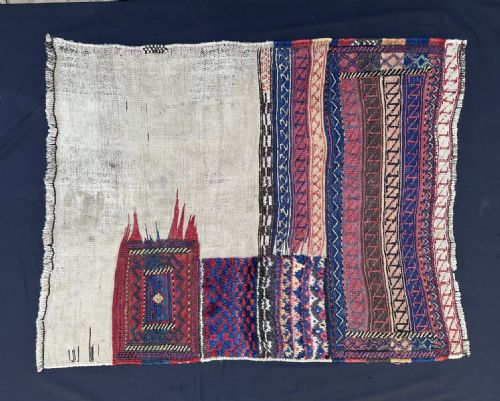
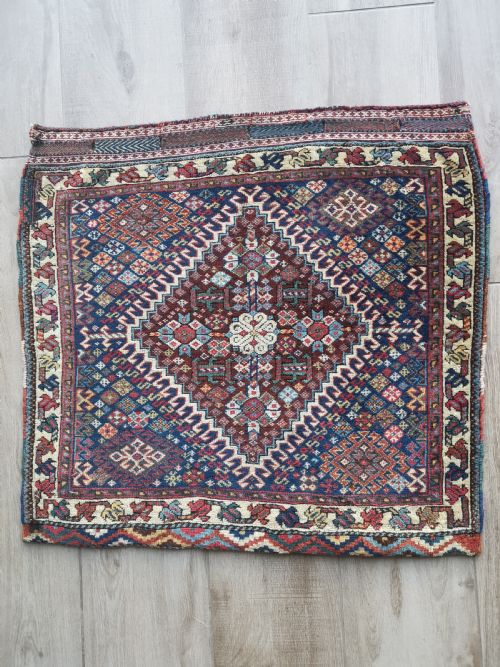
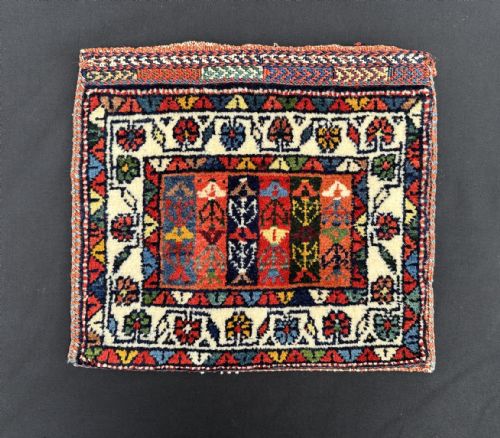
A tribal bag face textile originates from nomadic and village traditions across Central Asia and Persia, encompassing formats such as torba, chuval, jollar, and chanteh. These pieces formed the decorative fronts of utility bags used for storage, bedding, or transport within tribal tents.
The selection on this page leans heavily toward Turkmen groups including Tekke, Saryk, Yomut, and Ersari, alongside Persian and Afghan nomadic groups like the Baluch, Qashqai, and Lori-Bakhtiari. Most examples date from the nineteenth century into the early twentieth century, reflecting traditional tribal patterns.
Makers utilised specific structural layouts to suit the intended function of the original bag, whether for holding vanity items, spindle equipment, or larger household stores. Collectors encounter fragments, complete bag faces with intact backs, and double-faced items from regions spanning Turkmenistan, Persia, and Afghanistan.
Materials and Construction
Weavers relied primarily on hand-spun wool for the foundational pile and structural warps and wefts, occasionally incorporating cotton and silk highlights to emphasise specific motifs. Natural dyes provided the characteristic deep palette seen across these nomadic weavings.
Certain pieces feature supplementary embellishments such as glass beads or fine embroidery techniques applied over the base weave. The density of the knotting or the precision of the flatweave bandings dictate the tactile weight and durability of each textile.
Listings feature wool, natural dyes, cotton, silk, and glass beads across nineteenth-century Turkmen, Persian, and Afghan nomadic traditions.
Evaluating Quality and Execution
Quality rests upon the fineness of the weave, the clarity of tribal guls or geometric motifs, and the depth achieved through natural dyeing methods. Finer knot counts and tightly packed foundations separate high-status tent furnishings from standard utilitarian items.
Preservation of the original structural edges, balanced proportions, and the inclusion of secondary materials like silk highlights or glass beads elevate an example. The crispness of design translation across traditional formats distinguishes master weaver output.
The Tribal Bag Face Textile Glossary
- Gul
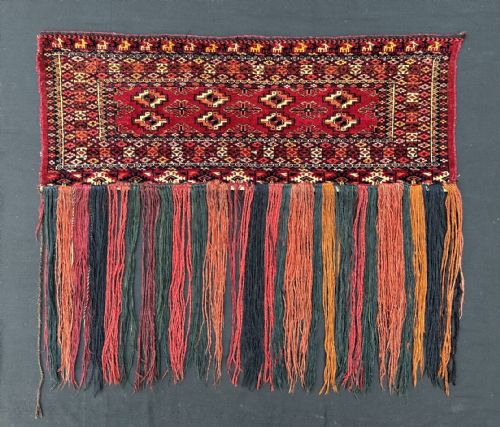
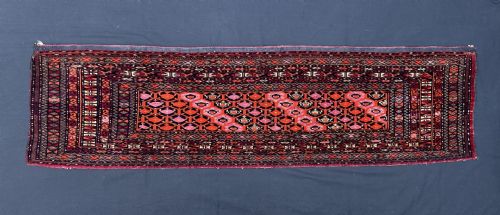
- A primary octagonal or repeating medallion motif used extensively in Turkmen and Central Asian tribal weaving. Each design often signifies a specific tribal lineage or sub-group.
- Torba
- A small horizontal storage bag traditionally hung on the lattice walls of a nomad tent. The face displays the principal decorative weaving.
- Chuval
- A large tent storage bag used for bedding and household goods. Surviving bag faces preserve the primary face design separated from the larger storage pouch.
- Chanteh
- A small personal carrier or vanity bag produced by nomadic tribes. These pieces typically feature concentrated geometric or pictorial designs.
- Mafrash
- A rectangular storage bag or bedding chest face. They frequently utilise banded flatweave or pile techniques.
Tribal Bag Face Textile: Frequently Asked Questions
What is a tribal bag face?
A tribal bag face is the decorative front panel of a nomadic utility bag, preserved after the plain backing fabric wore away or was separated over time.
These panels were woven by tribal groups in Central Asia and Persia to ornament utilitarian storage containers used inside tents.
How were these bags used originally?
Nomadic families utilised these bags to store household possessions, bedding, grain, and personal items within portable dwellings.
They hung from tent lattice frames or served as functional containers during seasonal migrations across Central Asian steppes and Persian provinces.
How do I identify different tribal designs?
Tribal attribution relies on specific structural motifs, such as the guls used by Tekke, Saryk, Yomut, and Ersari Turkmen groups.
Colour palettes, wool quality, and border arrangements further distinguish pieces made by Baluch, Qashqai, or Lori-Bakhtiari weavers.
How should I display a bag face?
Many collectors mount these flat textiles securely onto neutral backing fabrics for wall display as decorative tribal art.
Others place them on flat surfaces or incorporate them into interior schemes where physical wear remains minimal.