
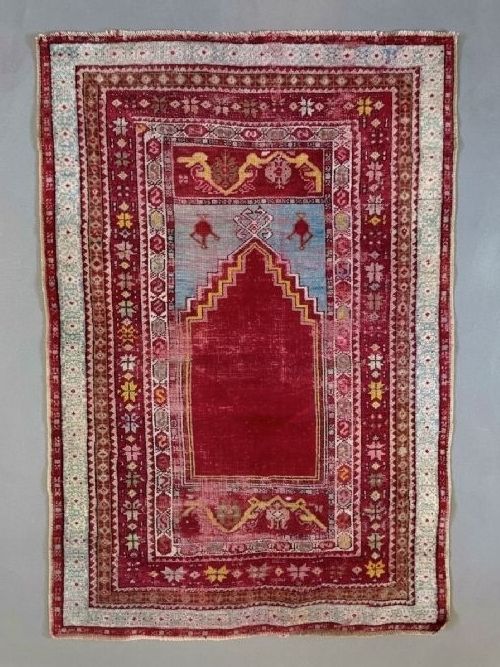
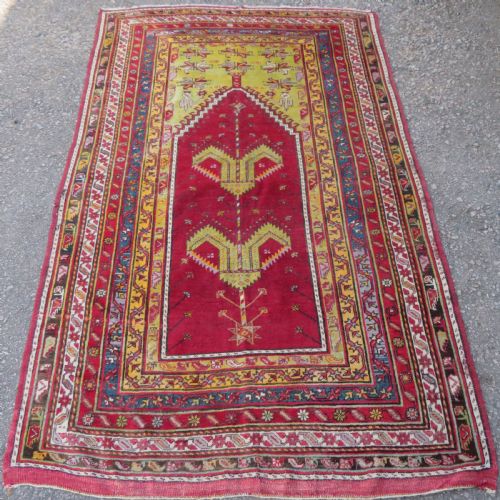
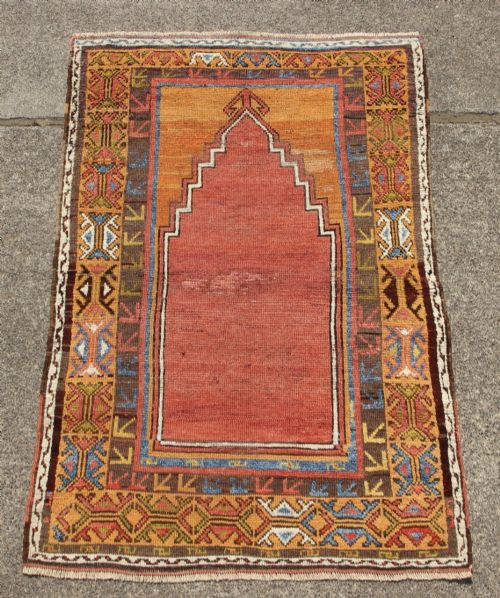


Tribal Anatolian Prayer Carpet
A tribal anatolian prayer carpet brings centuries of nomadic artistry and symbolic design directly into modern interiors.
Tribal Anatolian Prayer Carpet
When searching for a tribal anatolian prayer carpet, collectors examine woven floor coverings originating from various regions of Anatolia, including Konya, Kirsehir, Milas, and Bergama. These pieces typically feature characteristic mihrab arches designed to direct prayer towards Mecca.
The selections available here span from the eighteenth century through the early twentieth century, encompassing village and regional workshops. Buyers frequently encounter formats produced with distinct central field designs and traditional border motifs associated with specific weaving centres.
Materials and construction methods
Weavers constructed these textiles primarily using wool and hand-spun wool foundations alongside cotton elements, dyed utilising natural vegetable colourants. This combination yields the characteristic handle and enduring structural integrity observed across the collection.
The utilisation of traditional hand-knotting and flatweaving techniques accounts for the varied pile depths and flatweave kilim structures present in pieces from regions such as Sivrihisar and Obruk.
Listings feature pieces spanning the eighteenth, nineteenth, and early twentieth centuries, incorporating both pile rugs and flatwoven kilims.
Assessing quality in regional weaving
Quality differences stem from the fineness of the knotting and the complexity of the regional design, distinguishing standard village productions from finer workshops. Colour saturation and the palette achieved through vegetable dyes also separate standard examples from superior ones.
The crispness of the mihrab drawing and the preservation of original borders influence the standing of an individual rug. Furthermore, the handling of wool and the consistency of the weave reflect the skill of the original maker.
Kirsehir·Konya·Milas·Bergama·Ladik
The Tribal Anatolian Prayer Carpet Glossary
- Mihrab
- The arched niche in a prayer rug design that represents the direction of prayer. This architectural motif often dominates the upper portion of the central field.
- Kilim
- A flatwoven textile produced without a pile by tightly interweaving warp and weft strands. Examples from regions like Obruk demonstrate this technique.
- Hand-Spun Wool
- Yarn prepared manually using traditional spinning tools rather than industrial machinery. This material retains natural lanolin and produces irregular textures.
- Vegetable Dye
- Colouring matter derived from plants, roots, and insects used to dye wool before weaving. These dyes produce subtle tonal variations across the rug surface.
- Warp
- The vertical foundation threads stretched tightly on the loom before knotting begins. Weft threads are subsequently passed horizontally through these warp threads.
Tribal Anatolian Prayer Carpet: Frequently Asked Questions
How do I identify a prayer rug?
Prayer rugs are distinguished by the presence of a mihrab arch at one end of the field, which creates a directional focal point. This layout was traditionally used to orient the textile during daily devotions.
Beyond the central arch, the field often remains free of large medallion patterns to maintain an uncluttered space for the user.
Where were these carpets made?
These textiles originate from various towns, villages, and nomadic encampments across the Anatolian plateau. Specific weaving groups are associated with districts such as Konya, Kirsehir, Milas, and Bergama.
Each region developed distinct geometric or floral vocabulary that allows knowledgeable observers to trace the geographical origin of a piece.
How should I care for an antique rug?
Protect antique wool textiles by placing them in low-traffic areas away from direct, harsh sunlight to prevent dye fading. Regular, gentle vacuuming without a rotating brush roll helps remove embedded dust safely.
Professional cleaning tailored to antique vegetable-dyed wool should be utilised periodically rather than standard domestic washing methods.
What period do these rugs date from?
The pieces available range primarily from the eighteenth century through the early decades of the twentieth century. Many examples date from the nineteenth century, reflecting traditional village production methods.
Dates are attributed based on structural analysis, dye analysis, and stylistic comparisons with documented examples in museum and private collections.