
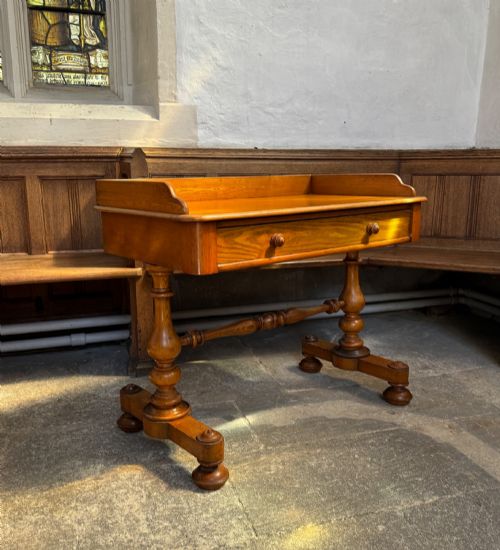
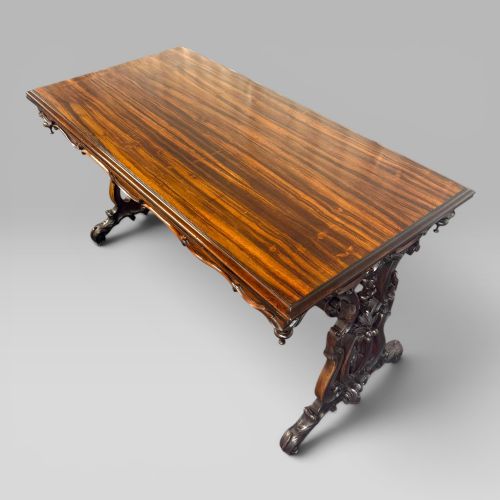


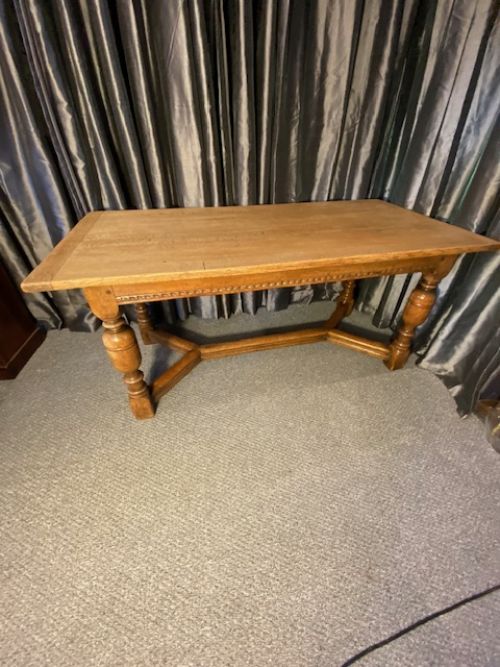


Trestle Leg Writing Desk
These trestle leg writing desk pieces offer classic utility and timeless proportion, bringing refined surface space and period character directly into your study.
Trestle Leg Writing Desk
A trestle leg writing desk brings functional workspace and refined form into a room, drawing on centuries of cabinet-making traditions. When you search for a trestle leg writing desk, you encounter various formats designed for domestic study and library use.
The pieces appearing on this page span several distinct eras, stretching from the Georgian and Regency periods through the Victorian age and into the early twentieth century. These furnishings take many structural forms, including library tables, writing tables, side tables, and end support designs.
Makers utilised robust timbers such as mahogany, walnut, and rosewood, frequently incorporating functional elements like leather writing surfaces and drawers. The surviving examples reflect the changing domestic requirements for writing and administrative tasks across the nineteenth century.
How they were made
Cabinet-makers constructed these desks using dense hardwoods like mahogany and walnut, alongside decorative veneers such as zebrawood and rosewood. These timbers provided both the structural integrity required for daily writing and the handsome grain patterns valued by period patrons.
Workshops integrated specialised details such as inset leather writing surfaces, brass mounts, and fitted inkwells to enhance utility. Trestle and end support configurations offered sturdy load-bearing capacity while maintaining an open, balanced silhouette beneath the top.
Listings feature woods including mahogany, walnut, rosewood, zebrawood, and pitch pine across the nineteenth and early twentieth centuries.
What varies in quality
The distinction between standard and superior examples often lies in the selection of timber and the precision of the joinery. Finer pieces demonstrate careful attention to grain matching on the top surface and precise execution of structural supports.
Original hardware, intact leather inserts, and maker stamps or signatures elevate the standing of a desk. The integration of secondary woods and the condition of the structural joints further indicate the level of craftsmanship invested in the piece.
Gillingtons Dublin·Gillows
The Trestle Leg Writing Desk Glossary
- Trestle table
- A table supported by end frames or trestles rather than four conventional corner legs. This construction method provides robust stability.
- Library table
- A large freestanding table designed for the centre of a room, often fitted with drawers for stationery and books. These pieces served scholarly pursuits in country houses.
- Centre table
- A table finished on all sides intended to stand away from the walls in the middle of a room. They frequently feature decorative timber veneers.
- Veneer
- A thin layer of figured wood applied to a secondary timber base to create a decorative surface. Master cabinet-makers used this technique to display dramatic grain patterns.
- Leather top
- An inset writing surface traditionally made from dyed and tooled leather. This material provided a smooth, durable texture for handwriting.
Trestle Leg Writing Desk: Frequently Asked Questions
Where should a trestle leg writing desk go?
These desks suit studies, home offices, or living rooms where surface space and period character are desired. Placing them away from direct sunlight protects the timber and leather surfaces.
Because many examples are finished on all sides, they can float in the middle of a room rather than sitting strictly against a wall.
How do I care for the leather top?
Leather writing surfaces require gentle dusting and occasional conditioning to prevent drying and cracking over time. Avoid harsh chemical cleaners and excessive moisture during maintenance.
Using a blotter when writing helps preserve the vintage surface from ink marks and deep impressions.
What is the difference between a writing table and a side table?
Writing tables are specifically designed for seated work, frequently featuring integrated drawers for stationery, kneehole clearance, and specialised top inserts. Side tables offer a flat surface primarily intended for display or general placement.
Many period tables cross these definitions depending on their proportions and the presence of internal compartments.
How can I tell a Victorian desk from an earlier period?
Victorian pieces often display heavier proportions, darker walnut or mahogany timbers, and industrial manufacturing influences compared to earlier eras. Georgian and Regency pieces generally exhibit lighter framing and more restrained neoclassical lines.
Examining the secondary woods inside the drawers helps clarify the manufacturing era.