

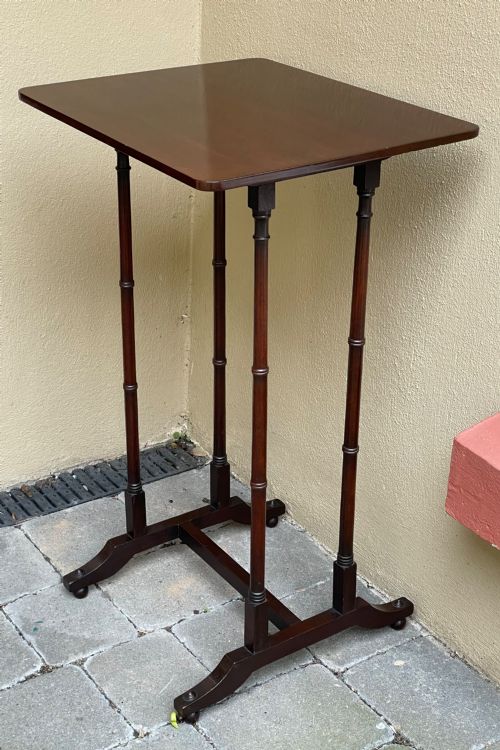


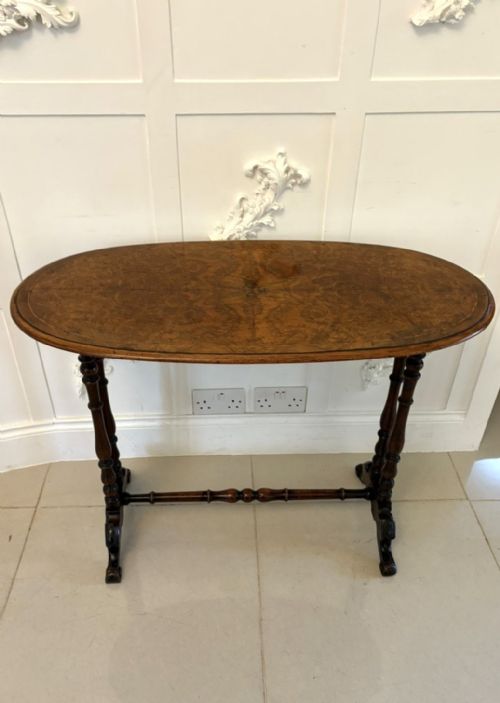


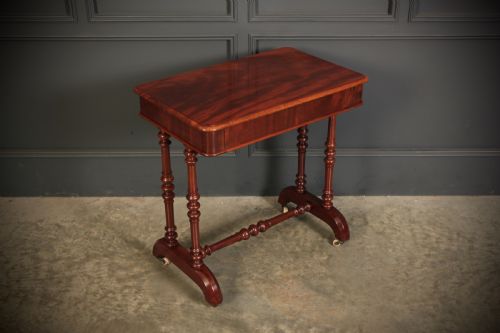

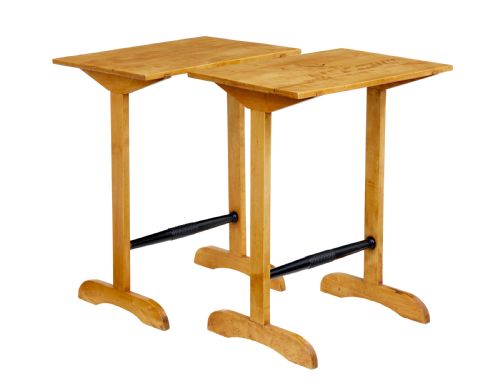
Trestle Lamp Table
A trestle lamp table provides a steady, compact surface for illumination, combining functional design with period charm.
Trestle Lamp Table
A trestle lamp table serves primarily as a convenient surface for lighting beside seating areas or in reception rooms. Buyers searching for a trestle lamp table encounter pieces described variously as side tables, occasional tables, end tables, and wine tables.
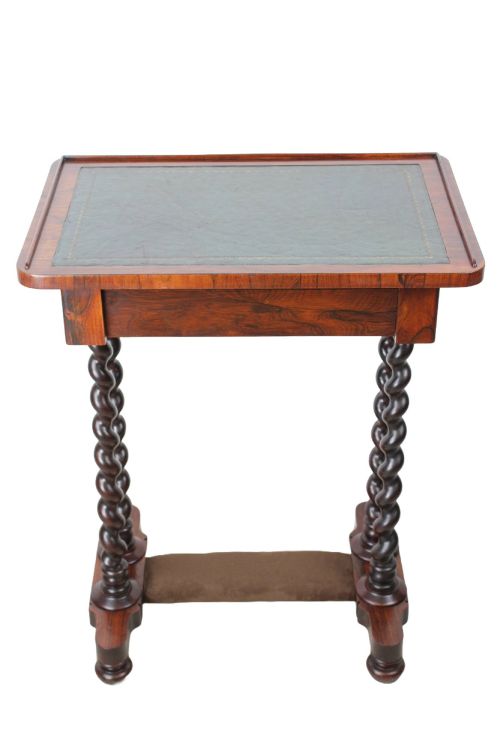
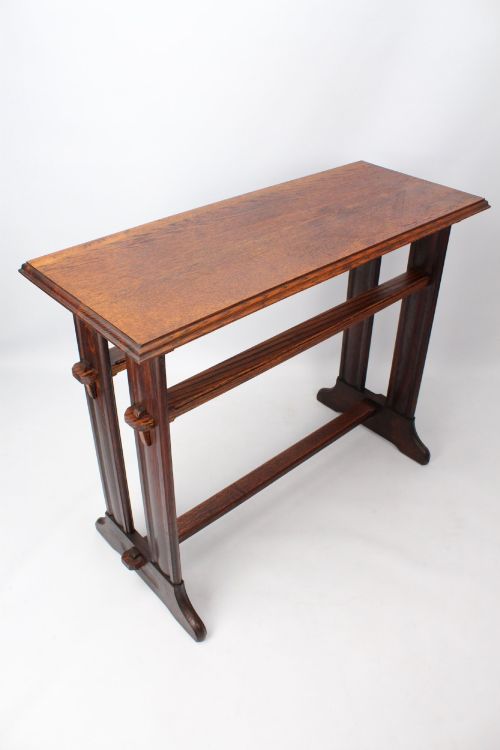
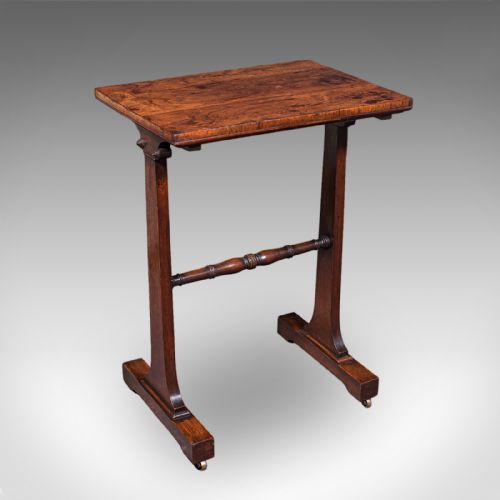
The selection ranges from nineteenth-century Regency and Victorian examples to Edwardian and early twentieth-century designs. Materials span mahogany, walnut, rosewood, burr walnut, oak, birch, and brass-inlaid palisander, reflecting diverse stylistic influences.
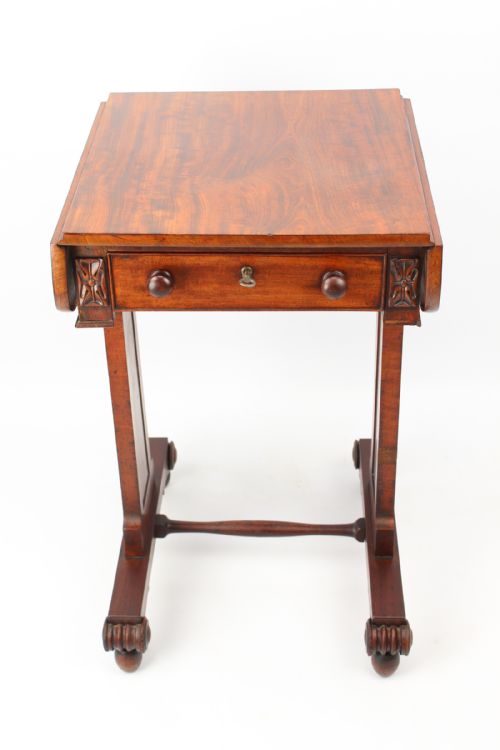
Forms include small rectangular tables, drop-flap variants, nests of tables, and oval centre tables. Makers such as Heal & Son and Whytock and Reid appear among the pieces, alongside items attributed in manner to George Smith.
Materials and construction
Timbers such as mahogany, walnut, rosewood, and burr walnut form the primary structures of these tables. Cabinetmakers utilised dense hardwoods to ensure stability and durability for everyday domestic use.
Decorative techniques include brass inlay and fine wood veneers, particularly on Regency and Edwardian pieces. Joints and structural supports reflect the period joinery standards of nineteenth and early twentieth-century workshops.
Listings feature woods such as mahogany, brass, walnut, rosewood, burr walnut, leather, oak, and birch across the nineteenth and twentieth centuries.
Distinctions in quality
Quality rests upon the selection of timber grain, such as figured mahogany or burr walnut, and the precision of cabinetmaking execution. Superior examples display refined proportions and thoughtful integration of decorative elements like brass inlay.
The reputation of recorded makers, including Heal & Son and Whytock and Reid, distinguishes workshop pieces from unsigned vernacular furniture. Finer construction details and well-preserved original surfaces elevate individual examples within the range.
Heal And Son·Whytock And Reid·George Smith
The Trestle Lamp Table Glossary
- Trestle
- A supporting framework consisting of a horizontal beam fixed to two pairs of splayed legs. This construction offers robust support while maintaining a compact footprint.
- Drop-flap
- A table design featuring hinged leaves that fold down to save space or lift up to extend the surface area. It provides flexible utility in smaller rooms.
- Palisander
- A dense tropical timber often used in high-end nineteenth-century cabinetmaking for its rich colour and prominent grain patterns. It frequently appears on Regency occasional furniture.
- Burr walnut
- Wood taken from the abnormal growth of a walnut tree, yielding highly decorative swirling grain patterns. Cabinetmakers utilised it for tabletops to create striking visual texture.
- Sutherland table
- A narrow drop-leaf table where the leaves fold down almost vertically, supported by swinging gate legs. This form originated in the nineteenth century for efficient storage.
Trestle Lamp Table: Frequently Asked Questions
What is a trestle lamp table?
A trestle lamp table is a small, stable support surface traditionally positioned beside seating to hold a reading light or decorative object.
These pieces draw on nineteenth and early twentieth-century styles, offering functional surface area without occupying excessive floor space.
How do I date a lamp table?
Dating relies on identifying timber choices, construction methods, and stylistic markers such as Regency brass inlay or Edwardian Arts and Crafts simplicity.
Comparing the recorded periods of similar pieces helps narrow down the decade of manufacture.
Where should I place a lamp table?
These compact tables fit readily beside armchairs, sofas, or in hallways where surface space is required for illumination or small items.
Their varied forms allow them to function as side, end, or occasional tables depending on room layout.
What woods were commonly used?
Nineteenth and twentieth-century makers utilised dense hardwoods including mahogany, walnut, rosewood, oak, and birch for durability and appearance.
More decorative surfaces often featured burr walnut veneers or contrasting brass inlays.