



Trestle Drop Leaf Table
A trestle drop leaf table is a practical space-saving surface, and here you will find various forms shaped by Georgian, Regency, and Victorian makers.
Trestle Drop Leaf Table
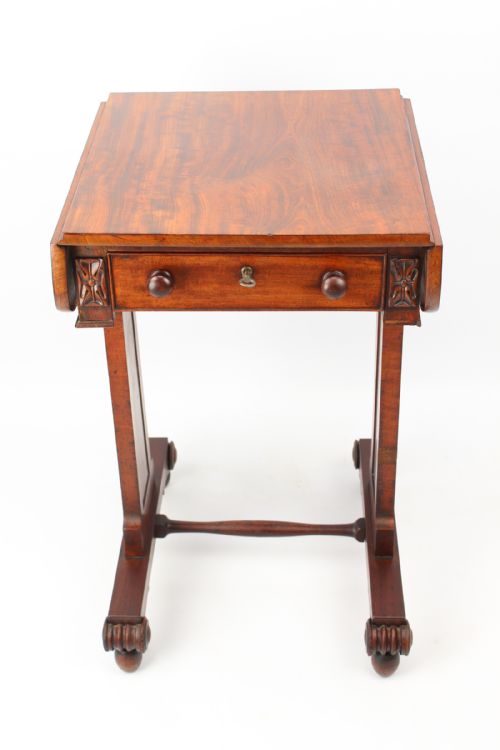
A trestle drop leaf table encompasses versatile forms like sofa tables, lamp tables, and gateleg dining tables across this selection. Buyers search for these pieces to gain flexible surface area that folds away neatly when not in use.
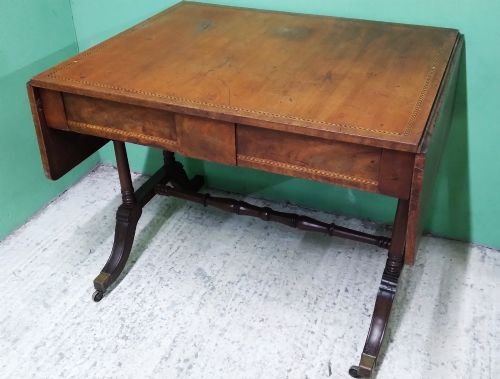
The most common examples encountered here are mahogany and rosewood sofa tables from the Regency and Georgian periods. These typically feature twin pedestals or trestle supports connected by a stretcher, flanked by drop leaves on either side.
Other variations span from rustic pine farmhouse tables to compact burr walnut Sutherland tables and oak gateleg coffee tables. Each type serves a distinct domestic function while retaining the folding mechanism characteristic of the form.
Materials and construction methods
Cabinetmakers utilised dense timbers such as mahogany, rosewood, and burr walnut for fine parlour and drawing-room furniture, often embellishing surfaces with brass inlay and marquetry. Oak and pine served for sturdier dining and kitchen pieces designed for everyday domestic labour.
Hinges and folding brackets support the drop leaves, while turning, carving, and veneering define the structural and decorative elements across different stylistic periods from the eighteenth century onwards.
Forms range widely across the selection, featuring dedicated sofa tables, gateleg dining tables, compact Sutherland tables, and occasional lamp tables.
Distinctions in craftsmanship
Superior examples display crisp timber grain selection, precise brass inlay, and stable joinery that ensures the drop leaves hang level when raised. Finer pieces maintain original structural components and balanced proportions between the central base and the movable flaps.
Simpler vernacular items rely on honest utility, where the character of the pine or oak takes precedence over elaborate decorative embellishment. Quality rests on the integrity of the folding mechanism and the skilful handling of the chosen wood.
The Trestle Drop Leaf Table Glossary
- Drop leaf
- A table with a fixed central section and hinged flaps that fold down to save space. These flaps are supported by swinging legs or brackets when raised.
- Sofa table
- A type of small drop leaf table traditionally placed in front of a sofa during the Regency and Georgian periods. They typically feature two small drawers and trestle ends.
- Sutherland table
- A narrow table with exceptionally slender drop leaves that fold down almost vertically. This design allows the piece to occupy minimal floor space when closed.
- Gateleg table
- A table featuring legs hinged to swing outward like a gate to support the drop leaves. This construction provides robust support for dining-sized surfaces.
- Marquetry
- Decorative veneer work formed by fitting together small pieces of various woods to create pictorial or geometric patterns. It appears on the tops of finer occasional tables.
Trestle Drop Leaf Table: Frequently Asked Questions
What is a sofa table?
A sofa table is a specific form of drop leaf table designed during the Georgian and Regency periods to sit behind or alongside a sofa. They typically feature two small drawers and twin trestle supports connected by a stretcher.
Over time, these versatile pieces transitioned into general occasional tables used for lamps or display within various rooms of the house.
How do gateleg tables work?
Gateleg tables utilise hinged legs that swing outward from the central frame to support the folding leaves. This mechanism provides sturdy structural weight-bearing points beneath the extended flaps.
When not in use, the legs swing back toward the centre, allowing the leaves to drop down for compact storage against a wall.
Where were these tables used?
Finer rosewood and mahogany versions were traditionally placed in drawing rooms, parlours, and libraries as flexible serving or writing surfaces. Sturdier oak and pine variants served working domestic roles in farmhouse kitchens and dining spaces.
Smaller coffee and lamp table adaptations found placement in twentieth-century interiors where floor space was at a premium.
How can I tell the period?
Dating relies on observing timber choices, hardware, and stylistic details such as brass inlay, Regency pedestal forms, or Victorian walnut turning. Georgian and Regency examples often showcase figured mahogany or rosewood with delicate craftsmanship.
Later Victorian and Edwardian iterations frequently employ burr walnut or oak, reflecting the shifting domestic tastes and manufacturing methods of those decades.
Are drop leaf tables sturdy?
Stability depends entirely on the design of the support mechanism beneath the leaves, whether swinging gatelegs, wooden brackets, or pivoting wooden arms. Properly adjusted joints and solid timber frames ensure the leaves remain level under normal daily use.
Heavier dining versions in oak or mahogany offer substantial weight, while smaller lamp tables are best suited for lighter items.