
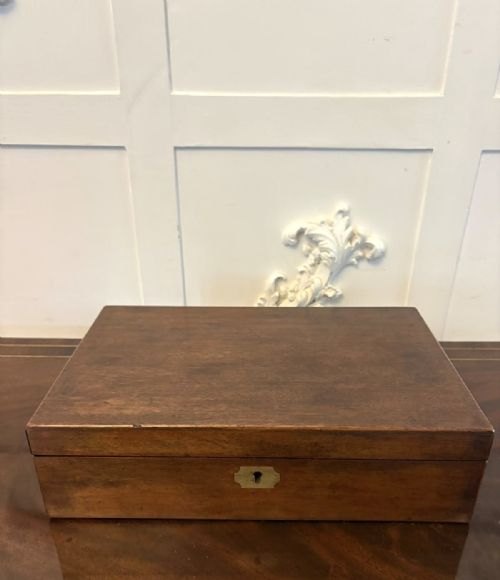


Travelling Writing Slope
These travelling writing slope pieces are portable mahogany, walnut, and rosewood desks built for correspondence on the move.
Travelling Writing Slope
A travelling writing slope offers a portable desk surface that folds shut to secure paper, ink, and pens during transit. The pieces on this page span the 18th century through the Edwardian period, with Victorian examples appearing most frequently.
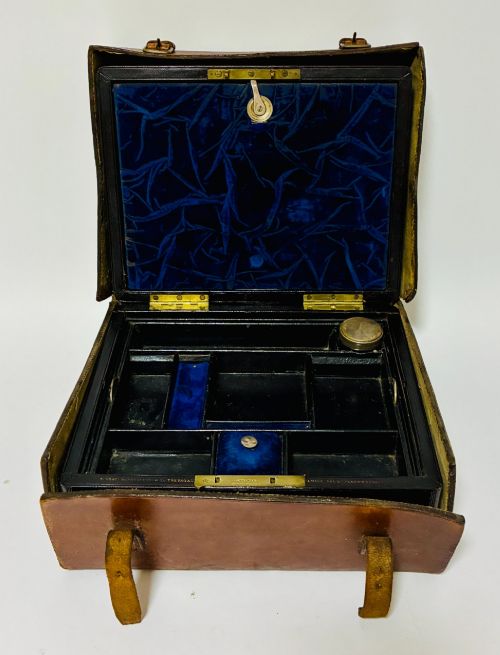
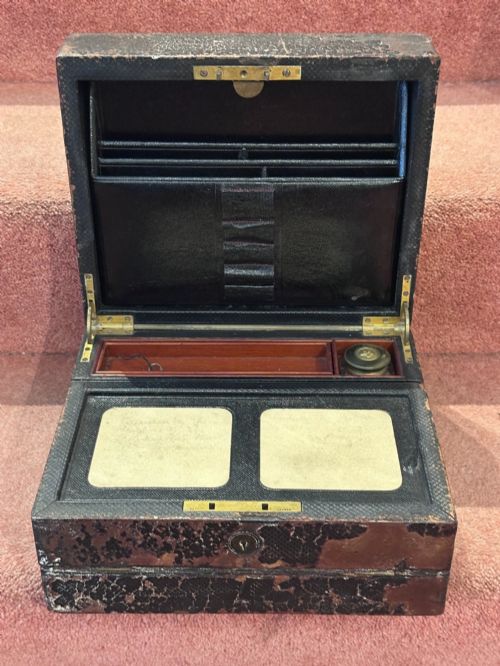
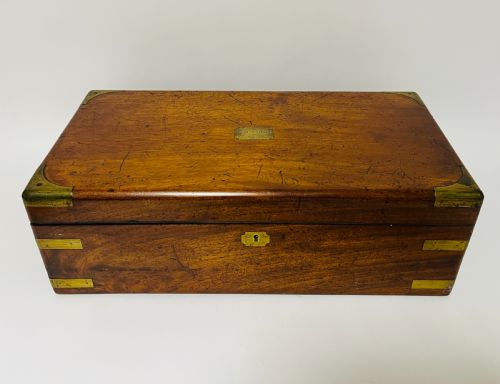
Makers designed these portable boxes in woods such as mahogany, walnut, and rosewood, often mounting the corners in brass for durability. Interiors typically feature fitted compartments, secret drawers, and leather writing surfaces.
Formats range from simple campaign boxes to elaborate dressing cases and officers' correspondence chests. Many pieces combine writing surfaces with inkwells and storage for stationery.
Materials and Construction
Cabinet makers utilised dense hardwoods like mahogany, walnut, rosewood, and camphor wood to withstand the rigours of travel. Brass banding and corner brackets reinforced the structure against heavy handling.
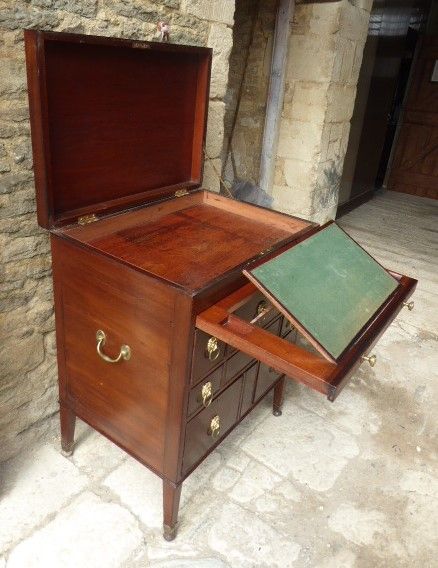
Interiors combined turned wooden components with tooled leather writing surfaces and velvet linings. Specialised workshops integrated secret compartments and folding mechanisms into compact wooden carcasses.
Listings feature woods including mahogany, walnut, rosewood, oak, camphor wood, and coromandel.
Distinguishing Quality
Quality rests in the precision of the joinery and the selection of timber veneers, such as burr walnut or figured mahogany. Finer examples retain original brass mounts, fitted glass inkwells, and functioning locks with matching keys.
The complexity of the internal mechanisms dictates the grade of the piece, from basic folding desks to elaborate cases incorporating sewing compartments and dressing mirrors.
F. West·Mappin & Webb·P&F Shafer
The Travelling Writing Slope Glossary
- Campaign
- Furniture constructed in sections with brass corners and recessed handles for military transport. These items were built to dismantle or fold easily for officers on active service.
- Secret compartment
- A concealed drawer or hidden space built behind removable panels within the box. Makers designed these to secure valuables and sensitive correspondence.
- Tunbridgeware
- Woodwork decorated with mosaic patterns created from thousands of tiny tinted wood cubes. This technique adorned small Victorian desk accessories and boxes.
- Dressing case
- A multi-functional box containing compartments for grooming bottles alongside writing equipment. These fitted cases catered to personal hygiene and correspondence during travel.
Travelling Writing Slope: Frequently Asked Questions
What is a travelling writing slope?
A travelling writing slope is a portable wooden box that opens to form an angled desk surface. It provides fitted storage for paper, pens, and ink while on the move.
Most examples date from the Georgian, Victorian, and Edwardian eras, constructed in durable hardwoods with brass reinforcements.
How were writing slopes used?
Travellers and officers used them as portable desks to write letters and manage correspondence away from home. The folding design kept writing materials contained and protected during journeys.
Inside, compartments held inkwells, stamps, and stationery, while the sloping lid provided a comfortable writing angle.
How do I date a writing slope?
Dating relies on timber choices, brass hardware styles, and internal construction methods. Georgian pieces often feature simpler mahogany frames, whilst Victorian versions frequently include elaborate brass inlay and velvet.
Makers' marks, when present on locks or leather interiors, provide a more precise point of manufacture.
How do I care for wood and leather?
Maintain the wood surfaces with traditional beeswax to nourish the grain and preserve the polish. Keep leather and velvet inserts dry and away from direct sunlight to prevent cracking.
Check brass mounts periodically and avoid using harsh chemical cleaners on antique finishes.