
Travel Mantel Clock
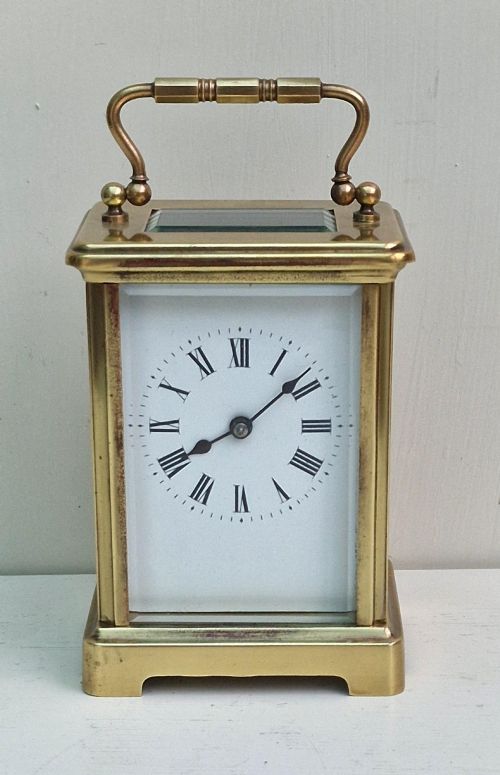
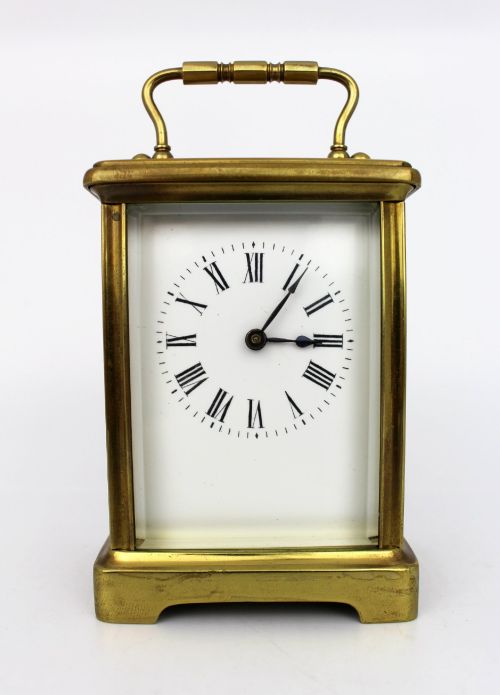
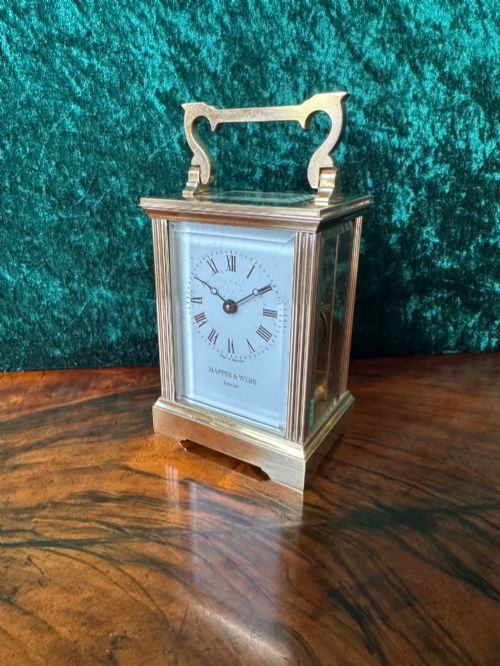
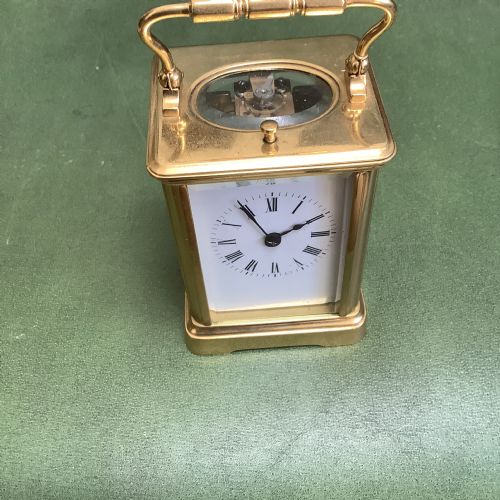
These travel mantel clock pieces are portable timepieces built for journeys, offering brass frames and glass panels that suit a desk or mantel.
Travel Mantel Clock
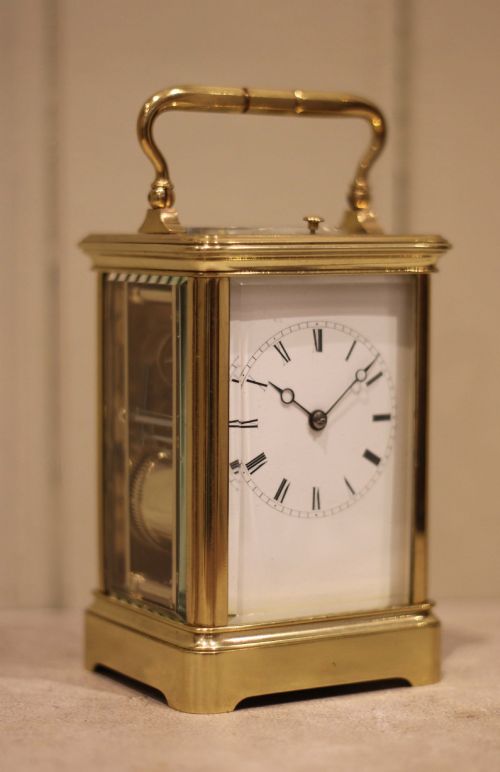
A travel mantel clock is a portable timepiece designed for movement, combining a robust metal case with bevelled glass panels to protect the internal mechanism during transit. These pieces appear primarily from the Victorian and Edwardian eras, spanning the nineteenth and early twentieth centuries.
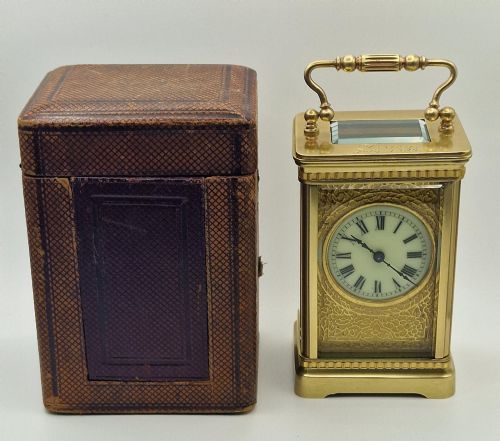
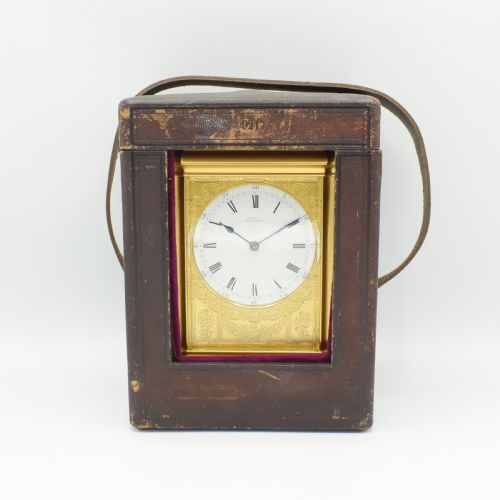
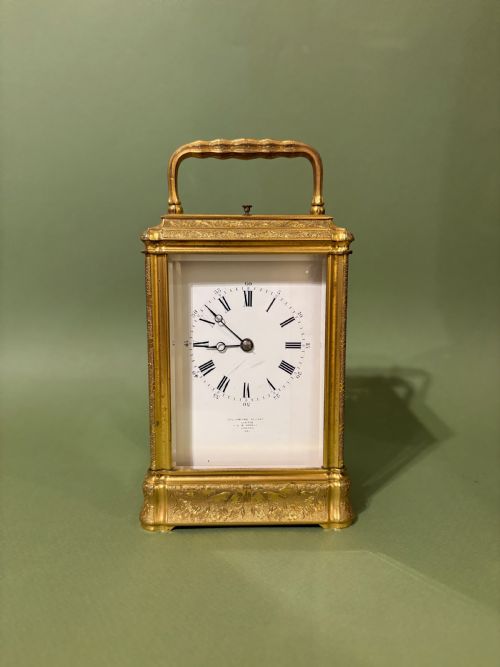
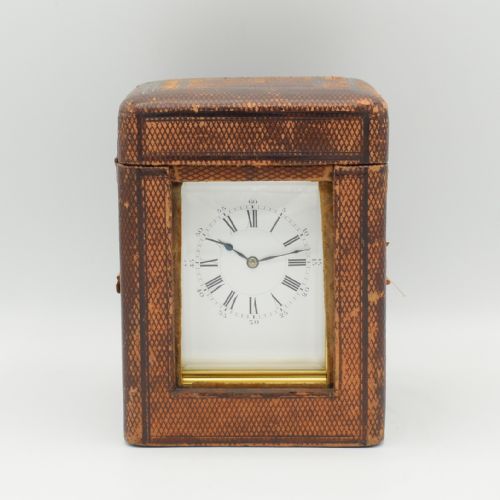
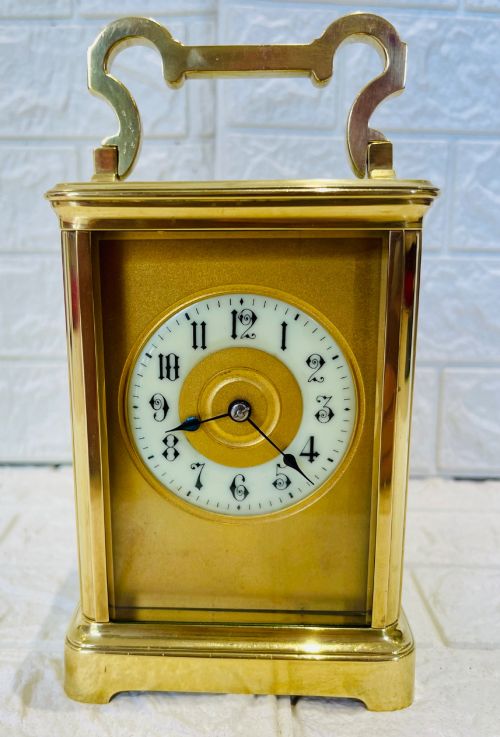
The version most commonly met on this page is the carriage clock, often French in origin and housed in a brass or gilt brass gorge case. Makers frequently fitted these clocks with striking or repeating movements, and some examples survive alongside their original leather travel cases.
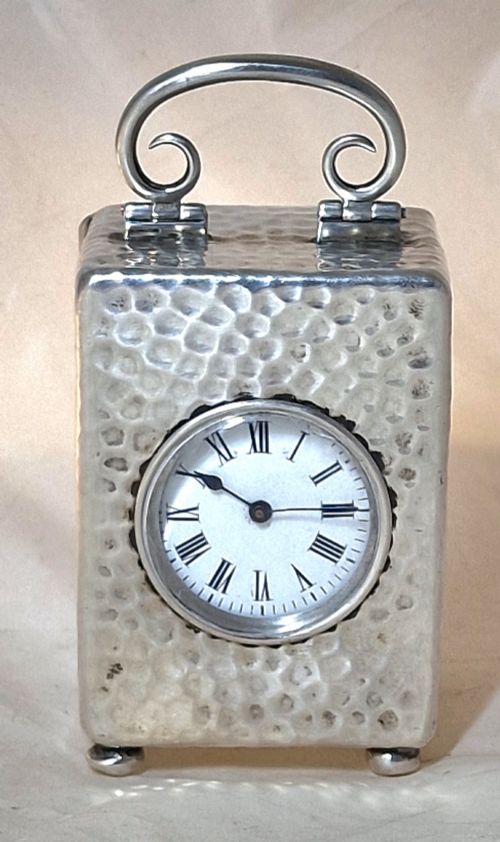
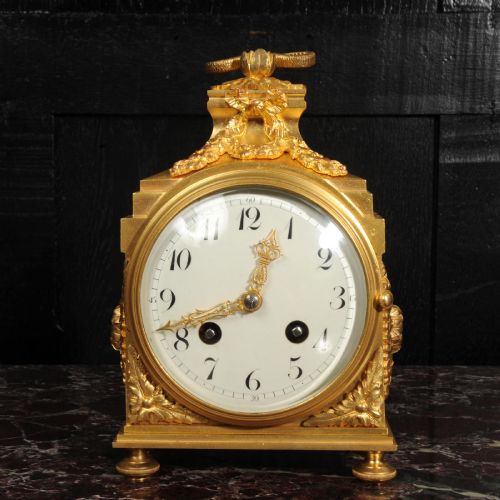
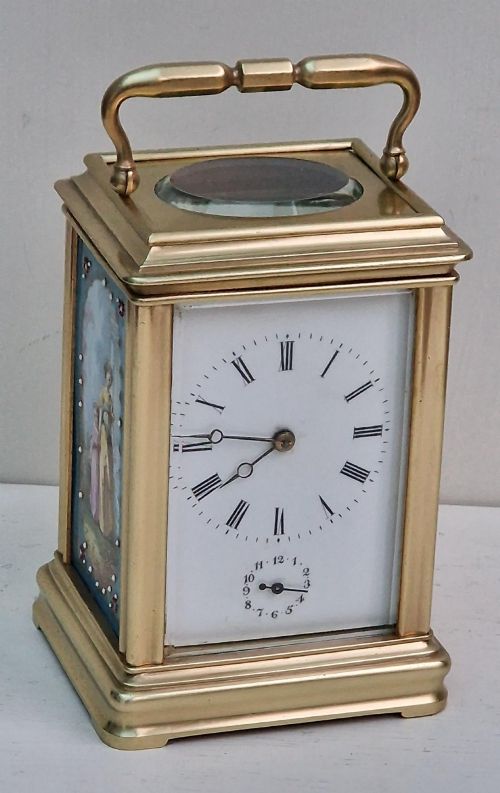
British makers also contributed fusee movements and silver cases, while French workshops produced enamelled and porcelain panels set into polished brass frames. Miniature models appear alongside larger, substantial pieces designed for prominent display.
What varies in quality
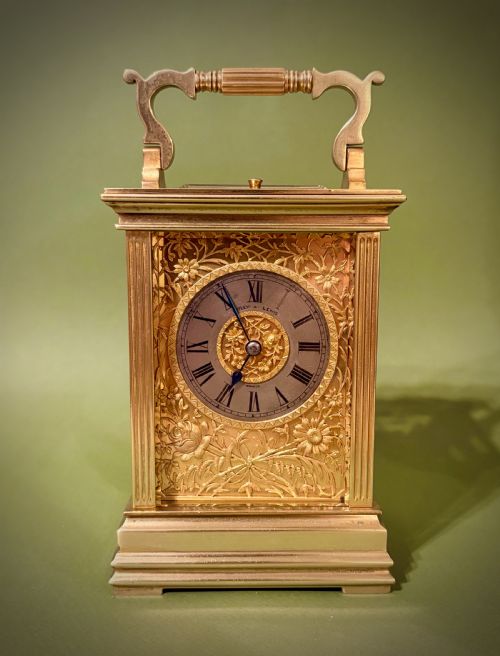
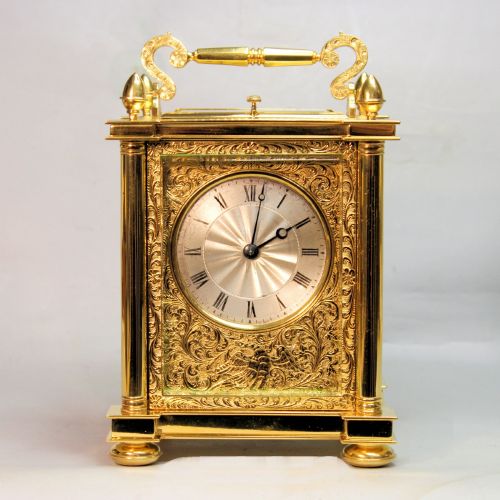
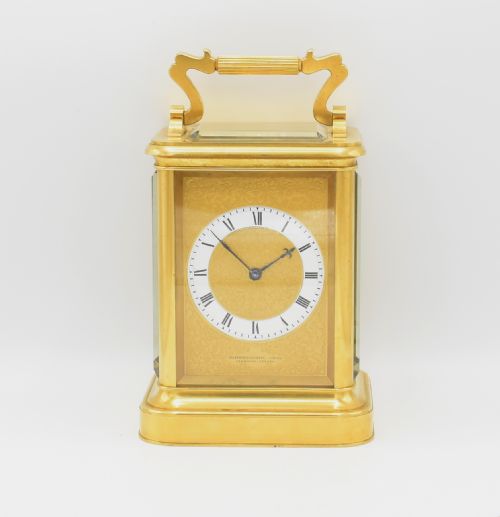
Quality rests heavily on the complexity of the movement, distinguishing simple timepieces from those with striking, repeating or fusee mechanisms. Finer examples display fully engraved gilt brass cases and hand-painted porcelain or enamel panels rather than plain white dials.
The presence of an original leather travel case elevates a piece, preserving the housing and indicating careful retention over generations. Signature marks from known makers such as Henri Jacot or Drocourt denote superior workshop standards.
Listings feature Victorian and Edwardian brass carriage clocks alongside French nineteenth-century examples with enamel panels.
HENRI JACOT·COUSENS AND WHITESIDE·MAPPIN AND WEBB·DROCOURT·T MARTIN AND CO·MARGAINE
The Travel Mantel Clock Glossary
- Carriage clock
- A small, portable spring-driven clock designed for travellers during the nineteenth century. These clocks typically feature a rectangular brass case with glass panels and a handle on top.
- Gorge case
- A specific style of brass carriage clock case characterised by stepped mouldings at the top and bottom. This frame style appears frequently on French nineteenth-century pieces.
- Repeating mechanism
- A complication in a clock that allows the owner to press a button and make the clock repeat the last hour or quarter-hour acoustically. This mechanism aided timekeeping in the dark.
- Fusee
- A conical pulley used in older clocks to maintain even tension on the chain as the mainspring unwinds. English makers frequently incorporated this system to improve accuracy.
- Pendule d'Officier
- A French military officer's travel clock from the nineteenth century, built for campaign use. These pieces often feature robust cases and distinct dial layouts.
Travel Mantel Clock: Frequently Asked Questions
How do I wind a travel mantel clock?
Most of these clocks utilise a dedicated winding key inserted into the rear dial plate to tension the mainspring. Care must be taken not to overwind the mechanism.
Eighty-day movements require winding at regular intervals to maintain accurate timekeeping across the week.
What is a repeat strike movement?
A repeat strike mechanism sounds the most recent hour or quarter-hour when a button on top of the case is pressed. This feature was designed for checking the time in a dark bedchamber.
Many French carriage clocks incorporate this function alongside their standard hourly chime.
Are travel clocks different from carriage clocks?
The terms largely overlap in the antique market, as carriage clocks were specifically engineered for travel in horse-drawn carriages or trains. Both types feature protective glass and sturdy metal frames.
Some pieces include fitted leather outer cases explicitly built for long journeys.
How do I care for an antique brass clock?
Keep the clock away from direct sunlight, damp environments and sudden temperature changes that affect the delicate metal and oil. Professional servicing every few years ensures the mechanical parts remain clean and functional.
Avoid aggressive chemical polishes on gilt or engraved brass surfaces.