



Silvered Brass Clock
A silvered brass clock brings together metalwork and timekeeping across centuries of domestic and carriage design.
Silvered Brass Clock
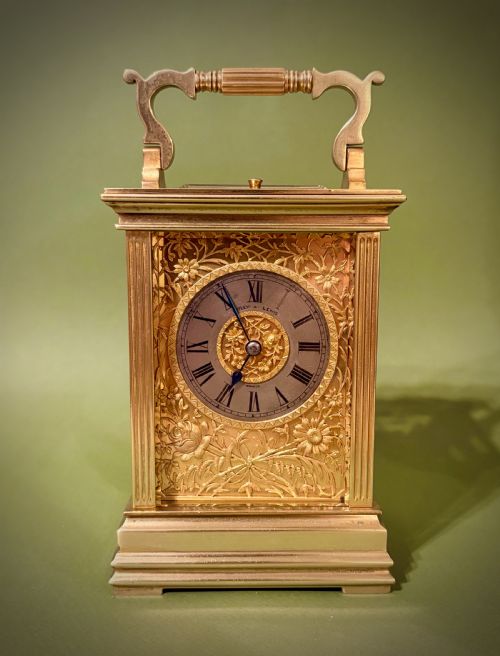
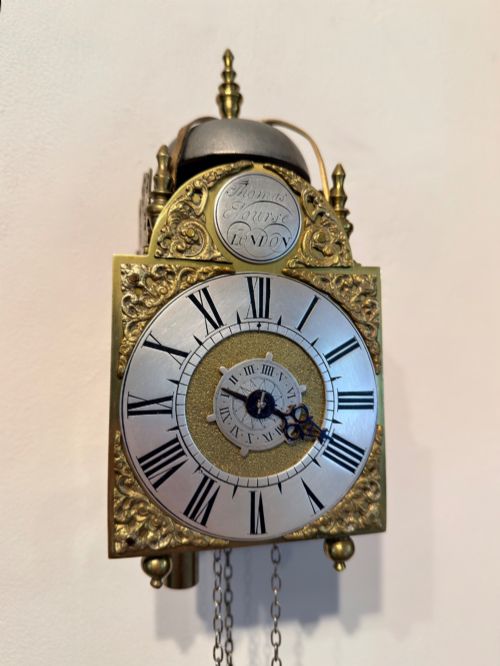
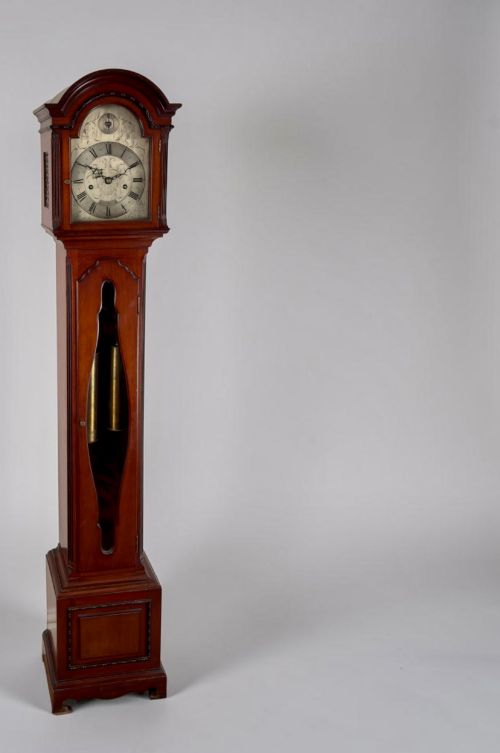
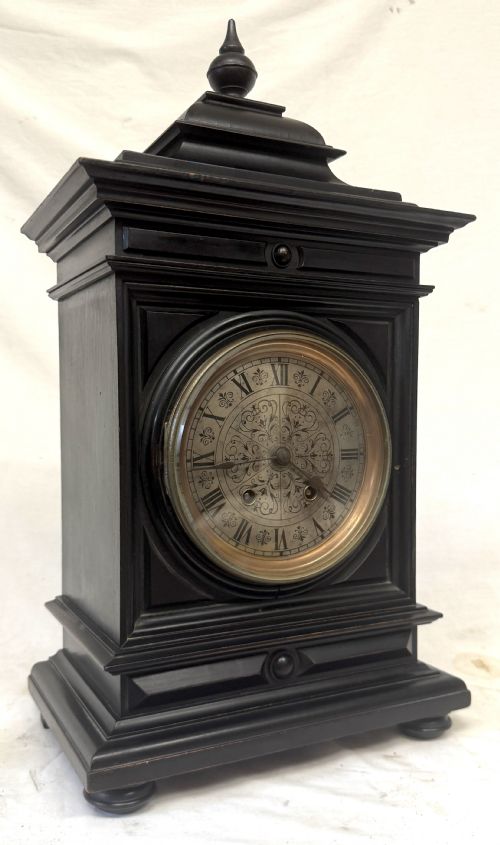
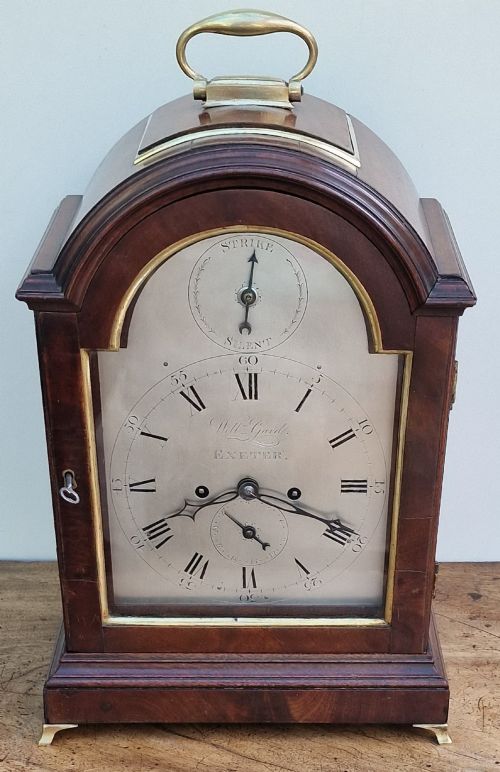
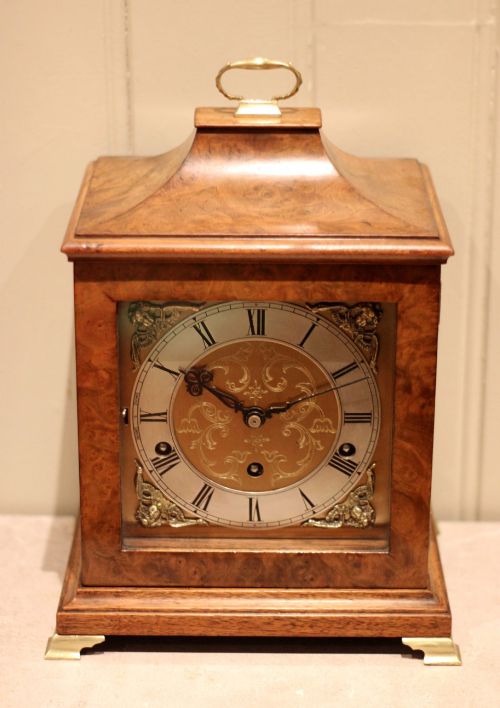
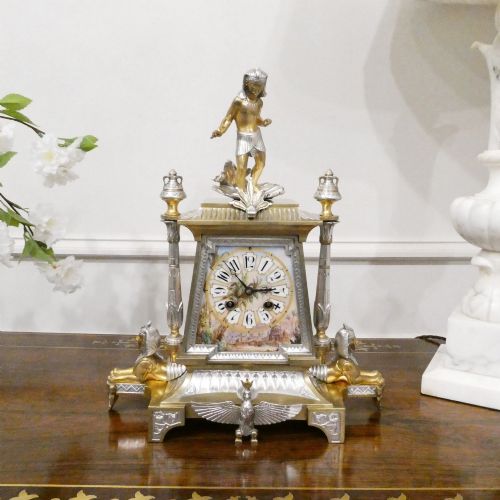
A silvered brass clock covers a broad sweep of domestic timepieces, ranging from Georgian bracket clocks to Victorian skeleton forms and Edwardian carriage designs. The examples found here span the seventeenth century to the twentieth century, taking in longcase clocks, wall clocks, and smaller desk pieces. The silvered brass dial remains a consistent element across varied cases of mahogany, rosewood, oak, and ebony.
Buyers meeting this phrase most frequently encounter mantel and bracket clocks fitted with engraved metal dials, alongside occasional wall-hung lanterns and longcase movements. The styles move from early lantern formats through William and Mary table clocks to Regency balloon cases and nineteenth-century French carriage mechanisms. Each period brings its own cabinetry, whether ebonised wood, inlaid rosewood, or architectural mahogany.
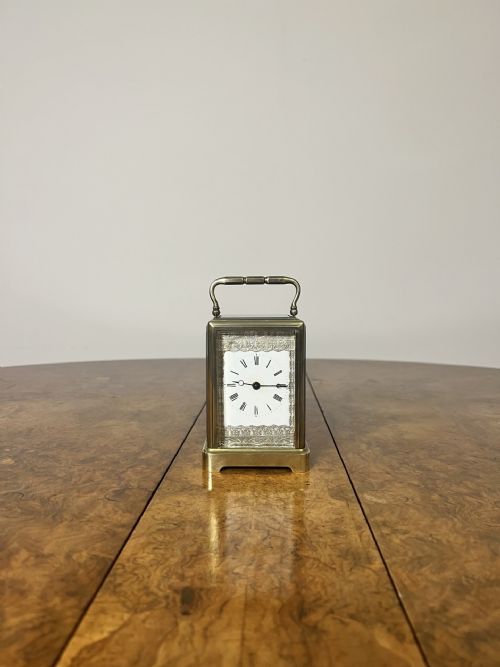
The physical presence of these pieces depends heavily on the housing, from substantial longcases down to miniature carriage clocks designed for travel. Brass framework combines with glass panels, steel components, and silvered chapter rings to create distinct visual layers. These items function as working furniture as much as portable timepieces, designed to sit upon brackets, desks, or mantel shelves.
Materials and construction
Makers constructed these movements from brass and steel, housing them in cases of mahogany, oak, walnut, rosewood, or ebony, and sometimes mounting them with silvered metal details. Dials were typically formed of brass plates treated to achieve a silvered finish, upon which numbers and maker details were engraved and blackened for legibility.
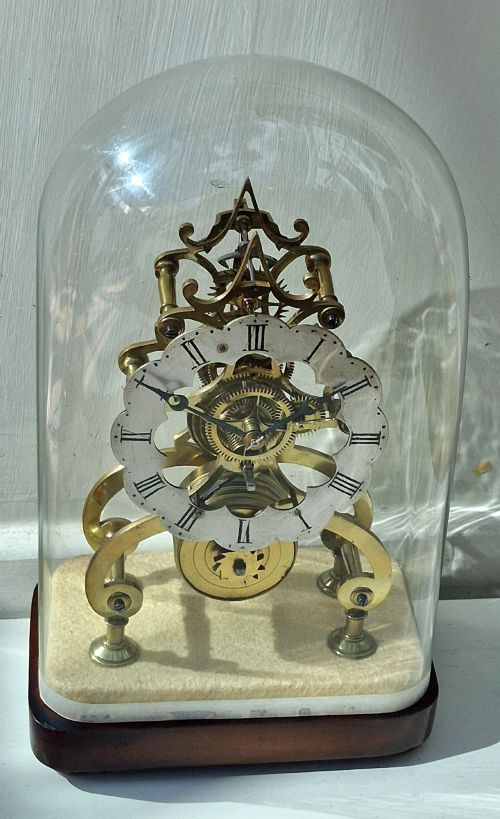
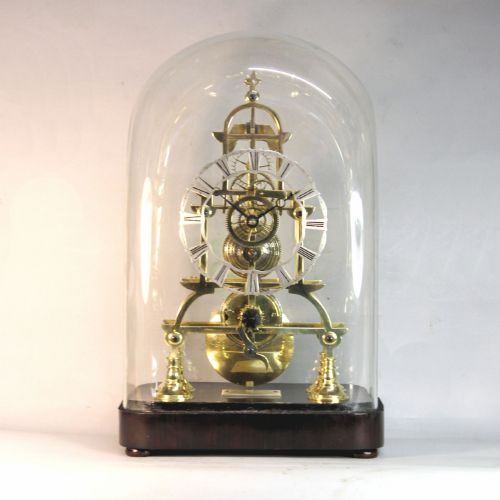
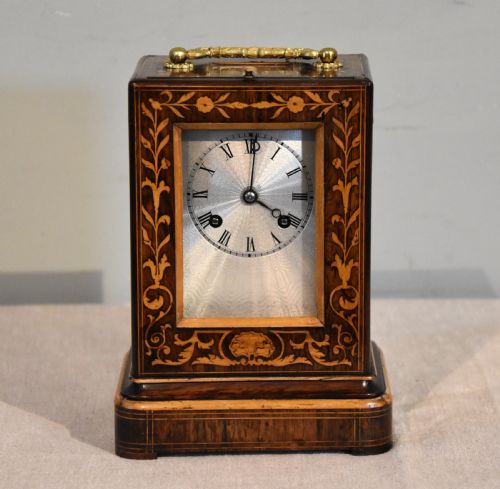
Cabinetmakers shaped the timber housings using traditional joinery, incorporating veneers, glass viewing panels, and brass carrying handles where appropriate. Skeleton movements exposed the brass gear trains directly between plates, while enclosed bracket and longcase clocks utilised fitted wooden doors and glazed bezels to protect the interior mechanics.
Listings for silvered brass clock examples incorporate materials such as mahogany, rosewood, glass, marble, and gilt brass across various centuries.
Craftsmanship and preservation
Quality in a silvered brass clock rests upon the crispness of the dial engraving, the depth of the silvering, and the integrity of the movement components. Better examples display finely pierced hands, carefully matted or engraved dial centres, and minimal wear to the brass gear teeth and pivots.
The standard of the cabinetwork also dictates value, with well-figured mahogany, rosewood, or ebony cases retaining sharp mouldings and original patination. Clocks retaining their signed backplates, matching components, and unblemished silvered chapter rings stand apart from those altered or overly restored over the years.
Gillett & Johnston of Croydon·Mappin & Webb·Richard et Cie·Thwaites of London·Thomas Cole and James Cole·Paul Garnier
The Silvered Brass Clock Glossary
- Silvered dial
- A brass dial treated with a chemical mixture of silver powder, salt, and cream of tartar to produce a white, metallic coating before engraving. This treatment provides high contrast against blackened numerals.
- Chapter ring
- The outer ring on a clock dial bearing the hour numerals. In many older clocks, this is a separate silvered brass ring pinned to a brass or matted centre plate.
- Fusee
- A conical pulley used in spring-driven clocks to equalize the diminishing power of the mainspring as it unwinds. This mechanism helps maintain consistent timekeeping throughout the power reserve.
- Bracket clock
- A portable spring-driven clock originally designed to sit upon a matching wall bracket or table. These pieces often feature carrying handles on top and glazed side panels.
- Skeleton clock
- A timepiece with an open framework that exposes the gear train and escapement to view. They are typically protected by a glass dome resting on a wooden or marble plinth.
Silvered Brass Clock: Frequently Asked Questions
What is a silvered brass clock?
A silvered brass clock is a timepiece featuring a dial made from brass treated with a silver finish, often paired with engraved numerals and housed in a wooden or metal case.
These clocks appear in many formats, from small carriage and desk models to large bracket and longcase variants spanning multiple centuries of British and continental production.
How do I wind a bracket clock?
Winding involves using a matching key inserted into the winding holes on the dial face, turning gently until resistance is felt. Care must be taken not to overwind the mainspring.
Many older mechanical clocks require weekly attention, while fusee movements and spring-driven models have specific winding directions that should be followed carefully.
Where should I place a mantel clock?
Mantel clocks need a stable, level surface away from direct sunlight, extreme temperature fluctuations, and damp environments. A sturdy shelf or sideboard prevents vibrations from interfering with the pendulum or balance wheel.
Ensuring the clock sits level is essential for the escapement to beat evenly and keep accurate time.
How do I identify the period of a clock?
Dating a clock involves examining the style of the case woodwork, the shape of the hands, the signature or maker's mark, and the technical construction of the movement. Architectural details like columns, pediments, and veneer choices change across Georgian, Victorian, and Edwardian eras.
Signatures engraved on the dial or backplate often point directly to a known maker working within a specific decade.