
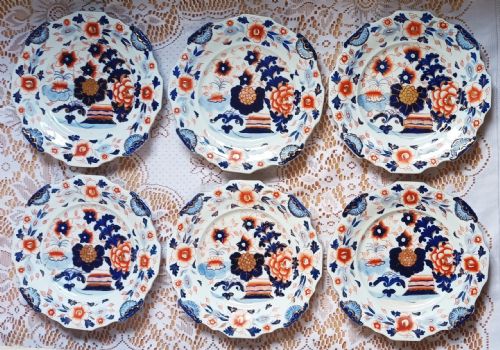


Transferware Wall Plates
Transferware wall plates bring printed historical scenes and botanical motifs into domestic spaces, offering buyers a rich piece of ceramic history to display.
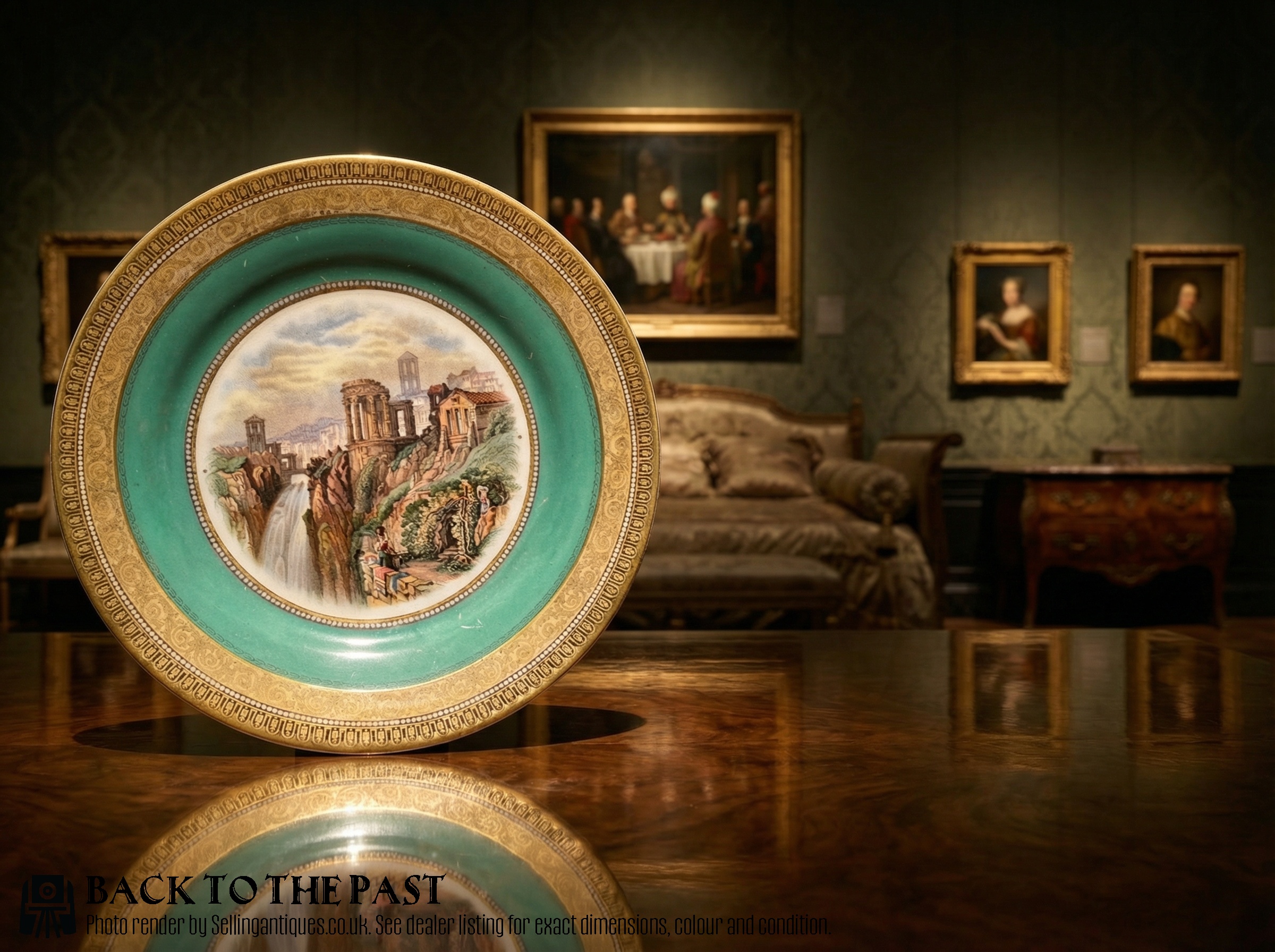
Transferware Wall Plates
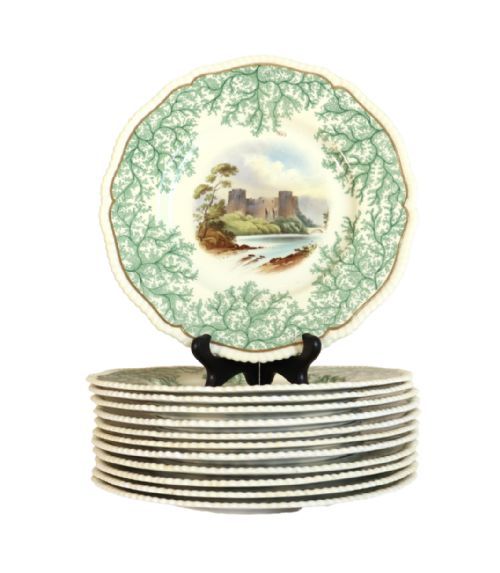
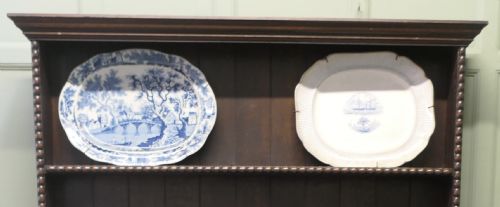
When you search for transferware wall plates, you encounter printed ceramic dishes carrying blue and white or polychrome scenes from the eighteenth and nineteenth centuries. These items range from small tea plates to large chargers, featuring landscapes, architectural views and patterned borders.
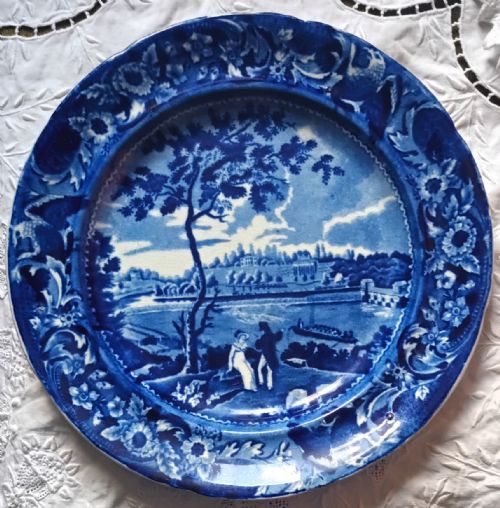
The version you are most likely to meet on this page is the nineteenth century earthenware or ironstone dinner plate, printed in blue with topographical views, botanical studies or traditional patterns like Willow and Chinoiserie.
Materials and Techniques
Potters formed these pieces using earthenware, pearlware, ironstone or stoneware, applying a smooth glaze over the ceramic body. Many items incorporate gilt highlights or enamel colours added by hand over the primary print.
Makers transferred engraved copperplate designs onto tissue paper, then pressed that paper onto the biscuited clay before glazing and firing. This transfer printing method allowed workshops to produce intricate landscape and narrative scenes with consistent detail.
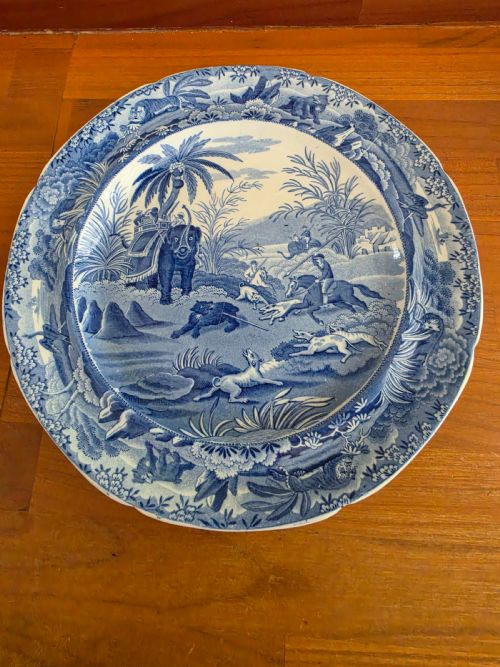
Some nineteenth century plates depict bears meeting their demise and sailing ships encountering rough seas.
Evaluating Quality
Quality rests in the crispness of the transfer print and the clarity of the underlying ceramic paste, whether pearlware, ironstone or refined earthenware. Finer examples display sharp lines in complex architectural or figural scenes without blurring or smudging in the glaze.
The reputation of the pottery and the complexity of the border work also distinguish finer plates from standard utilitarian wares. Marked pieces from notable manufactories demonstrate superior potting skill and careful kiln work.
Spode·John Ridgway·Caughley·Stubbs·Minton·William Adams·John Davenport
The Transferware Wall Plates Glossary
- Transferware
- Pottery decorated by printing a design from an engraved copper plate onto tissue paper and transferring it to the ceramic body before glazing. This technique revolutionised Staffordshire production in the eighteenth and nineteenth centuries.
- Pearlware
- A refined earthenware developed by Josiah Wedgwood featuring a subtle bluish glaze that pooled in crevices. It bridged the gap between creamware and later white ironstone.
- Ironstone
- A heavy, durable ceramic patented in the early nineteenth century to imitate Chinese porcelain. It resists chipping and forms a sturdy base for printed decoration.
- Charger
- A large decorative plate or platter originally used for serving food or display on a sideboard. In transferware collections, these larger pieces often highlight expansive topographical views.
- Chinoiserie
- A European decorative style reflecting Chinese artistic motifs, popular in British transferware patterns. These designs feature imaginary landscapes, pagodas and pavilions.
Transferware Wall Plates: Frequently Asked Questions
How do I hang transferware wall plates safely?
Use spring-loaded brass wire hangers that grip the rim without scratching the glaze, ensuring the wall fixing is secure enough to bear the weight of dense ironstone or stoneware bodies.
Avoid adhesive discs that attach directly to the unglazed foot ring, as age and humidity can weaken the bond over time.
Are these plates safe for daily dining use?
While these ceramics served as functional tableware in the eighteenth and nineteenth centuries, antique pieces often carry glaze crazing and manufacturing flaws that absorb food residue.
Display them on walls or in cabinets rather than using them for modern meals to preserve the printed surface and prevent further staining.
How can I tell pearlware from later ironstone?
Pearlware exhibits a characteristic bluish tint where the clear glaze pools around the foot rim or impressed marks, dating generally to the late eighteenth and early nineteenth centuries.
Ironstone presents a heavier, whiter, more opaque body designed for durability, which became common from the Victorian era onwards.
What do historical place names on plates signify?
Inscriptions naming specific halls, towns or foreign views indicate that the pottery drew inspiration from contemporary travel books, prints or American export markets.
Patterbooks and engravings by artists provided the source material that Staffordshire potteries translated onto their earthenware plates.