


Transferware Meat Platter
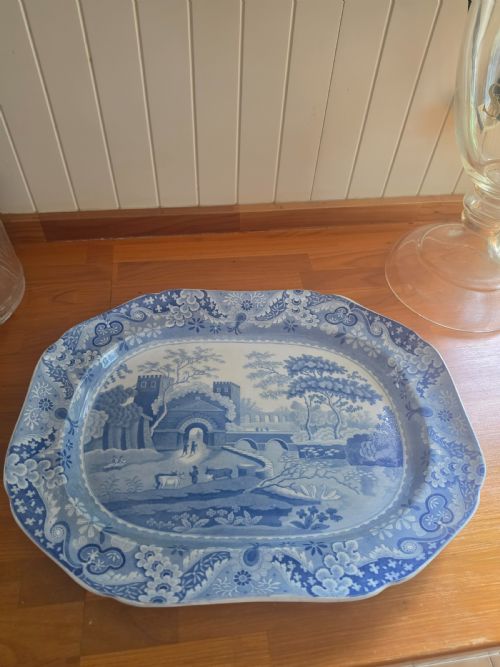
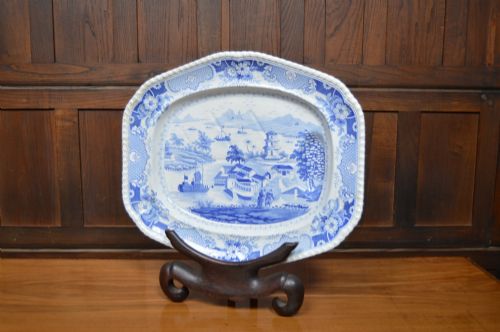
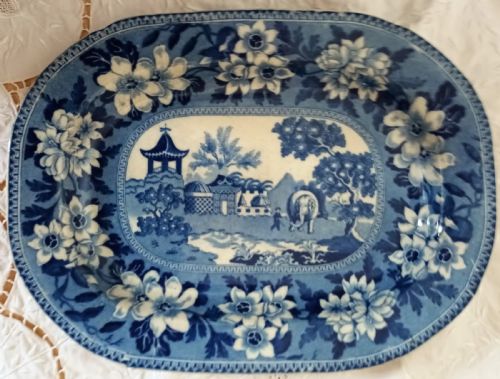
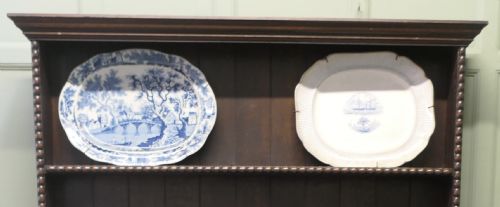
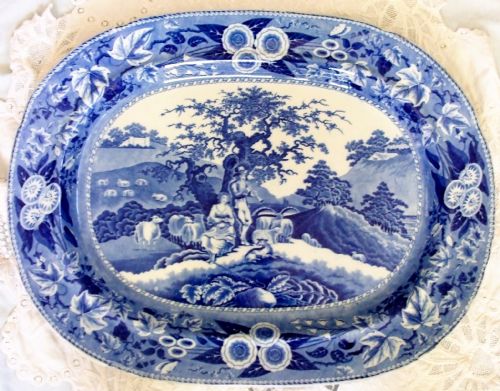
A transferware meat platter is a large ceramic dish designed for family dining, carrying printed pastoral or architectural scenes in rich cobalt blue.
Transferware Meat Platter
A transferware meat platter functions as a wide serving dish for joints of meat, appearing frequently across nineteenth century dining rooms in Georgian and Victorian styles. These heavy ceramic boards take various forms, including deep reservoirs for juices and matching pottery drainers that lift the joint above the well.
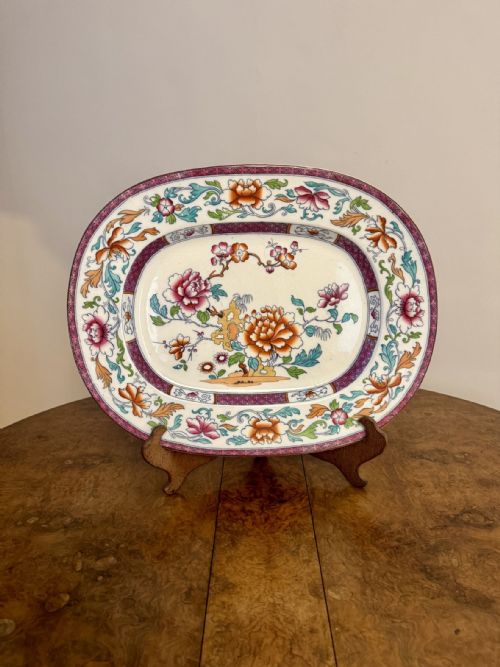
Most examples found on this page span the 1800s, featuring printed topographical views, classical ruins, or Chinese gardens rendered in blue and white pigment. English potteries produced these substantial platters in heavy earthenware, pearlware, and ironstone to withstand daily service on large tables.
Materials and Method
Potters made these large dishes from earthenware, pearlware, or ironstone, shaping the clay before applying a fluid ceramic glaze. Workers then transferred engraved copperplate designs onto tissue paper and pressed the blue cobalt pigment directly onto the porous biscuit surface before final firing.
Makers integrated practical elements like gravy wells and perforated drainer inserts directly into the heavy ceramic body during production. The combination of cobalt pigment and clear glaze created a durable finish that protected the intricate landscape and architectural transfers.
Water dogs and wandering sheep occasionally patrol the borders of otherwise solemn classical ruin scenes.
Grading Quality and Execution
Quality rests in the crispness of the transfer print and the balance of the ceramic body, where superior pieces retain deep, sharp lines without blurring or smudged cobalt pigment. Finer platters display intricate border patterns that frame complex scenes like classical ruins or detailed shipping series without gaps or misalignment.
The weight and stability of the ironstone or pearlware body dictate the grade, alongside the inclusion of matching drainers and well-formed reservoirs. Potters working at major Staffordshire factories achieved a more even glaze and truer shape across larger serving dishes than smaller regional kilns.
Spode·Mason's Ironstone·Copeland and Garrett·Don Pottery·John Rogers and Son
The Transferware Meat Platter Glossary
- Transferware
- Pottery decorated by printing an engraved design from a copper plate onto paper and transferring it to the ceramic body before glazing. This technique allowed complex pictorial scenes to be replicated consistently.
- Pearlware
- A refined earthenware developed in the late eighteenth century with a bluish-white glaze that pooled in recesses. It bridges the gap between creamware and later white ironstone.
- Ironstone
- A dense, durable type of ceramic patented in the early nineteenth century to imitate Chinese porcelain. It resists chipping and forms heavy, substantial platters.
- Meat Drainer
- A perforated ceramic insert placed inside a platter to drain juices away from the meat. These removable pieces often match the border pattern of the main dish.
- Gravy Well
- A recessed depression at one end of a platter designed to collect juices for easy spooning. Platters with wells often accommodate a separate drainer plate.
Transferware Meat Platter: Frequently Asked Questions
What is a transferware meat platter used for?
These large ceramic dishes served as the centrepiece for presenting roasted meat at large nineteenth century dinner tables. The wide surface area held the joint while sloped channels directed juices toward the edge.
Many examples include a built-in gravy well or a removable ceramic drainer plate to keep the meat elevated above accumulated pan drippings during carving.
How do I date a blue and white platter?
Dating relies on stylistic markers, ceramic bodies like pearlware or ironstone, and specific printed backstamps or registry marks. Early nineteenth century pieces often feature deep cobalt tones on earthenware bodies with intricate botanical borders.
Later Victorian examples tend to show lighter transfer shades and heavier ironstone construction. Potters frequently named their pattern series, which helps narrow down the production decade.
Are these platters safe for everyday use?
While these nineteenth century pieces remain structurally robust, their historic glazes and soft earthenware bodies require careful handling. Hand washing preserves the cobalt pigment and prevents thermal shock from modern dishwashers.
Using them for dry presentation rather than carving protects the antique surface from modern cutlery marks and potential chips.
What causes the blue colour to blur?
Blurring occurs when the cobalt pigment spreads slightly into the wet glaze during the high-temperature kiln firing. This characteristic depends on the chemistry of the glaze and the consistency of the transfer ink used by the pottery.
Some variation in line sharpness is normal for nineteenth century transfer printing and reflects the hand-operated production methods of the period.
What is a meat drainer?
A meat drainer is a perforated ceramic plate designed to fit inside the well of a large serving platter. It lifts the roast out of its own juices so the meat remains dry during service.
Finding a platter that retains its original matching drainer is unusual because these thin inserts suffered heavy breakage over generations of use.