







Traditional Wooden Vessel
A traditional wooden vessel brings tactile warmth to a room, holding centuries of domestic utility in turned oak, sycamore and pine.
Materials and construction methods
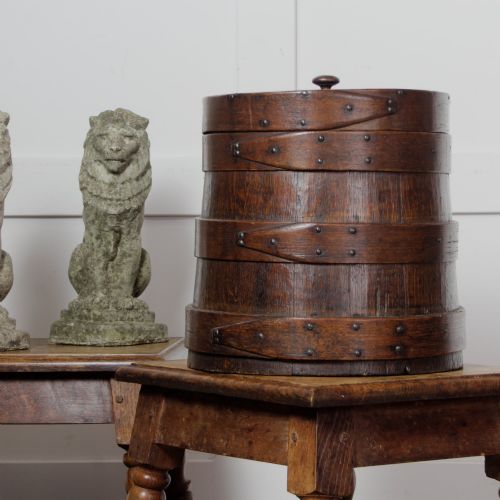
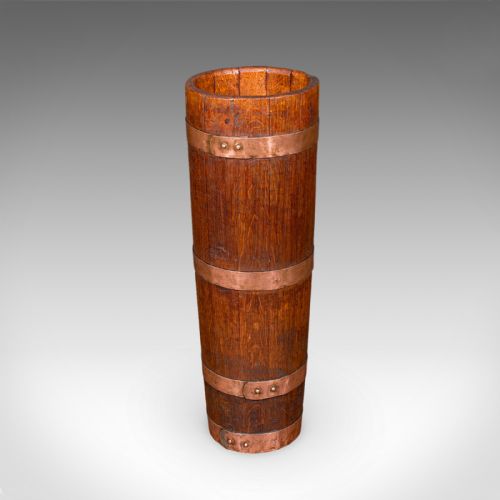
Craftsmen shaped these vessels primarily from domestic hardwoods and softwoods including oak, sycamore, walnut, pine, teak, olive wood and lignum vitae. Iron and brass bands, hoops or handles provide structural reinforcement to coopered barrels, buckets and jugs.
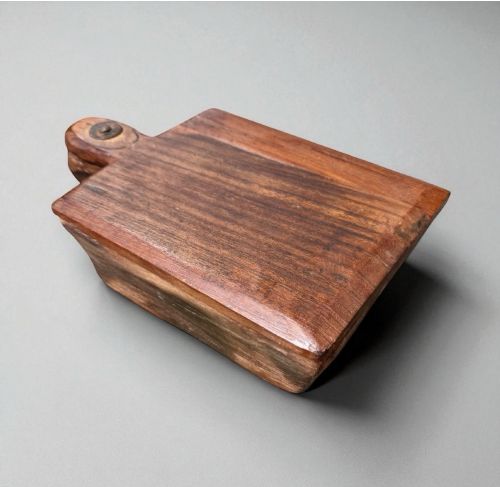
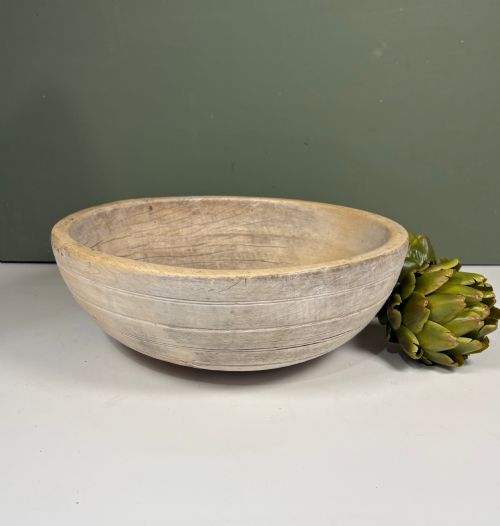
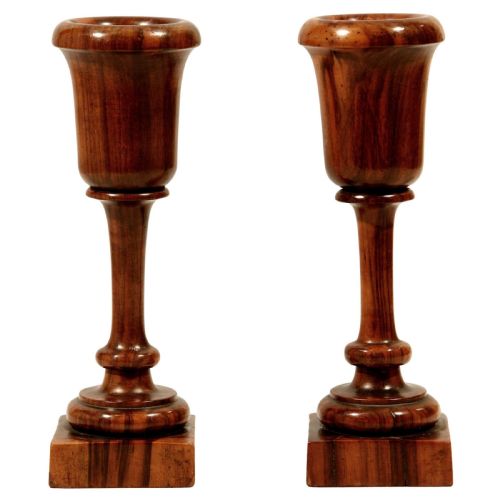
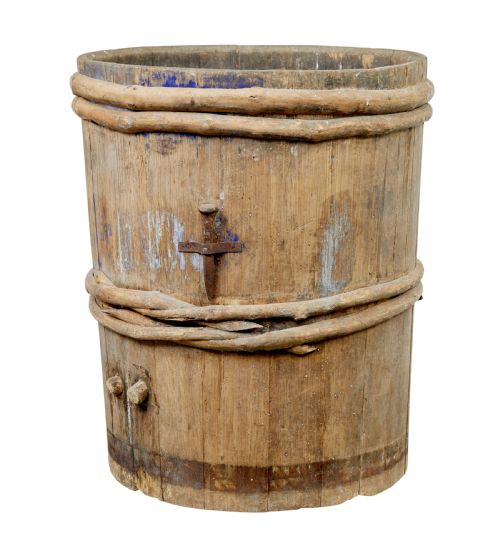
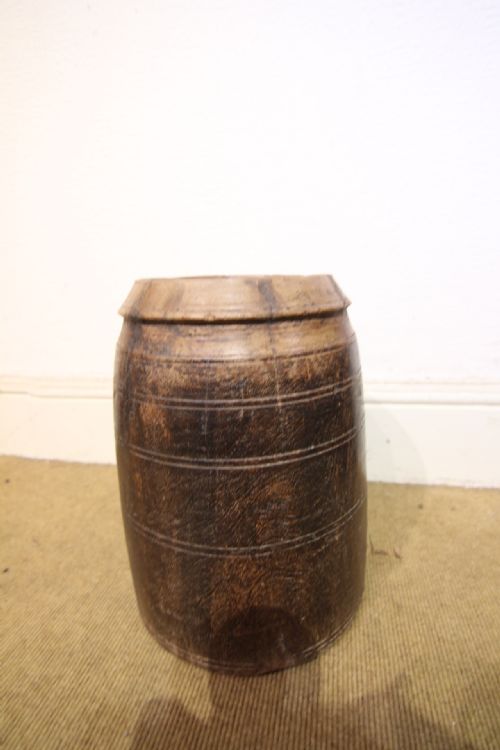
Turning on a lathe created symmetrical bowls, mortars and spill vases from green or seasoned timber, while coopers assembled stave-built barrels and tubs using tongue-and-groove joints secured by metal hoops. Dug-out items relied on hollowing solid tree trunks rather than joining separate pieces of wood.
Assessing quality in early woodware
Quality rests in the crispness of the original turning, the integrity of coopered joints, and the survival of an honest surface finish. Pieces retaining original metalwork, such as brass or iron bands and swinging handles, command greater respect among collectors.
Patina dictates visual success, where decades of handling and use impart a warm, lustrous tone to the timber without obscuring tool marks or grain patterns. Heavy restoration or inappropriate stripping diminishes the tactile authenticity of the object.
The Traditional Wooden Vessel Glossary
- Coopered
- Constructed from curved wooden staves fitted together edge-to-edge and bound by metal or wooden hoops. This technique kept liquid-holding vessels watertight.
- Treen
- Small handmade wooden household objects made from tree components. Collectors prize these functional items for their varied forms and patinated surfaces.
- Sycamore
- A dense, light-coloured hardwood frequently selected by turners for dairy bowls because it resists splitting when exposed to moisture and scrubbing.
- Lignum vitae
- An extremely heavy, dense exotic hardwood utilised for turned items requiring high impact resistance, such as mortars and pestles.
- Patina
- The surface sheen and colour acquired by wood through age, handling and light exposure over many decades.
Traditional Wooden Vessel: Frequently Asked Questions
How were dairy bowls used?
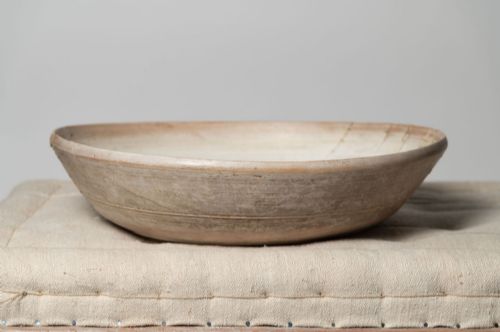
Dairy bowls served to hold fresh milk during the creaming process, allowing the cream to rise to the surface where it could be skimmed off easily.
The shallow, wide profile maximised the surface area for this separation, while smooth interior turning aided daily cleaning.
What is a coopered bucket?
A coopered bucket consists of vertical wooden staves locked together by tight joints and encircled by metal hoops for strength.
Craftsmen built these containers to withstand heavy loads of water, grain or coal without springing leaks under pressure.
How do I date an antique vessel?
Dating relies on observing tool marks, timber selection, construction methods, and the style of any metal mounts or handles.
Machine-sawn components indicate later nineteenth or twentieth-century production, whereas hand-adzed or pit-sawn surfaces point to earlier eras.