
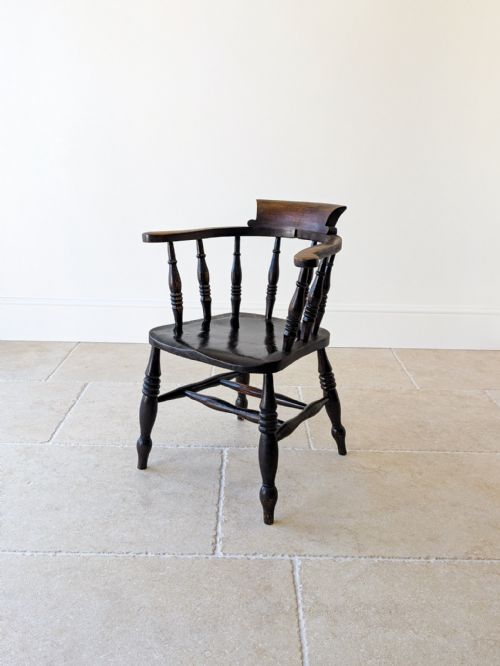
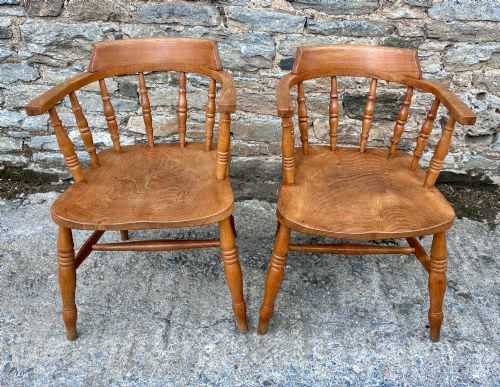
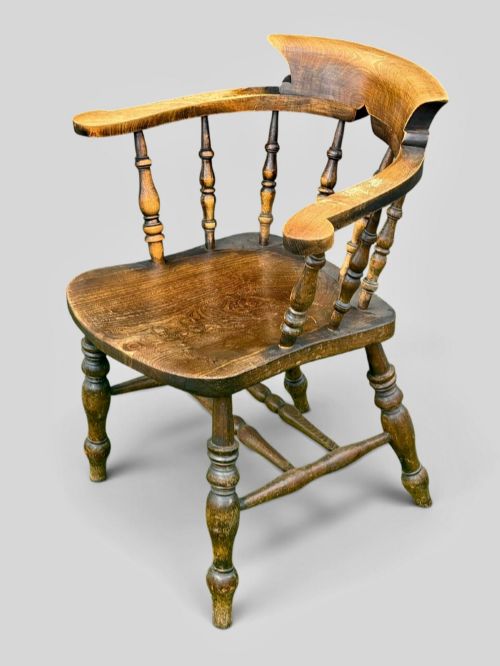
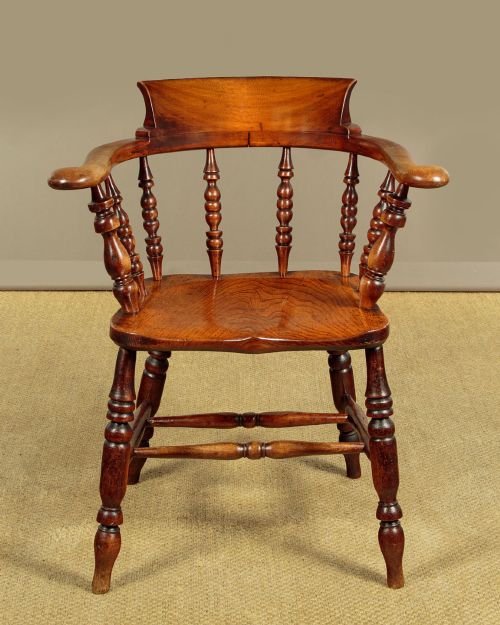
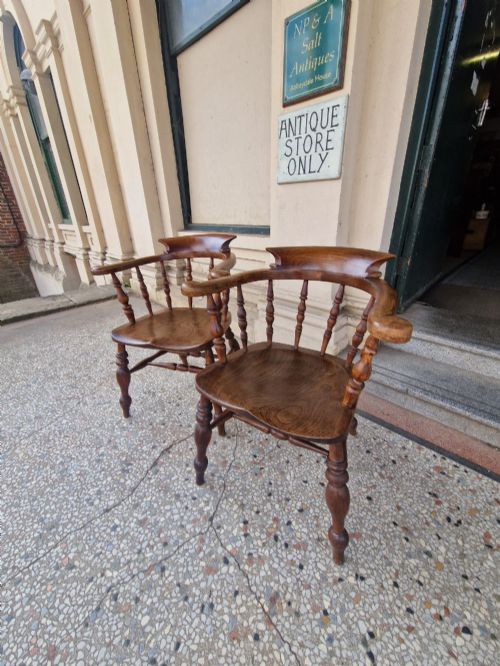
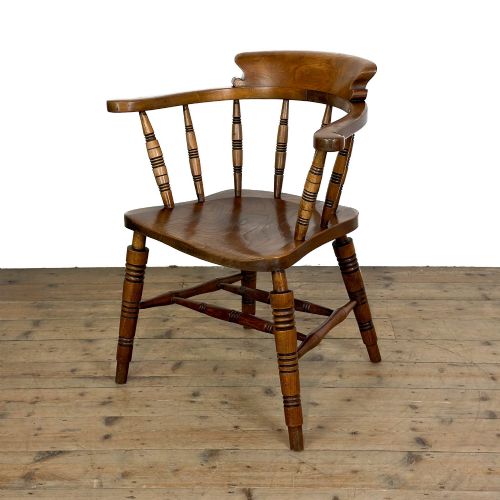
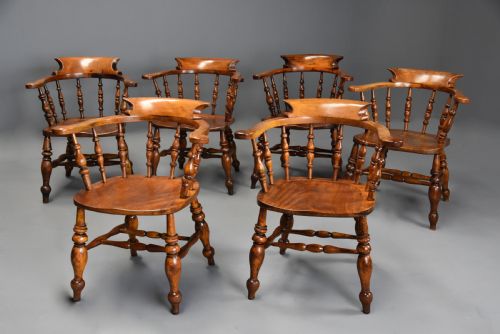
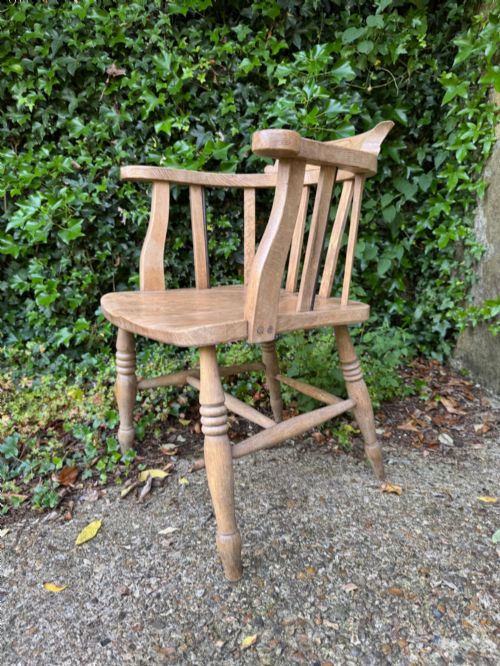
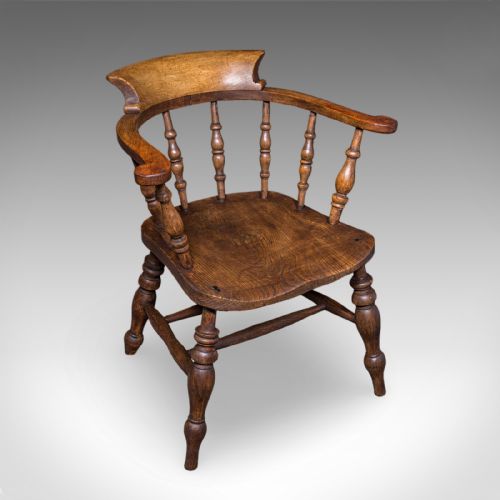
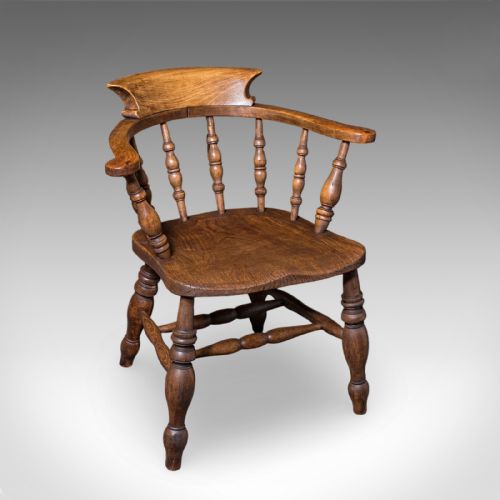
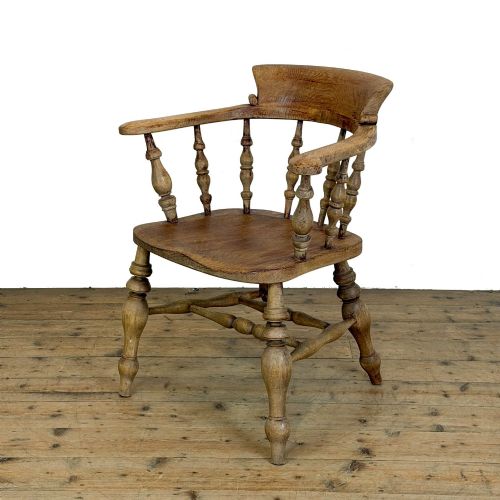
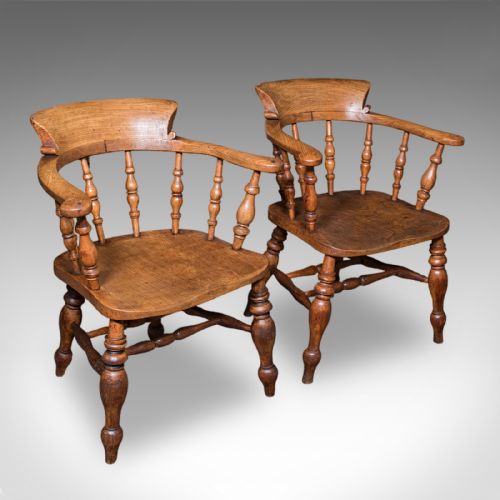
Traditional Wooden Tub Chair
A traditional wooden tub chair brings sturdy comfort to a room, offering deep seating through curved wooden backs.
Traditional Wooden Tub Chair
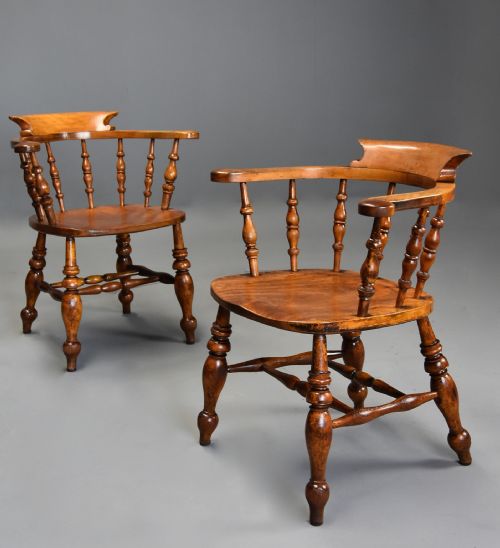
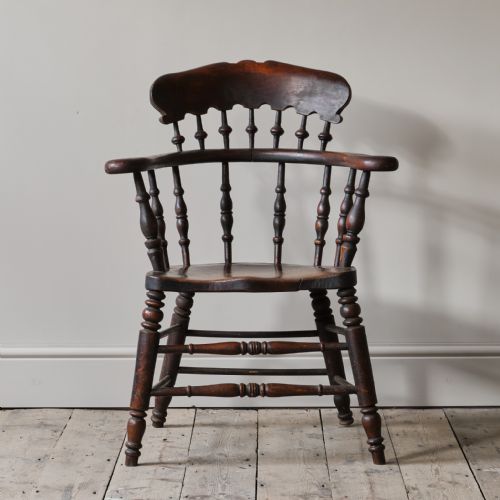
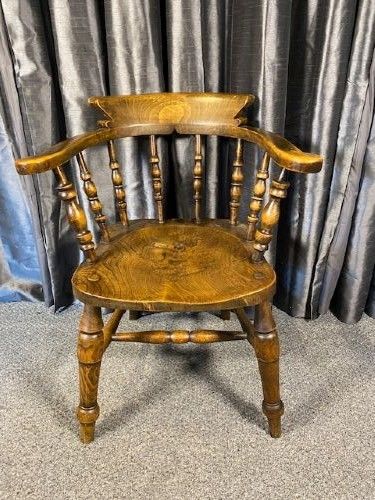
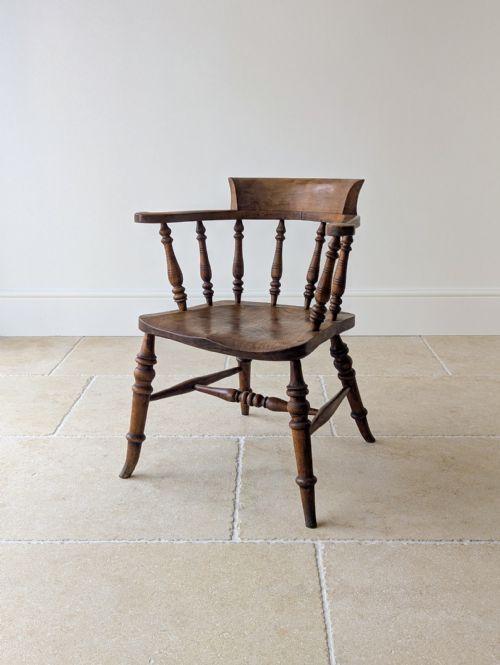
When you search for a traditional wooden tub chair, you encounter robust seating forms built for daily use, most commonly represented here by Captains chairs, smokers bows, and Windsor armchairs from the Victorian and Edwardian eras. These domestic and office seats combine low profiles with sweeping, horseshoe-shaped arm rails that cradle the sitter.
The selections span English country vernacular styles, featuring sturdy timber frames designed for studies, parlours, and country houses. Victorian and Edwardian examples dominate the listings, showing heavy utilitarian roots alongside more refined office iterations fitted with leather or hide pads.
How they were made
Cabinet makers and bodgers built these frames using native British hardwoods, frequently combining elm seats with ash, beech, oak, or birch for spindles and bentwood arm rails. Steam-bending allowed timber to form continuous, curved backrests that provided resilient structural support.
Joinery relied on traditional methods including wedged through-tenons, turned spindles, and pegged joints to handle the daily stress placed on low-backed armchairs. Surfaces often received simple wax finishes that allowed the grain and natural markings of the timber to show through decades of use.
Many nineteenth-century children shared in the seating comfort, with miniature caned mahogany highchairs and diminutive Windsor forms included among the full-sized desks.
What varies in quality
The quality of a traditional wooden tub chair rests largely on the depth and character of the timber's patina, alongside the integrity of the original joints. Pieces retaining their original unclipped elm seat slabs and balanced steam-bent back rails stand apart from those with replaced components or aggressive sanding.
Construction details such as the thickness of the arm bow, the turning of the spindle supports, and the careful shaping of the saddle seat distinguish standard utility furniture from finer country house examples. Original surface wear accumulated over generations adds depth to better specimens.
The Traditional Wooden Tub Chair Glossary
- Smoker's bow
- A low-backed Windsor armchair with a continuous curved arm rail, popular in English homes and taverns throughout the nineteenth century. These seats feature solid wooden saddles and turned spindle supports.
- Captain's chair
- A sturdy wooden armchair designed for office or domestic use, characterised by a low, rounded back rail supported by numerous spindles. They share close lineage with Windsor and smoker's bow forms.
- Saddle seat
- A thick wooden chair seat carved with hollows to accommodate the sitter comfortably. Elm was frequently chosen for this component due to its interlocking grain.
- Steam-bending
- A woodworking technique where timber is softened using steam to allow bending into curved components like chair backs. This process creates strong, unbroken lines in the wood.
Traditional Wooden Tub Chair: Frequently Asked Questions
What is a traditional wooden tub chair?
A traditional wooden tub chair is a sturdy low-backed armchair featuring a curved wooden rail that encircles the sitter. These pieces often take the form of Captains chairs and smokers bows.
They were built in Britain during the Victorian and Edwardian periods using native timbers like elm, beech, and ash. Their versatile designs suited studies, offices, and parlours alike.
Where were these chairs used?
These chairs served multiple roles in the nineteenth and early twentieth centuries, appearing in home offices, studies, country house parlours, and commercial spaces. Their low profiles made them practical for writing desks and smoking rooms.
Working spaces often utilised them as desk or office chairs fitted with wooden or leather seats. Domestic settings placed them by firesides and in reading corners for everyday comfort.
How do I care for wooden chairs?
Maintaining these wooden frames requires simple dusting with a dry cloth and occasional application of traditional beeswax to nourish the timber. Avoid placing them near direct heat sources to prevent the wood from drying out.
Keeping humidity levels stable protects the glued joints and steam-bent components from shifting. Gentle care preserves the aged patina developed over generations of use.
How do I date a wooden chair?
Dating these pieces involves examining the timber species, construction methods, tool marks, and turning styles visible on the spindles and legs. Victorian and Edwardian examples often display specific combinations of elm seats with beech or ash turnings.
Hardware, screw types, and any integrated leather or hide upholstery also offer clues to the manufacturing decade. Comparing the wear patterns and overall proportions helps establish the era of origin.