


Traditional Wooden Toy
A traditional wooden toy brings tangible history into a room, offering tactile connection through carved surfaces and weathered paint that appeal directly to collectors.
Traditional Wooden Toy
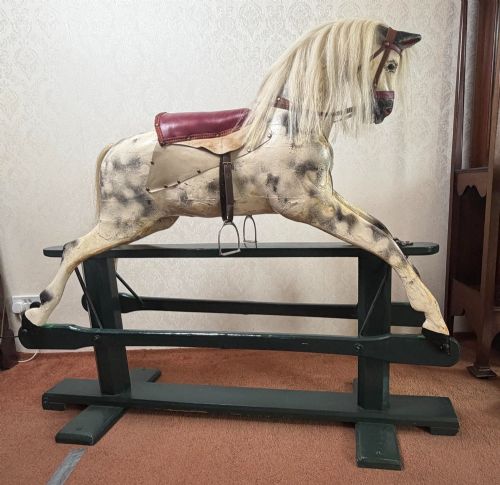
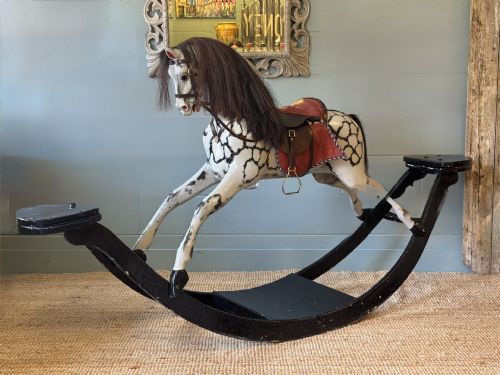
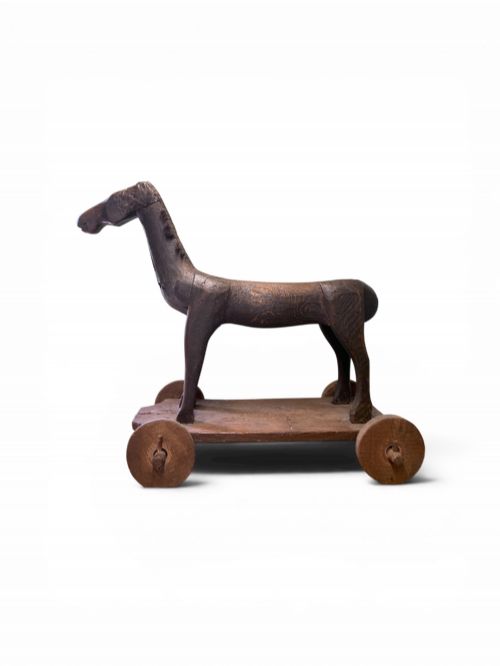
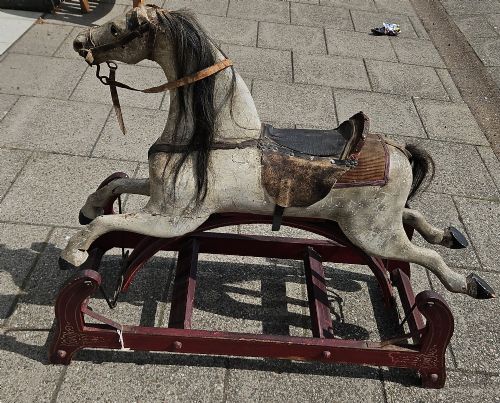
When you search for a traditional wooden toy, you encounter enduring playthings spanning the Victorian era through the mid twentieth century. Rocking horses dominate this category, alongside handcrafted items such as pull-along horses, carved figures, ball and cup games, marionettes, puppet theatres, and alphabet block boxes.
These items originate from diverse domestic settings and workshops, reflecting both vernacular craft and commercial toy production. Pieces range from naive folk art sculptures to substantial nursery furnishings mounted on original rockers.
The selection here encompasses items fashioned from pine and carved wood, frequently enhanced by surviving historical paint schemes. Buyers encounter everything from small hand-held treen items to large exhibition-scale nursery animals.
How they were made
Maker construction relies heavily on solid timber, notably pine and carved wood, shaped using traditional joinery and hand-carving techniques. Structural reinforcement often incorporates iron and metal fixings to withstand robust nursery use.
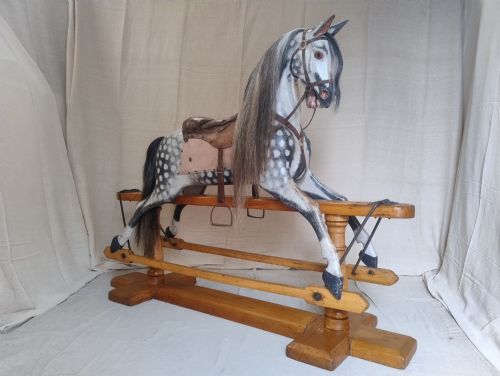
Surfaces receive diverse treatments, including wax polishing, ebonising, or application of historical paint. Details on figures frequently incorporate organic materials such as leather and horsehair to simulate manes, tails, and tack.
Materials documented across the pieces include pine, iron, leather, horsehair, and traditional paint.
What varies in quality
Quality rests in the degree of sculptural confidence and the survival of original surface treatments. A piece displaying untouched early paint or natural wax patination stands apart from later re-painted examples.
Proportion and carving detail dictate the tier of craftsmanship, particularly in animal forms where anatomical expression varies from naive folk interpretations to sophisticated workshop output. Completeness of original components, such as rockers or hardware, also elevates the stature of a survivor.
G & J Lines of London·F.H.Ayres·Collinson·Lines Bros Sportiboy
The Traditional Wooden Toy Glossary
- Treen
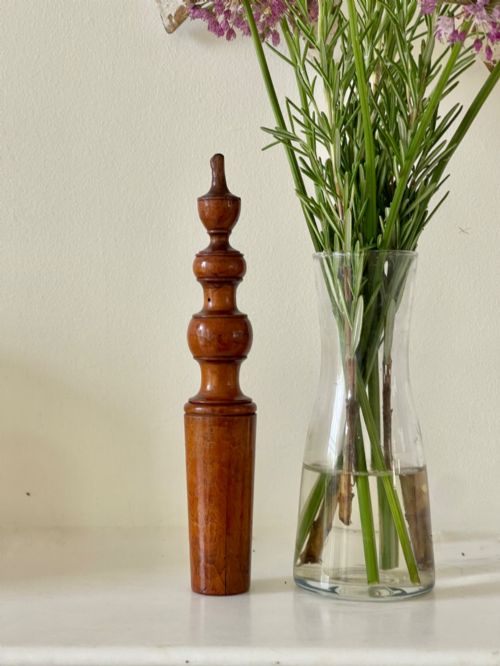
- Small handmade wooden objects for domestic or playful use. This term embraces items like small rattles and skill games.
- Bilboquet
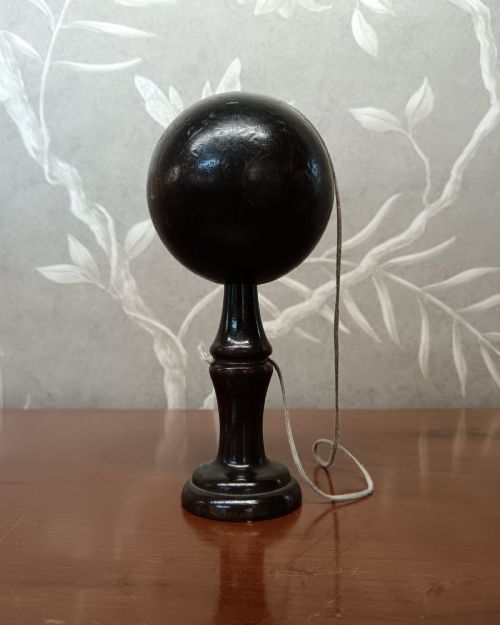
- A traditional ball and cup game of skill. Players attempt to catch a suspended wooden ball in the attached cup.
- Folk art
- Material culture created by self-taught or vernacular makers. These objects prioritise utility and direct expression over academic convention.
- Puppet theatre
- A miniature stage built for theatrical performance using string puppets or marionettes. Surviving examples retain structural frames for domestic entertainment.
- Mule chest
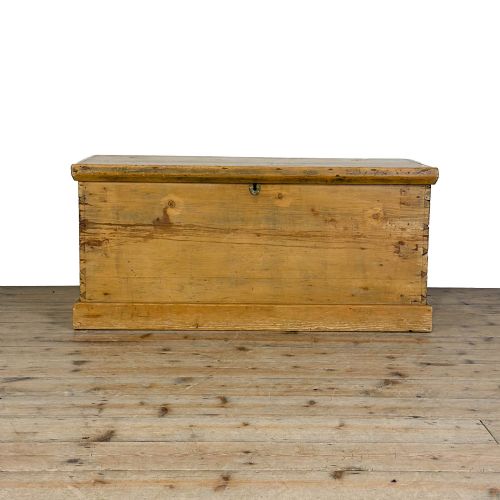
- A storage trunk featuring one or more drawers beneath the main compartment. These robust pieces frequently utilise pine construction.
Traditional Wooden Toy: Frequently Asked Questions
How do I date a wooden rocking horse?
Dating relies upon construction methods, structural proportions, and surface finishes like early paint or wax. Examining the mounting style, such as bow rockers or safety stands, helps narrow the production window.
Makers' marks or stamps, where present, offer definitive production eras. Comparing the carving style to documented workshop outputs further clarifies the timeline.
Are these toys in original condition?
Many examples survive with untouched historical surfaces, retaining their initial wax polishes or early painted decorations. Traces of wear reflect genuine historical use in nurseries and playrooms.
Some objects exhibit patination accrued over generations of handling. This honest state remains central to the appeal of historical playthings.
How were jigger dolls used?
A jigger doll is a mechanical folk art toy designed to dance rhythmically. Placed on a board or table, the operator manipulates the board to make the figure step and move.
These figures often display detailed period clothing like top hats and tails. They represent interactive vernacular entertainment from the early twentieth century.
What materials are used besides wood?
Makers frequently incorporated horsehair and leather to render realistic manes, tails, and harnesses on animal figures. Iron and metal components provide internal reinforcement and operational hinges.
Paint finishes supplied vibrant colour to educational blocks and nursery toys. Organic elements contribute significantly to the tactile character of surviving pieces.