


Vintage Horsehair Rocking Horse
These vintage horsehair rocking horse pieces bring timeless charm into a room, offering the classic appeal of traditional craftsmanship and enduring play.
Vintage Horsehair Rocking Horse
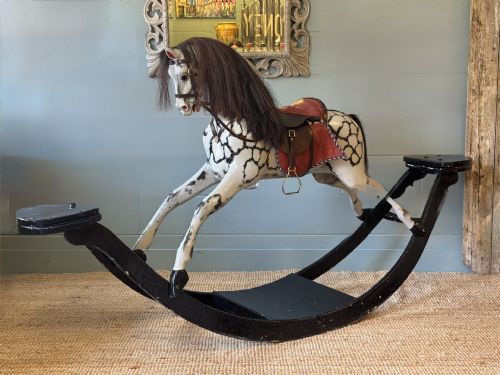
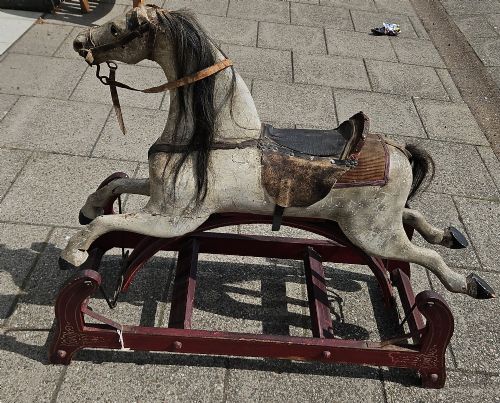
A vintage horsehair rocking horse represents a traditional British toy form designed for children, appearing in various scales from large examples to extra large formats. You are most likely to meet pieces originating from the Victorian era through the mid twentieth century, reflecting enduring workshop traditions.
The objects span multiple decades including the nineteen hundreds, nineteen tens, nineteen twenties, nineteen thirties, nineteen forties, and nineteen fifties. Makers such as G and J Lines, Collinson, and F H Ayres shaped this category with distinct regional provenance.
How They Were Made
Construction relies heavily on carved wood and pine foundations, shaping the primary animal forms with traditional joinery and sculptural detail. Iron, steel, and general metal components reinforce the rocking mechanisms and structural integrity of the bows.
Finishing materials include genuine horsehair for manes and tails, complemented by leather tack and glass eyes for realistic expression. Painted surfaces often feature dappled finishes applied over carved timber bases.
What Varies in Quality
The standard of carving and the expressiveness of the head define the upper tiers of production, distinguishing workshop masterpieces from simpler commercial output. Original surface treatments, such as dappled paintwork, carry greater aesthetic value than later repainting.
The integrity of the structural frame and the survival of original horsehair and leather elements determine the overall historical completeness. Larger scales and documented maker attribution elevate individual examples within the market.
G and J Lines·Collinson·F H Ayres
The Vintage Horsehair Rocking Horse Glossary
- Dappled
- Painted spot pattern applied to the body of a rocking horse to imitate a real coat. This traditional finish is characteristic of many British workshop pieces.
- Bow rockers
- Curved wooden beams beneath the horse that allow for the rocking motion. These components support the weight of the structure.
- Tack
- The harness, reins, and saddle fittings attached to the horse. Leather is the standard material used for these elements.
- Carved pine
- The timber foundation material used to shape the body of the horse. It provides a lightweight yet durable core for carving.
Vintage Horsehair Rocking Horse: Frequently Asked Questions
How do I date a rocking horse?
Dating relies on examining the construction methods, the style of the carving, and the materials used for the mane and eyes. Victorian and Edwardian examples often feature heavier timber frames and distinct facial carving.
Maker marks and ironwork details also provide reliable clues for narrowing down the decade of production. Comparing the paint layers helps establish whether the finish remains original.
Are these horses safe for children?
While these pieces were originally built as toys, vintage models are generally treated as decorative objects or collector items today. Their historical construction may not meet modern safety standards for active play.
Buyers often place them in nurseries or living spaces as focal points rather than utilising them for everyday use. Regular checks on the stability of the stand are still recommended.
How should I clean horsehair?
Horsehair requires gentle maintenance to preserve its texture and prevent shedding over time. Soft brushing removes dust without disturbing the original attachment points.
Harsh chemical cleaners should be avoided entirely to protect the natural fibres and surrounding leather tack. Professional conservation advice is best for delicate restoration work.
What is the difference between bowed and safety stands?
Bow rocking horses rest on curved wooden rockers that allow the entire horse to move back and forth across the floor. This traditional design requires open space around the piece.
Safety stands use an iron swing frame that keeps the horse stationary while the mechanism moves. This later innovation prevents the horse from moving across the room during use.