


Vintage Safety Stand Horse
A vintage safety stand horse offers traditional playground charm, bringing sturdy wooden craft and classic rocking movement into family spaces.
Vintage Safety Stand Horse
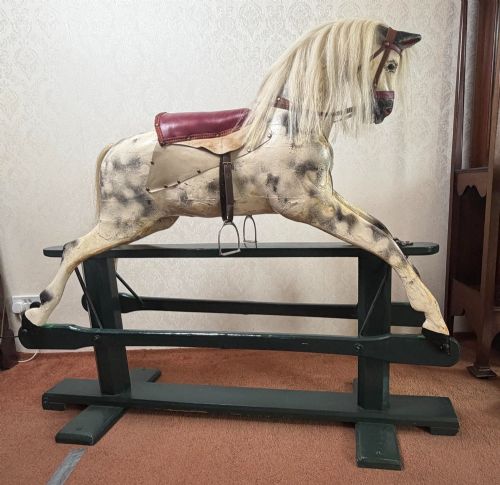
The selections available here range from grand nineteenth-century examples down to mid-century specimens. Makers such as F.H. Ayres, Collinsons, and Lines Bros dominate the offerings, showing both grand proportions and standard playroom scales.
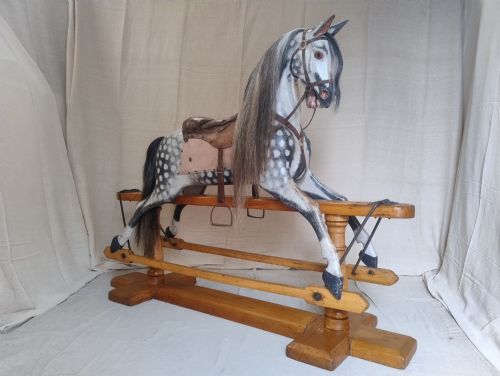
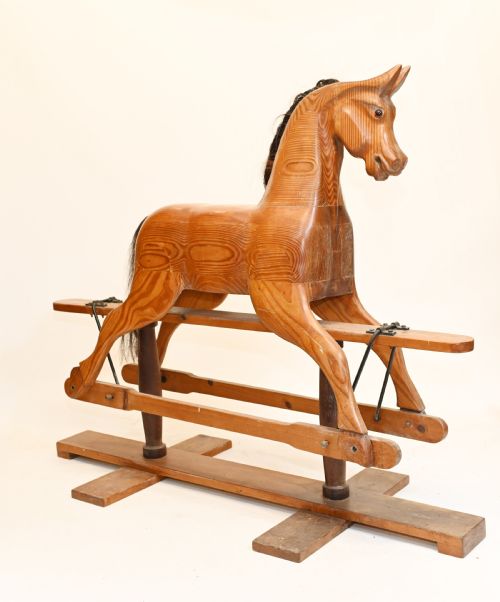
Buyers encounter various construction forms, including carved pine, carved wood bodies finished with real horsehair tails, and leather saddles mounted upon sturdy iron and steel stands.
Materials and Construction
Makers shaped these horses primarily from carved wood and pine, building robust bodies designed to withstand rigorous childhood play. Artisans utilised carved wood techniques to articulate muscles and facial expressions before applying paint layers.
Finishing touches incorporated genuine horsehair for manes and tails alongside leather for tack and saddles. Metal and iron components reinforced the swinging mechanisms, connecting the carved bodies to sturdy wooden or metal safety stands.
Many of these wooden survivors still carry the faint scent of old horsehair and saddle leather after a century indoors.
Assessing Quality and Character
The distinction between standard examples and exceptional pieces rests upon the finesse of the wood carving and the survival of original painted surfaces. Master workshops invested greater time in detailed facial carving and anatomical proportion.
Originality defines the upper tier of these pieces, where untouched paint finishes, authentic horsehair, and stamped maker attribution remain intact. Playworn examples show heavy use over decades, contrasting with pieces preserved in remarkably complete original condition.
F.H. Ayres·Collinsons·Lines Bros
The Vintage Safety Stand Horse Glossary
- Safety stand
- A fixed wooden or metal frame that holds a rocking horse securely in place, preventing the whole apparatus from moving across the floor during vigorous play. This design gained popularity for domestic nurseries seeking greater stability.
- Dappled
- A painted finish imitating the mottled coat pattern of specific horses, traditionally rendered in grey or brown spots over a lighter ground colour. Artisans applied these spots by hand to create depth across the wooden body.
- Playworn
- A descriptive term for items that bear the genuine scuffs, paint losses, and patina accumulated through active childhood use. Collectors often prize this honest wear for the history it communicates.
- Tack
- The equipment fitted to a horse, including saddles, reins, and bridles, usually fashioned from leather and metal buckles. Original tack contributes significantly to the integrity of an antique piece.
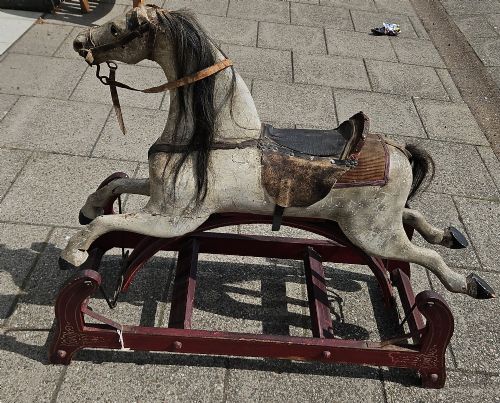
- Bow rockers
- The curved wooden rails attached to the feet of traditional rocking horses, distinct from the stationary safety stand design. These curved rails allow the entire horse to glide back and forth.
Vintage Safety Stand Horse: Frequently Asked Questions
How do I date a vintage safety stand horse?
Dating relies upon construction methods, paint analysis, and maker stamps located on the wooden stand or body. Nineteenth-century examples typically feature heavier timber framing and hand-carved details, whereas interwar and mid-century pieces reflect changing manufacturing standards.
Examining the type of iron brackets and the style of leather tack also helps narrow the decade of production. Comparing construction traits with documented pieces from makers like Ayres provides further chronological clarity.
Can children ride these antique horses safely?
While these pieces were built for play, their antique status and older materials require careful consideration regarding modern weight limits. Many buyers choose to use them primarily as decorative focal points in nurseries or playrooms.
Those who permit gentle riding usually inspect the iron swing links and wooden stand connections beforehand to ensure structural stability. Placing a soft rug underneath provides added protection for both the floor and the piece.
What is the difference between bow rockers and a safety stand?
Bow rockers feature curved wooden shoes that allow the horse to travel back and forth across the floor as it rocks. A safety stand keeps the base firmly planted on the ground while suspending the horse on swing arms.
The safety stand design was introduced to prevent the horse from tipping over or moving unexpectedly into furniture during enthusiastic play.