

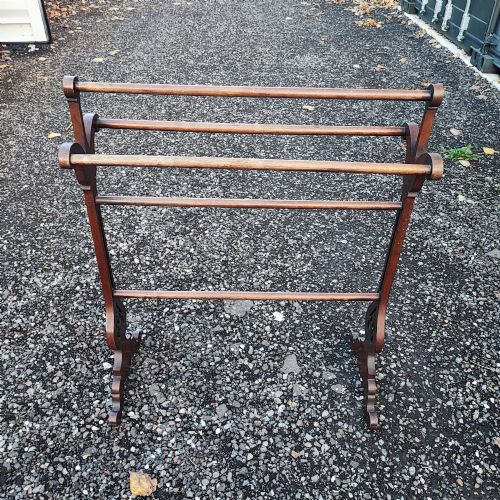
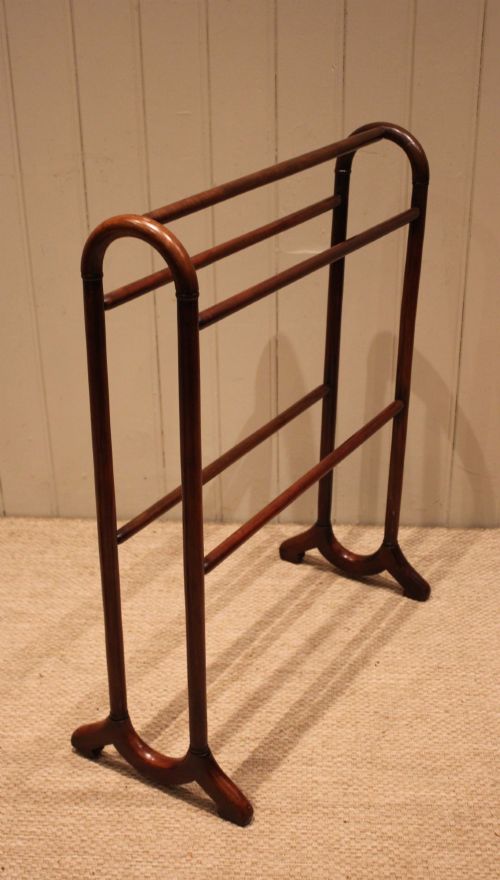
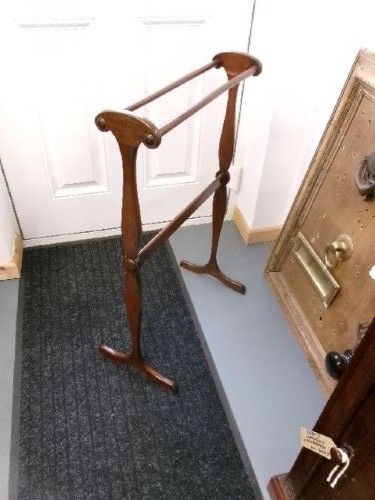
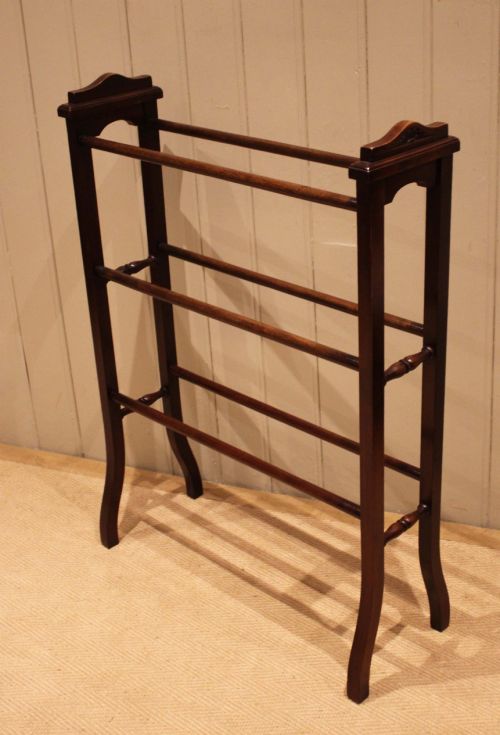


Traditional Wooden Towel Rail
A traditional wooden towel rail brings functional warmth to a room, offering sturdy rails crafted from mahogany, pine or elm for daily use.
Traditional Wooden Towel Rail
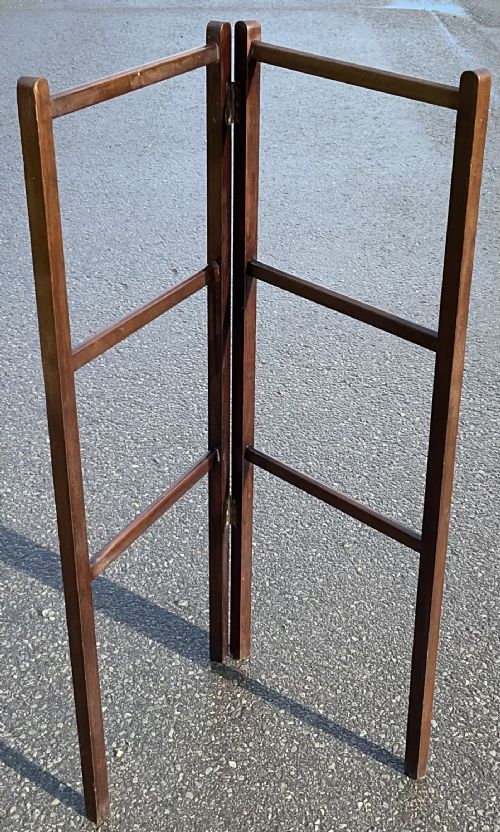
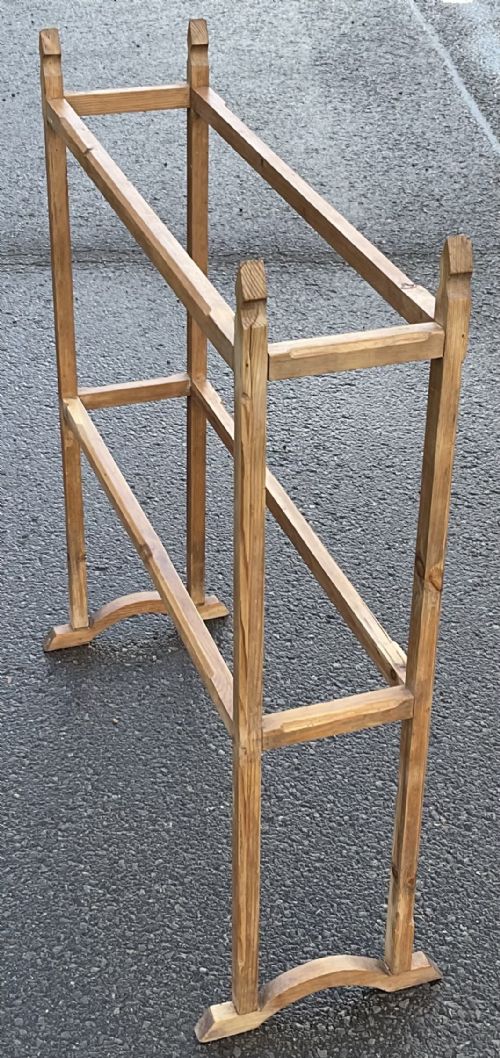
A traditional wooden towel rail serves as a practical furnishing designed for hanging and drying textiles, taking the form of standing rails, folding airers, and larger clothes racks.
The pieces seen here span the Victorian and Edwardian eras alongside earlier Regency and nineteenth-century examples, with Edwardian mahogany versions appearing most frequently alongside utilitarian pine variants.
Makers utilised various formats, ranging from compact rails with a single bar to large five-bar stands and expansive robe stands originating from nineteenth-century English workshops and Chinese Qing Dynasty sources.
How they were made
Carpenters constructed these frames primarily from solid timbers like mahogany, pine, elm, and hardwood, often employing ebonised finishes or delicate satinwood inlay to add visual interest.
Metal components such as brass fittings appear alongside carved wooden elements and decorated surfaces, demonstrating the blend of structural utility and cabinet-making skill typical of the period.
Traditional Wooden Towel Rail Retail Price Guide 2026
Typical asking prices for traditional wooden towel rail among the pieces listed under this phrase on Sellingantiques today, from the lower quarter to the upper quarter. They describe what is for sale here now, not the wider market.
Some nineteenth-century examples feature up to five distinct rails for the truly ambitious textile enthusiast.
What varies in quality
The standard of a traditional wooden towel rail rests upon the selection of timber and the rigidity of its construction, with denser hardwoods providing superior stability over softer pine alternatives.
Refinements such as inlaid satinwood, carved details, and multi-bar configurations elevate simpler utilitarian frames into pieces of finer decorative merit.
Gillows
The Traditional Wooden Towel Rail Glossary
- Mahogany
- A durable tropical hardwood prized for its rich reddish-brown tone and strength in structural furniture. It frequently forms the frame of finer nineteenth-century examples.
- Pine
- A softwood commonly utilised in utilitarian domestic furnishings. Painted or decorated pine variants offer a lighter aesthetic.
- Ebonised wood
- Timber treated with a dark finish to imitate expensive ebony. This technique creates a striking, uniform black surface.
- Satinwood inlay
- Decorative woodwork where contrasting pale timber is inserted into the primary surface. It appears on Edwardian pieces to create geometric patterns.
- Clothes horse
- A hinged folding frame designed for airing garments indoors. These utilitarian objects share construction methods with standard towel rails.
Traditional Wooden Towel Rail: Frequently Asked Questions
How do I clean a wooden towel rail?
Dust the timber regularly with a dry cloth to prevent grime accumulation. Avoid harsh chemical sprays that might strip historical polished surfaces.
Treat the wood occasionally with appropriate wax to maintain its moisture balance and natural sheen without damaging the finish.
Can I use these rails in a bathroom?
These historical pieces were originally designed for bedrooms or dressing rooms rather than modern humid bathrooms. Excessive steam can compromise aged glues and timber stability.
Place them in well-ventilated spaces or dry areas to preserve the structural integrity of the antique wood.
How do I distinguish Edwardian from Victorian rails?
Victorian examples often display heavier proportions in solid mahogany or decorated pine dating back towards the mid-nineteenth century. They prioritize robust utility and darker wood tones.
Edwardian pieces tend to feature lighter mahogany frames, sometimes incorporating delicate satinwood inlay or folding mechanisms suited to smaller Edwardian homes.
Are folding towel rails sturdy enough for daily use?
Folding airers rely on hinged joints that allow them to collapse for storage when not required. While functional, their stability depends on the tightness of these original pivot points.
Standing rails with fixed frames generally offer greater rigidity if you intend to hang heavier textiles regularly.