



Traditional Wooden Floor Lamp
A traditional wooden floor lamp brings warmth and functional height to a corner, grounding a room with carved or turned timber.
Traditional Wooden Floor Lamp
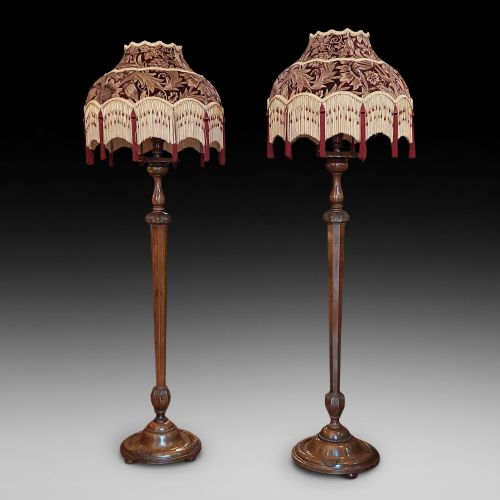
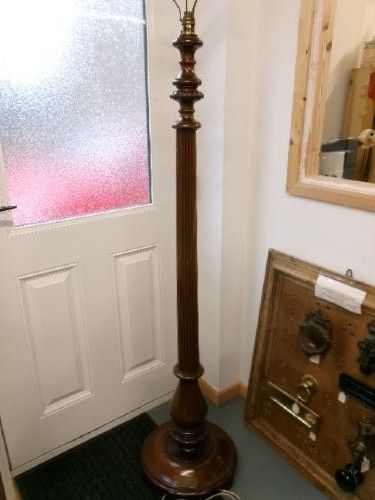
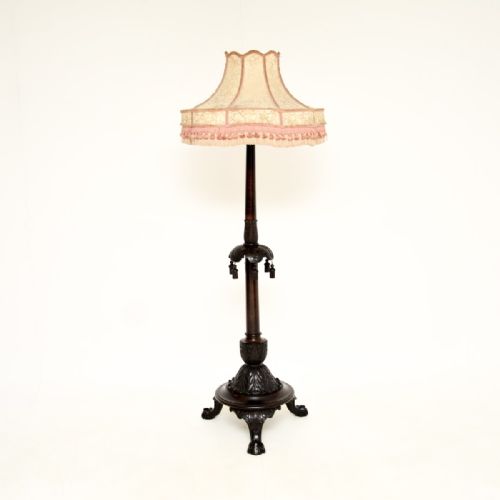
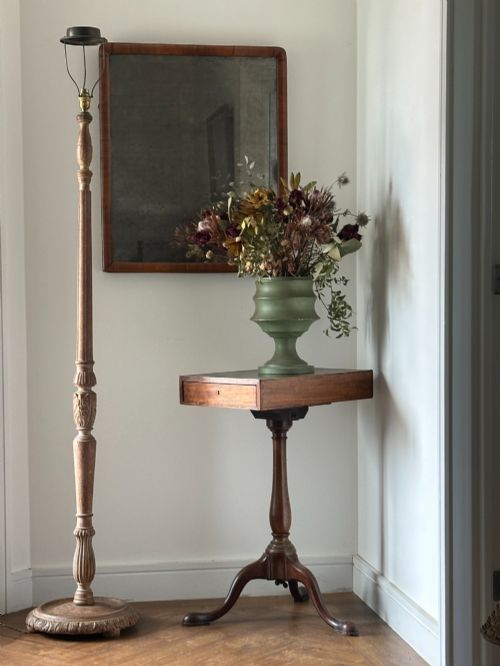
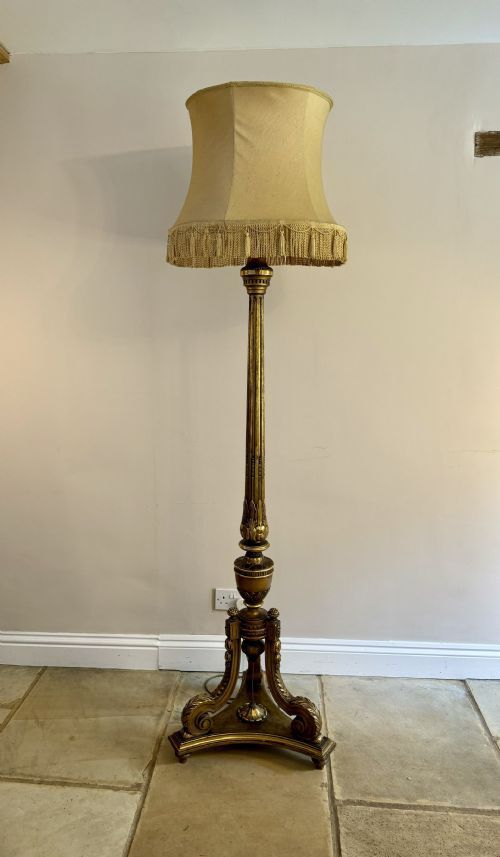
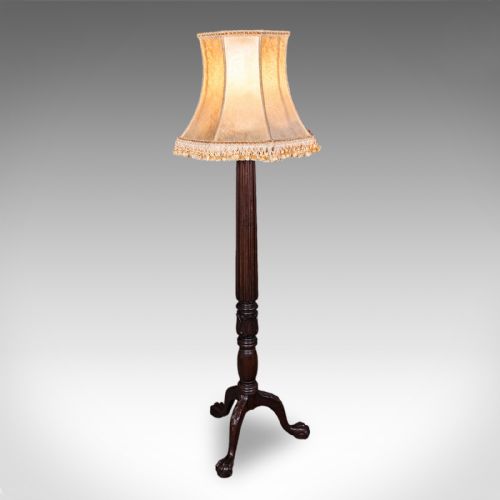
The most common examples on this page date from the Victorian, Edwardian, and interwar periods. They often appear as turned floor lamps, standard lamps, and carved variants featuring fabric shades.
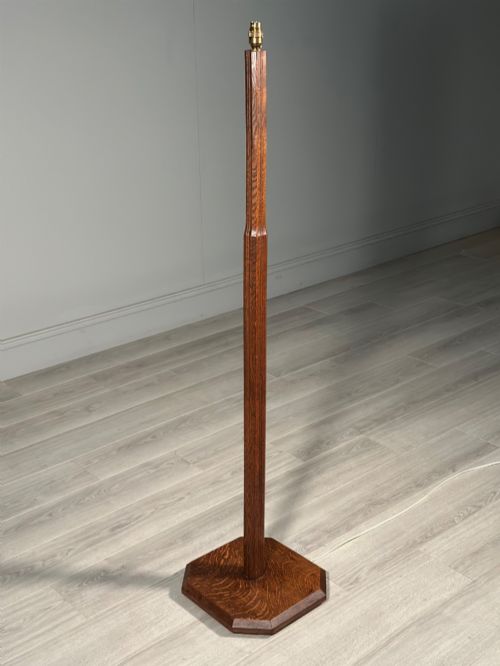
Makers and styles span from Arts and Crafts Cotswold School pieces to French Chateau and English Country forms. You will find standard lamps designed for both direct reading light and softer background glow.
How they were made
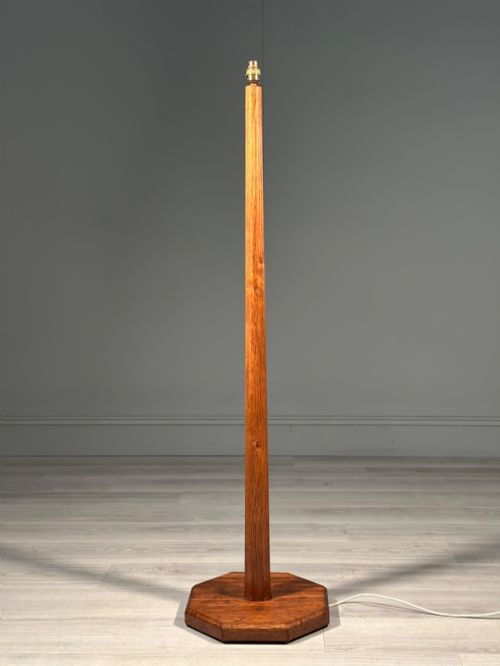
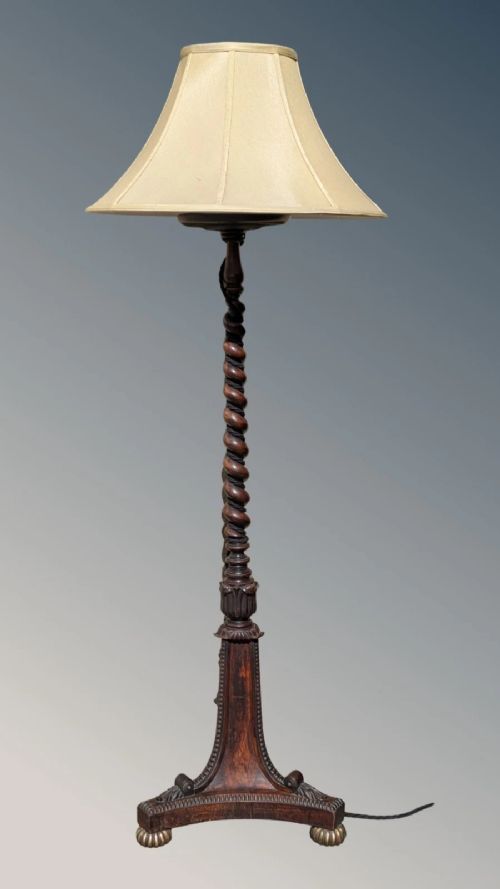
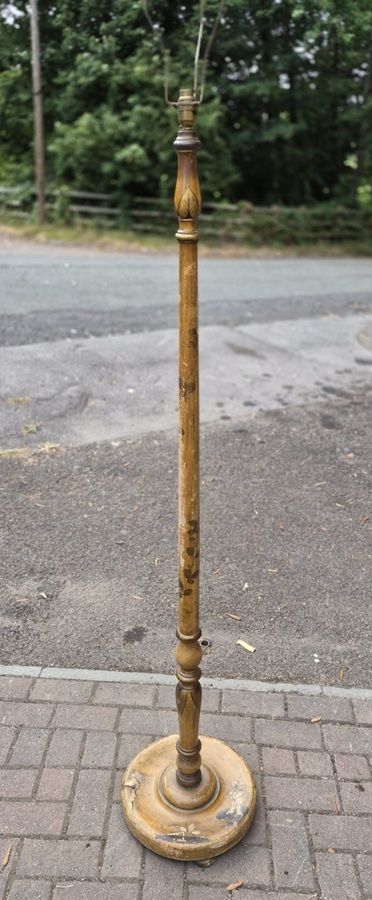
Woodturners shaped dense hardwoods on lathes to produce slender, columnar shafts with stepped or tiered bases. Craftsmen then joined these turned sections using traditional joinery to ensure stability for the tall upright structure.
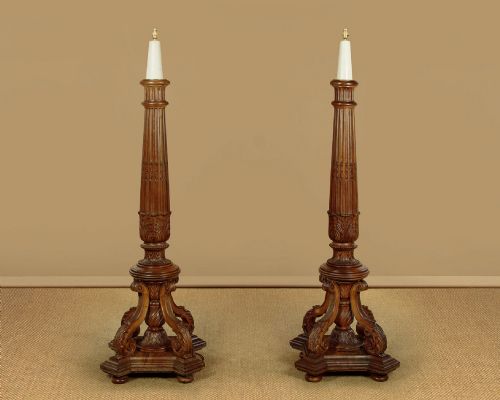
Surface ornamentation involved hand-carving botanical or classical motifs directly into the timber. Makers also applied parcel gilt, giltwood, or limed finishes to enhance the grain and decorative presence of the wood.
Traditional Wooden Floor Lamp Retail Price Guide 2026
Typical asking prices for traditional wooden floor lamp among the pieces listed under this phrase on Sellingantiques today, from the lower quarter to the upper quarter. They describe what is for sale here now, not the wider market.
Among the stately timber columns sits an amusing sculpture of a night watchman, proving that wooden lights need not be entirely serious.
What varies in quality
The weight and stability of the base separate ordinary examples from superior ones. Finer pieces employ heavy, dense hardwoods and wide platforms that prevent the tall shaft from tipping.
The crispness of hand-carved details and the subtlety of finishes like parcel gilding or liming define the upper tier of craftsmanship. Simpler turned beech or standard mahogany lamp standards represent more utilitarian production.
Arthur Reynolds·Whytock & Reid
The Traditional Wooden Floor Lamp Glossary
- Standard lamp
- The traditional British term for a floor lamp, consisting of a tall upright wooden pole on a base designed to hold a light fitting and shade.
- Giltwood
- Timber that has been coated with a thin layer of gold leaf or gilt paint. This technique adds reflective brightness to carved decorative elements.
- Cotswold School
- An Arts and Crafts design movement associated with straightforward, honest construction in solid oak. Pieces from this tradition showcase the natural qualities of the wood.
- Parcel gilt
- A decorative treatment where only specific carved details or raised portions of the wooden object are gilded, leaving the underlying wood exposed.
Traditional Wooden Floor Lamp: Frequently Asked Questions
What is a traditional wooden floor lamp?
A tall lighting fixture turned or carved from timber to hold a bulb and shade at height.
These pieces provide vertical illumination and decorative presence in traditional interiors.
How were standard lamps used historically?
They stood beside armchairs or in dark corners to supply reading light without requiring a side table.
Their height allowed illumination to cast downward over seating areas.
How do I identify an Edwardian wooden floor lamp?
Edwardian examples often feature lighter woods like oak or mahogany with restrained carving and slender proportions.
They reflect the domestic interior styles prevalent during the reign of King Edward VII.
Where should I place a floor lamp in a room?
Position them behind or beside seating furniture to create pools of functional light.
They anchor empty corners and balance the vertical scale of tall ceilings.