

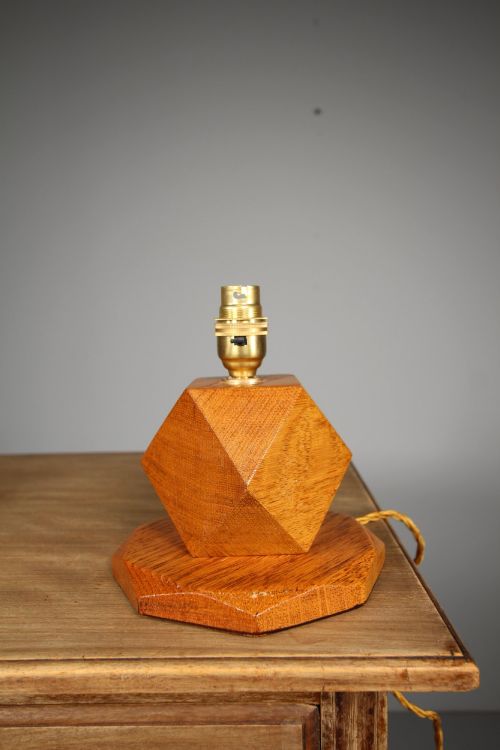
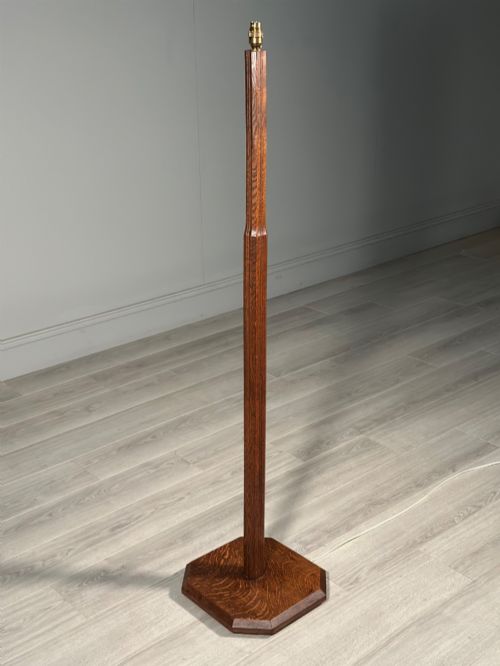
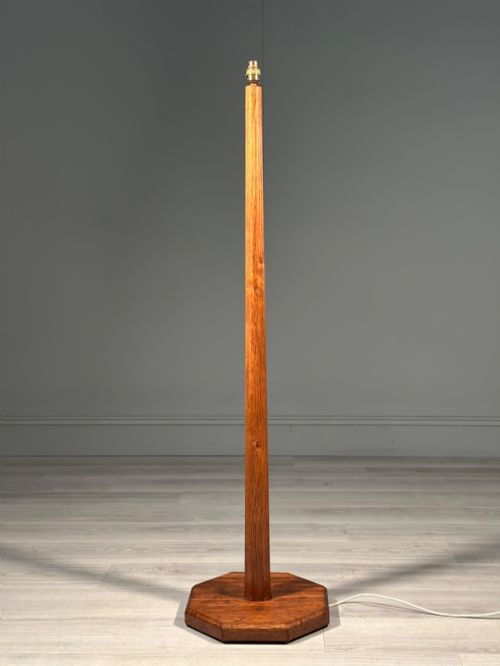
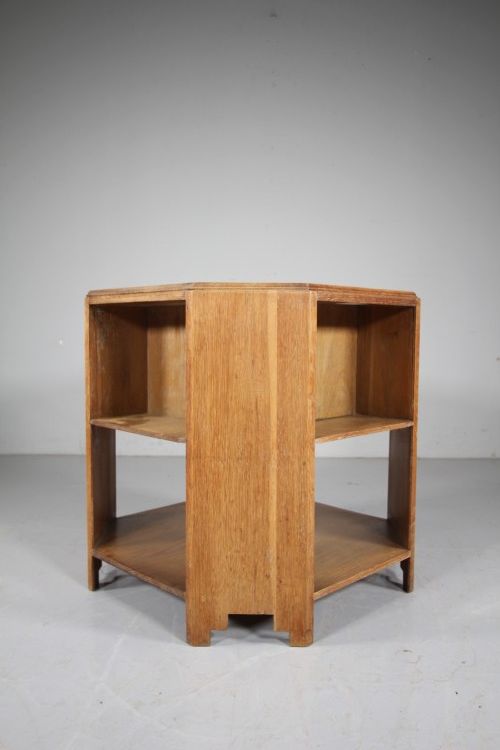


Solid Oak Standing Light
A solid oak standing light brings genuine grain and honest craftsmanship to a corner, offering a warm vertical presence built to last.
Solid Oak Standing Light
A solid oak standing light typically takes the form of a tall standard lamp designed to anchor a room with sturdy timber construction. These upright lighting pieces frequently emerge from the Arts and Crafts tradition, as well as the later Art Deco and Edwardian periods.
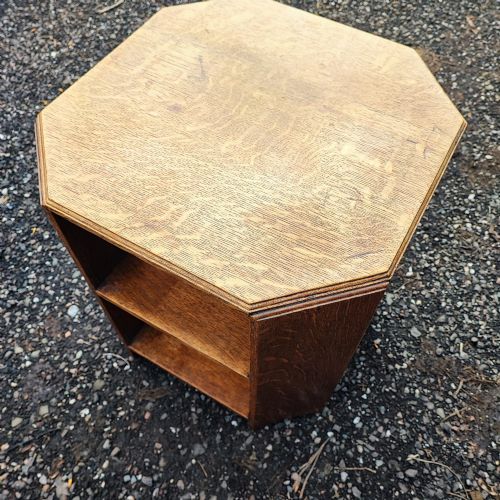
Buyers browsing for a solid oak standing light will also encounter related furnishings in the listings, including table lamps, small book tables, and occasionally fitted hall stands. Most examples date from the early decades of the twentieth century, reflecting the enduring appeal of heavy oak furniture.
The aesthetic ranges from the unadorned joinery of the Cotswold School to geometric moderne lines, yet the core material remains solid oak throughout. This consistency ensures that every standing light carries a tactile weight and visible grain pattern missing from lesser veneer work.
Materials and construction methods
Construction relies upon solid oak timbers selected for stability and grain character, often paired with contrasting details in ebony or brass. Makers utilised traditional joinery techniques such as mortise and tenon joints to ensure the tall upright shafts remained rigid over decades of use.
Metal components like copper, iron, and brass appear on switches, collars, and weighted bases, adding functional durability to the timber frames. Glass shades or fittings occasionally complement the design, though many standard lamps survive primarily as wooden structures awaiting modern wiring.
Solid Oak Standing Light Retail Price Guide 2026
Typical asking prices for solid oak standing light among the pieces listed under this phrase on Sellingantiques today, from the lower quarter to the upper quarter. They describe what is for sale here now, not the wider market.
Several oak standard lamps double as umbrella stands or book tables, proving that early twentieth-century makers loved a multitasker.
Distinguishing quality in oak lighting
Quality rests upon the selection of the timber and the architectural proportion of the standard lamp, where subtle chamfering and clean joinery separate workshop pieces from mass production. The integration of secondary materials, such as contrasting ebony inlays or hand-hammered copper, reveals the maker's attention to detail.
Proportion and stability dictate the merit of a floor-standing piece, ensuring the heavy oak shaft balances securely on its base without relying on excessive modern reinforcement. Originality of form and surface finish further elevate certain examples above standard utility lighting.
Arthur Reynolds·Whytock and Reid
The Solid Oak Standing Light Glossary
- Standard Lamp
- A tall floor-standing light designed to illuminate a room from a vertical timber or metal shaft. These pieces often feature heavy bases to ensure stability.
- Arts and Crafts
- A design movement valuing handcraftsmanship, simple forms, and visible construction methods over mass-produced ornamentation. Oak was a favoured medium for its honest texture.
- Art Deco
- A style spanning the interwar years characterised by sleek geometric lines, stylised motifs, and contrasting materials like oak and ebony. It brought modernism to everyday lighting.
- Cotswold School
- A regional offshoot of the Arts and Crafts movement focusing on vernacular furniture making and unadorned solid timber construction. Pieces from this tradition display straightforward joinery.
- Edwardian
- Pertaining to the period of the Edwardian era, spanning the early years of the twentieth century. Furniture from this time often balances traditional proportions with lighter domestic styling.
Solid Oak Standing Light: Frequently Asked Questions
How do I place a standard lamp in a room?
Standard lamps work best anchored in dark corners, beside reading armchairs, or framing larger pieces of furniture to draw the eye upward.
Their vertical presence helps balance horizontal seating arrangements without requiring extensive floor space.
How do I distinguish Arts and Crafts oak from Art Deco oak?
Arts and Crafts pieces emphasise visible hand-craftsmanship, pegged joints, and heavy, unadorned timber structures that celebrate natural grain. Art Deco examples lean towards geometric symmetry, often pairing golden oak with contrasting details like ebony.
Looking at the silhouette and decorative restraint usually clarifies which design ethos shaped the timber.
Are these lamps supplied with modern wiring?
Many vintage standard lamps have been rewired to meet contemporary electrical standards, though the degree of restoration varies by individual piece.
Buyers should inspect the specific listing details regarding rewiring before connecting the lamp to a mains supply.