



Traditional Wooden Cradle
A traditional wooden cradle brings centuries of quiet domestic history into a room, offering tactile warmth and solid timber construction that collectors prize.
Traditional Wooden Cradle
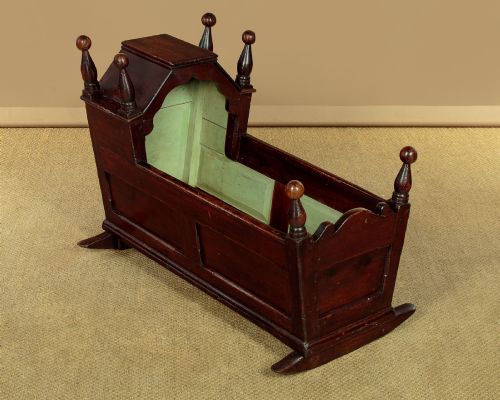
A traditional wooden cradle takes the form of a rocking bed designed for infants, appearing in periods from the seventeenth century through the Victorian era. These pieces arrive in heavy hardwoods and softer timbers, often featuring enclosed hoods or panelled sides that keep out draughts.
The versions most commonly met on this page range from sturdy pine examples with traces of original paint to richly figured oak and mahogany cribs resting on curved rockers. Alongside domestic infant beds, related forms such as panelled cribs and hooded designs shape the collection.
Geographic and stylistic variation runs from Scandinavian country pieces and French folk art to robust English oak examples. Buyers select these objects for their honest construction and the deep patination accumulated across generations.
How they were made
Construction relies upon solid timber, with cabinet makers and rural joiners utilising oak, pine, and mahogany for structural integrity. Panels are frequently hand-carved or field-panelled to give rigidity to the sides without excessive weight.
Rocking action is achieved through curved wooden rockers attached to the base, allowing the crib to sway smoothly. Surface treatments vary from clear finishes that highlight the natural grain of the wood to historic layers of blue paint and decorative painted schemes.
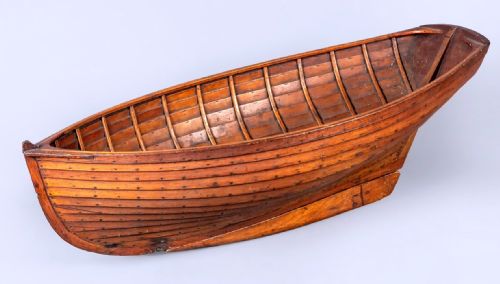
Several pieces double as watercraft-inspired creations, with one striking nineteenth-century example shaped precisely like a boat hull.
What varies in quality
Quality rests upon the selection of timber and the complexity of the joinery, distinguishing simple utilitarian items from finely carved examples. Pieces displaying crisp panel work, original surface paint, and intact structural elements hold higher distinction.
The survival of original rocking mechanisms and unblemished timber patination determines the standing of a piece within the range. Greater age combined with untouched construction elevates the character of the object.
The Traditional Wooden Cradle Glossary
- Field-panelled
- A method of construction where wooden panels have bevelled edges set into a frame. This technique allows the timber to expand and contract naturally with changes in humidity.
- Hood
- A protective canopy attached to the head of the cradle. It shields the infant from cold air and drafts in older domestic interiors.
- Rockers
- Curved pieces of timber fixed to the base of the crib. They allow the structure to pivot smoothly for motion.
- Patina
- The surface sheen and colour developed by wood through age, handling, and light exposure. It serves as an indicator of historic authenticity.
- Pine
- A softwood commonly utilised in regional and country furniture. It takes paint finishes readily and forms lighter domestic items.
Traditional Wooden Cradle: Frequently Asked Questions
How are traditional wooden cradles dated?
Dating relies upon examining the tooling marks, construction methods, and timber species visible in the frame. Stylistic motifs such as panel design offer further clues to the period of origin.
Changes in hardware and the presence of historic paint layers also help narrow down the decade in which the piece was constructed.
Can these cradles still be used for babies?
While these pieces were originally built for infants, modern safety standards differ significantly from historical manufacturing practices. Most buyers acquire them for display, storage, or decorative interior use.
Any contemporary use requires careful structural assessment to ensure stability and compliance with current safety regulations.
How should I clean painted pine furniture?
Maintenance requires gentle dusting with a dry or slightly damp soft cloth to preserve delicate historic surfaces. Harsh chemical cleaners and excessive moisture must be avoided to protect the paint layer.
Periodic waxing may be suitable for unpainted timber sections, but painted surfaces demand a cautious approach.
What is the difference between oak and pine cradles?
Oak provides a dense, heavy hardwood structure with a pronounced grain that endures centuries of wear. Pine offers a softer, lighter alternative frequently associated with regional folk traditions and painted finishes.
Both materials yield distinct aesthetic qualities depending on the region and period of manufacture.