

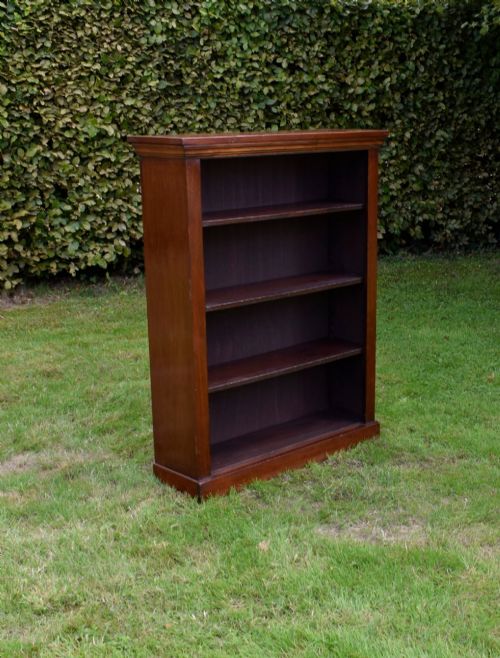
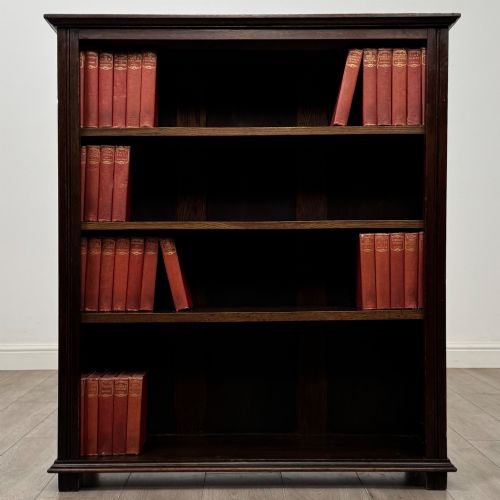
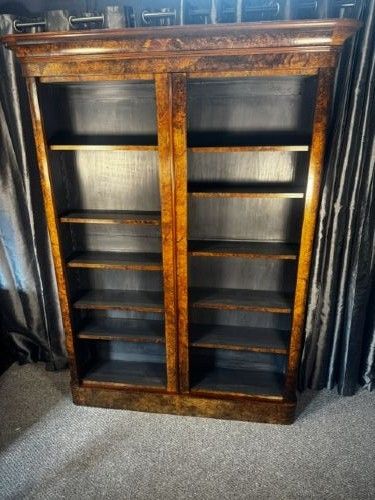
Traditional Wooden Bookcase Cabinet
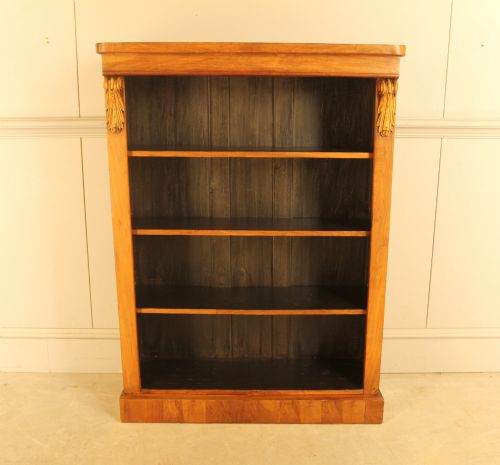
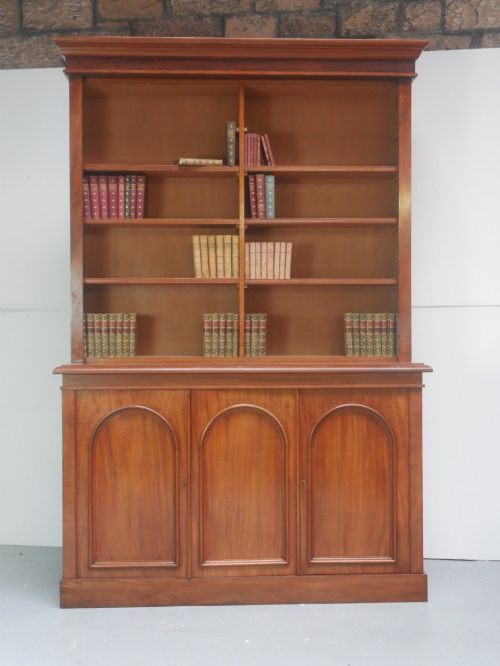
A traditional wooden bookcase cabinet stands ready to organise heavy volumes and display prized bindings with quiet dignity in any room.
Traditional Wooden Bookcase Cabinet
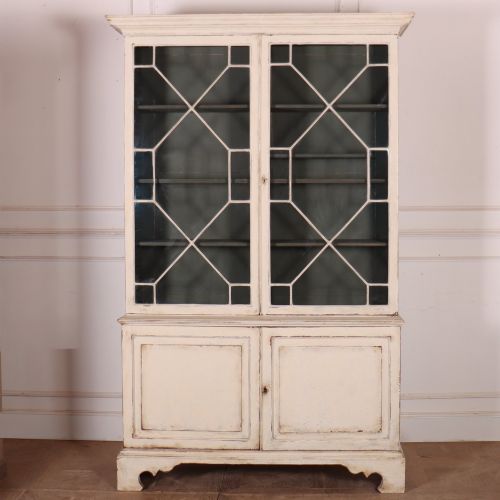
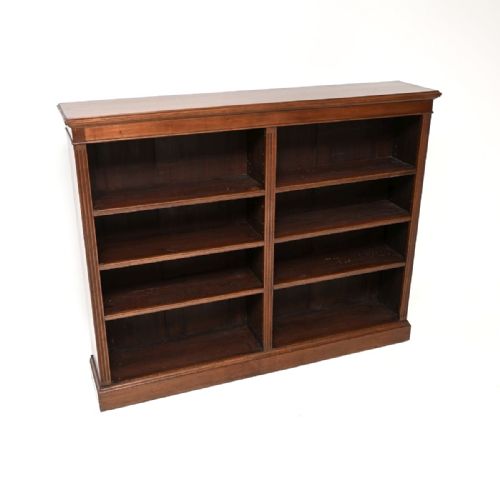
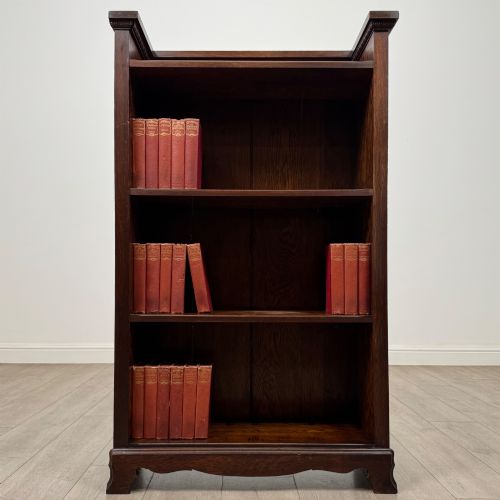
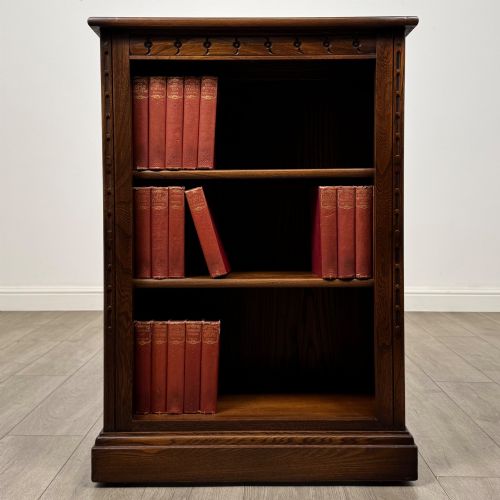
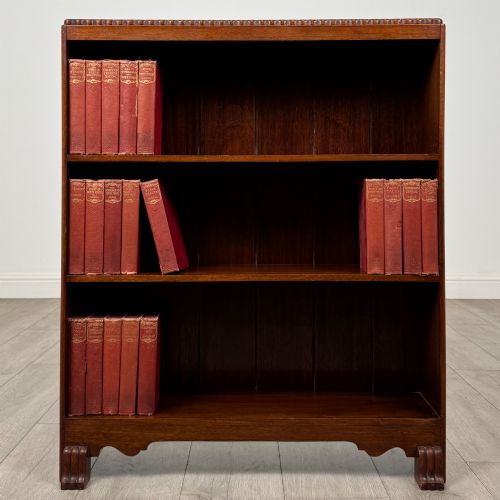
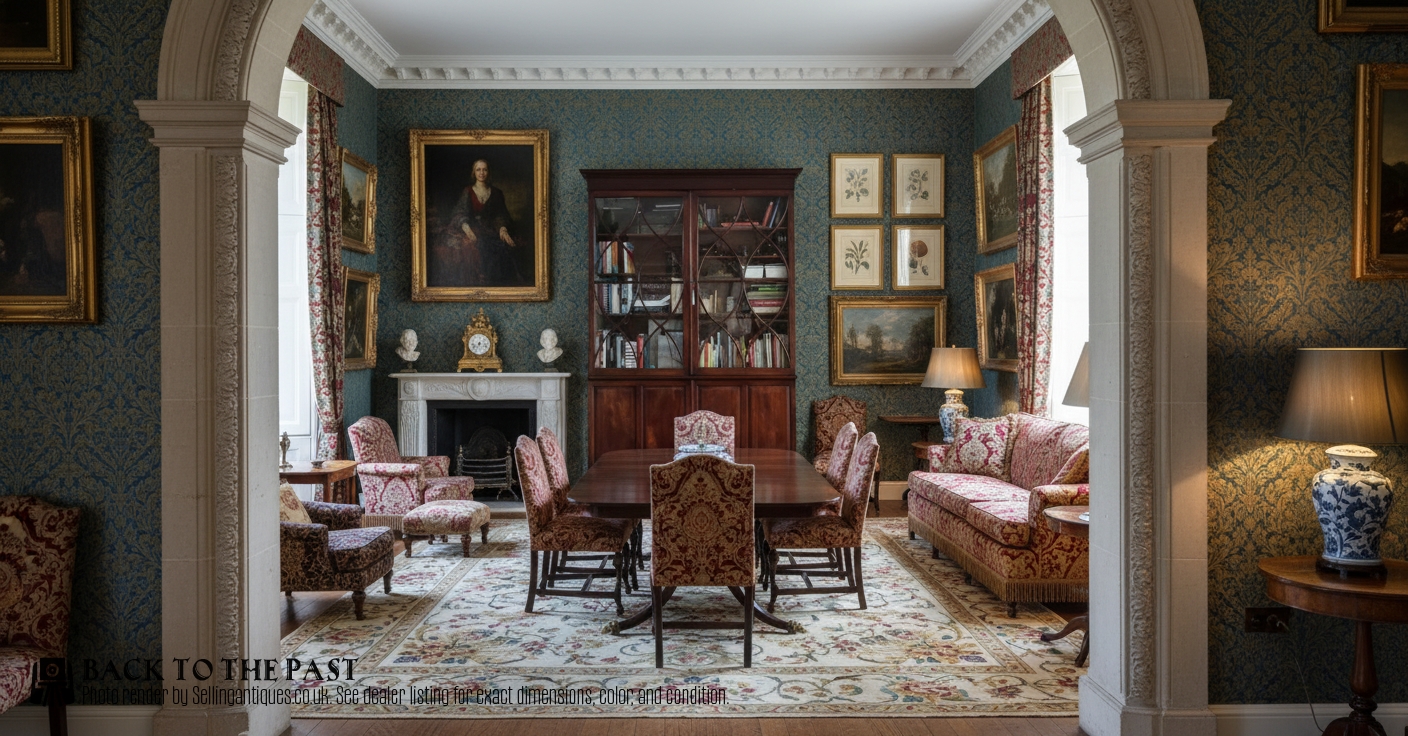
A traditional wooden bookcase cabinet combines open shelving with enclosed storage space below, offering a practical solution for housing libraries and household items. When searching for a traditional wooden bookcase cabinet, buyers encounter diverse forms ranging from modest open oak units to grand breakfront architectural pieces with glazed doors.
The selection draws from multiple centuries, with Victorian and Edwardian examples appearing frequently alongside earlier Georgian and Regency designs. These pieces range from narrow corner cupboards and stacking barristers to expansive breakfront formats built to command a substantial wall.
Materials and construction methods
Cabinetmakers relied heavily on dense hardwoods such as mahogany, oak, and walnut, often selecting figured veneers like burr walnut and satinwood for visual depth. Secondary timbers like pine and deal provided sturdy internal framing and backing boards for daily service.
Joinery techniques included adjustable shelving systems, inlaid friezes, and brass hardware fittings that secured glazed doors or drop-front writing desks. Surface treatments varied from polished French polishes and painted finishes to rich red lacquers.
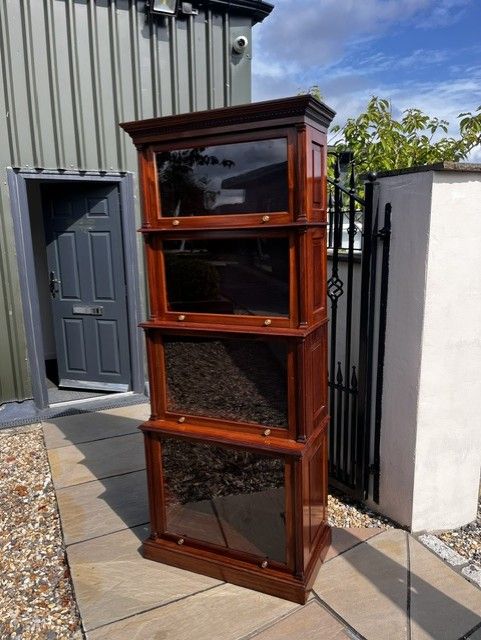
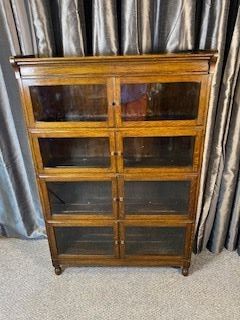
Lawyers once stacked their portable wooden bookcase sections to take their entire legal library straight to court.
Distinguishing quality in cabinetry
Superior examples demonstrate meticulous timber selection, where grain patterns align harmoniously across large breakfront doors and friezes. Fine joinery ensures doors hang square, drawers move smoothly on internal runners, and decorative inlays remain crisp and intact.
Proportion and scale dictate the distinction between standard utility furniture and masterworks designed for formal libraries. Pieces retaining original brass mounts, working locks, and adjustable shelving command greater appreciation among collectors.
The Traditional Wooden Bookcase Cabinet Glossary
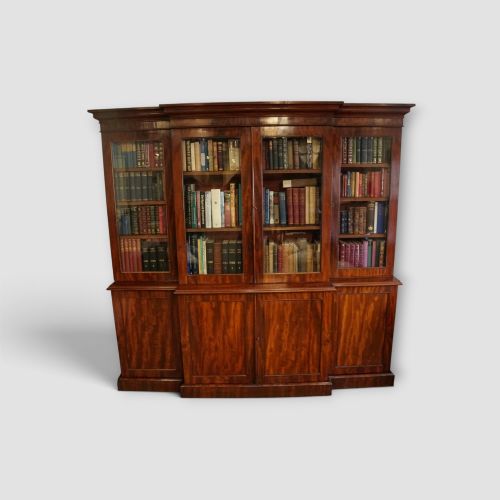
- Breakfront
- A cabinet design where the central section projects forward from the flanking wings. This architectural layout creates depth and visual rhythm in larger library pieces.
- Barristers stacking bookcase
- A modular shelving unit comprising multiple glass-fronted sections that lift and slide upwards. This clever format allowed lawyers to transport their libraries easily.
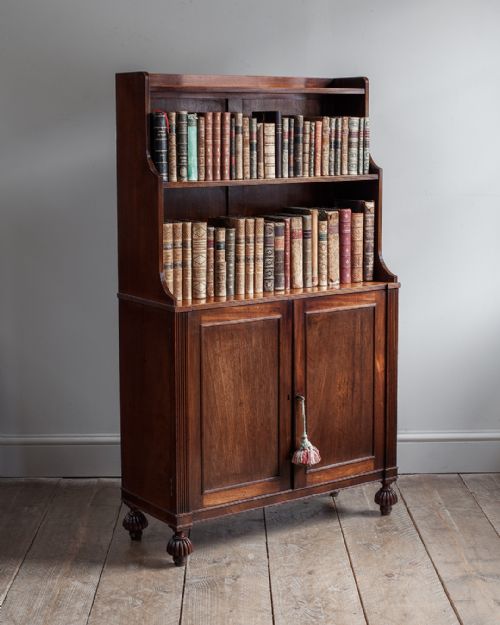
- Waterfall bookcase
- A distinctive open shelving format where the shelves recede in depth from bottom to top, following a stepped profile. It creates a graceful silhouette against the wall.
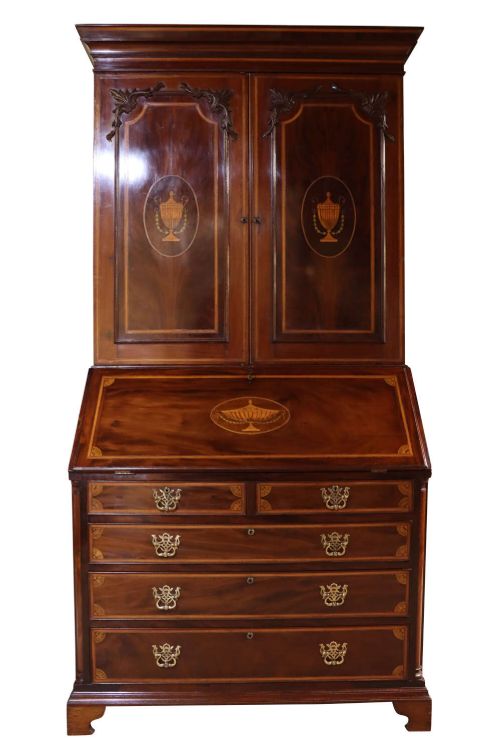
- Bureau bookcase
- A combination piece featuring a sloping fall-front desk compartment situated beneath upper bookcase shelving. It provides both writing space and enclosed storage.
- Frieze
- The flat horizontal band situated immediately beneath the cornice of a cabinet. Makers often decorated this area with contrasting wood inlays or carved mouldings.
Traditional Wooden Bookcase Cabinet: Frequently Asked Questions
How do I date a wooden bookcase?
Examine the secondary timbers used inside the cabinet, the style of the cornice moulding, and the method of drawer construction. Tool marks and timber choice often reveal whether a piece originates from the Georgian, Victorian, or Edwardian era.
Hardware fittings like brass handles and key escutcheons also offer reliable clues to the period of manufacture, though hinges and locks must be assessed for later replacements.
Are shelves usually adjustable in these cabinets?
Many traditional bookcases feature adjustable shelving supported by wooden ratchets, metal pins, or brass track systems. This adaptability allowed owners to accommodate books of varying heights.
Earlier open bookcases sometimes featured fixed shelving secured with pegged joinery, while later Victorian and Edwardian iterations frequently utilised adjustable mechanisms.
How should I care for a mahogany bookcase?
Keep wooden furniture away from direct sunlight and strong heat sources to prevent the timber from drying out and the polish from fading. Maintain a stable indoor humidity level to protect delicate veneers and solid joints.
Apply a light application of traditional beeswax periodically to nourish the surface polish and preserve the natural lustre of the mahogany grain.