



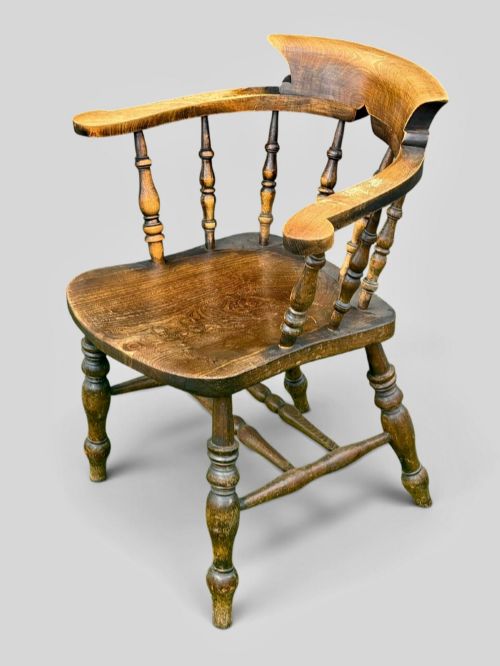
Traditional Wood Windsor Chair
A traditional wood windsor chair brings structural honesty and vernacular warmth to a room, offering sturdy seating shaped by centuries of English rural craft.
Traditional Wood Windsor Chair
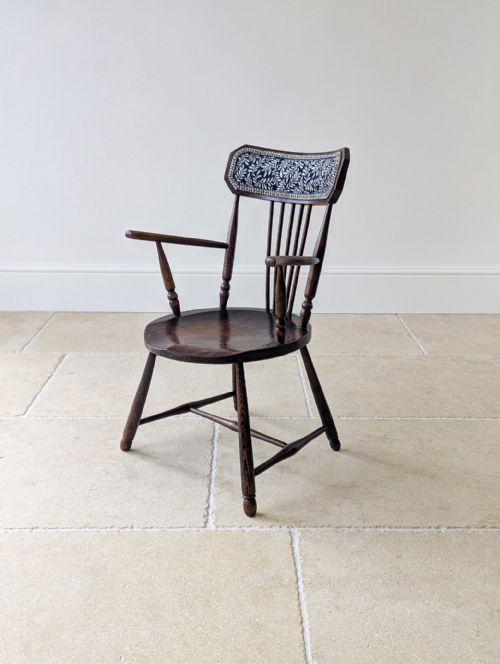
When searching for a traditional wood windsor chair, buyers encounter seating rooted in English country vernacular design spanning the eighteenth and nineteenth centuries. The selections on this page predominantly showcase forms originating from Victorian and Georgian periods, alongside Regency and Edwardian examples.
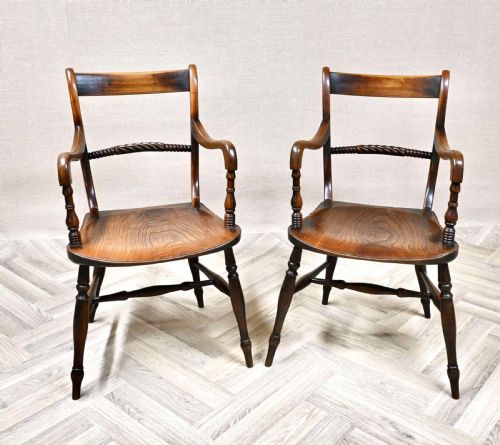
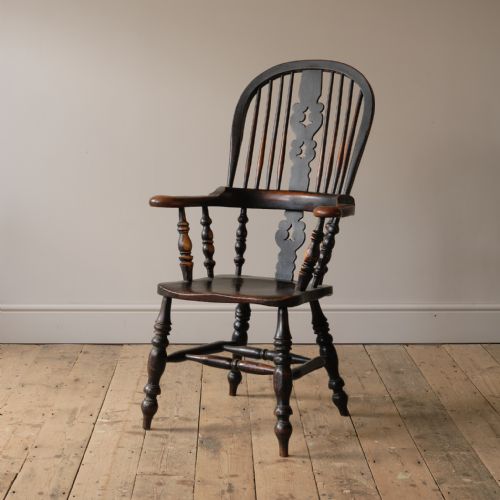
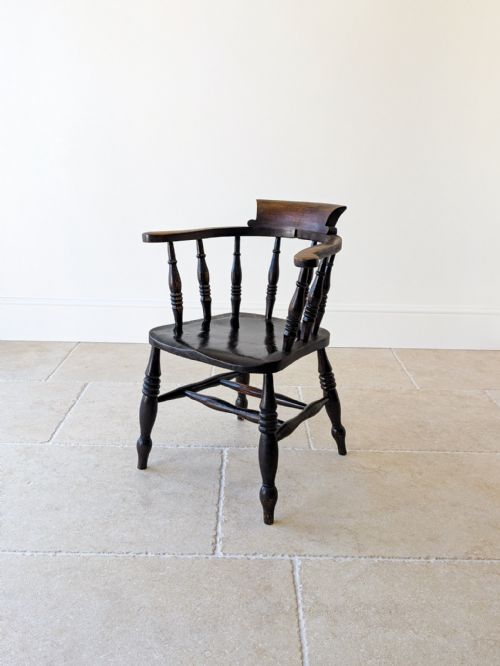
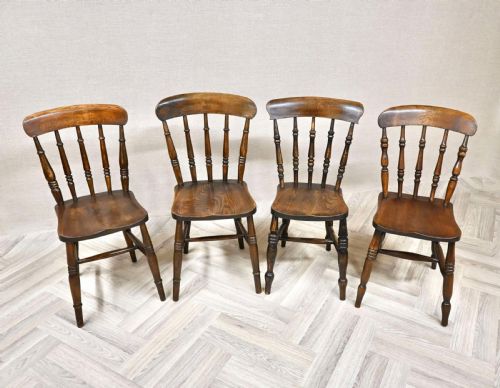
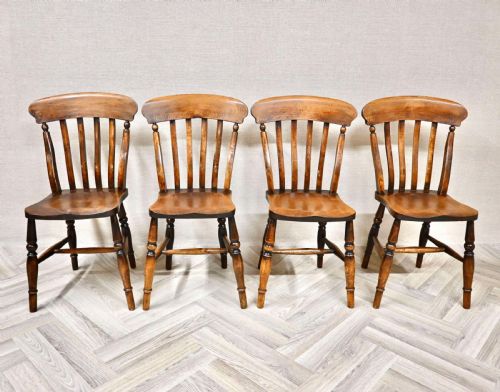
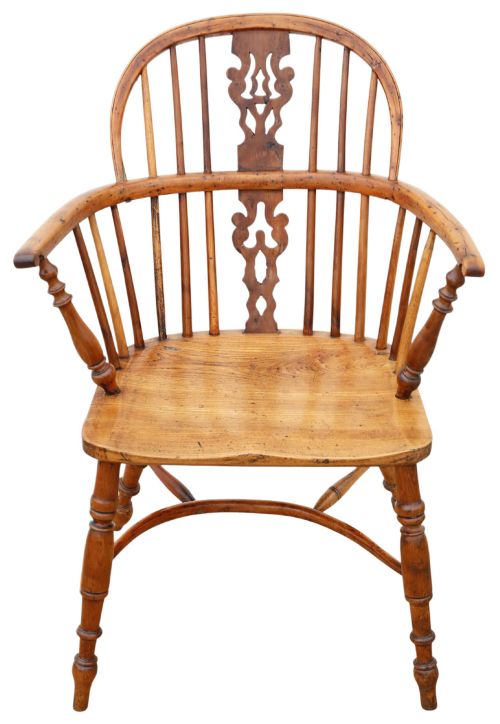
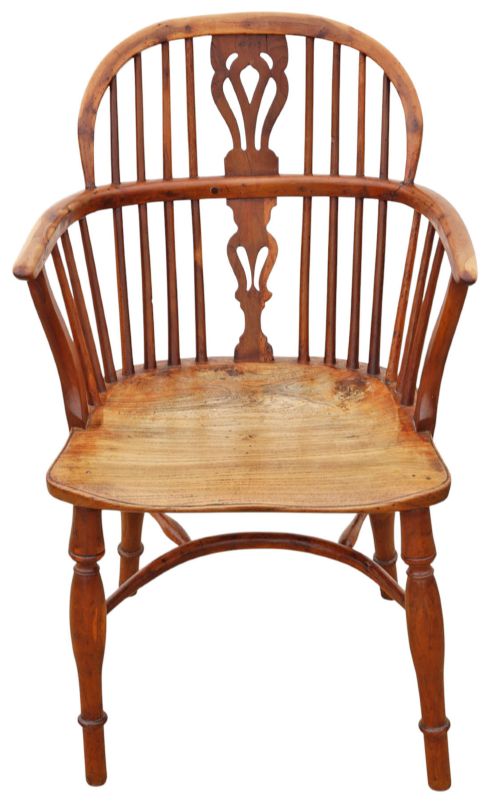
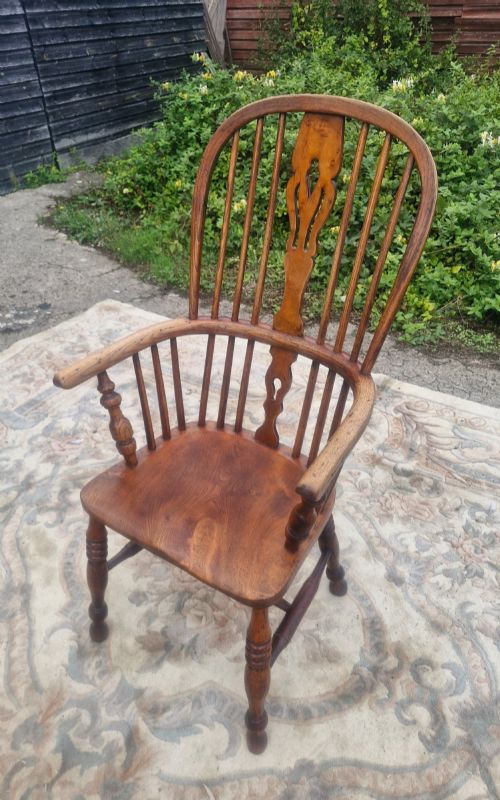
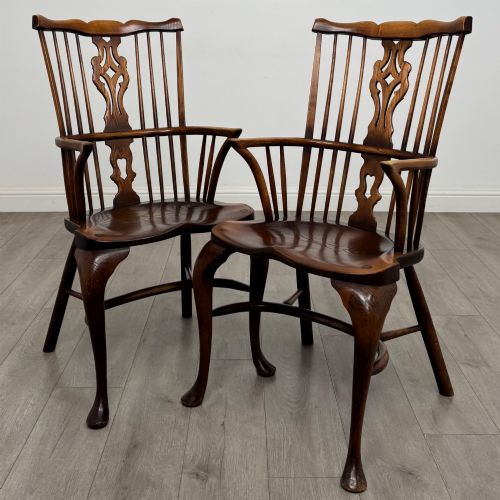
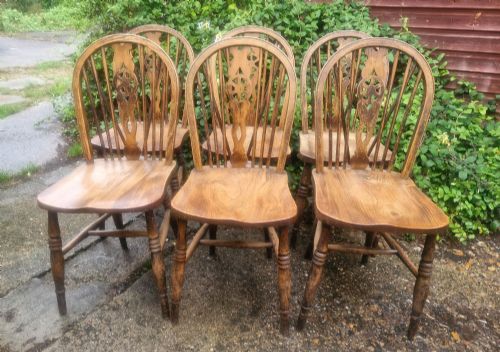
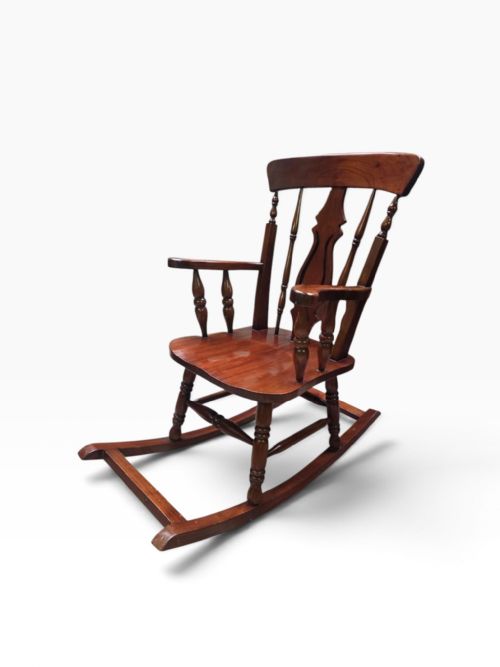
The available inventory includes distinct configurations such as high comb backs, hoop backs, barbacks, lathbacks, wheel backs, and smokers bows. These pieces appear as individual armchairs, carvers, rocking chairs, children's chairs, and matching dining sets intended for farmhouse kitchens and parlours.
Materials and Construction
Maker construction relies on contrasting timbers selected for specific structural demands, pairing strong elm seats with flexible ash, yew, beech, fruitwood, and oak for spindles, arms, and legs. Elm provides a stable, dense base that resists splitting when legs and backs are wedged into place.
Makers shaped green and seasoned wood using traditional turning and steam-bending techniques to create the characteristic bowed backs and carved saddle seats. Components are jointed directly into the solid wooden seat using tapered tenons secured with wedges.
Listings feature pieces spanning the Georgian, Regency, Victorian, and Edwardian eras, constructed from elm, ash, yew, beech, oak, and fruitwood.
Distinguishing Quality
Quality rests in the select pairing of timber figures, such as highly grained yew wood combined with richly figured elm seats, which elevates the visual presence of the chair. Grain movement and the depth of the saddle shaping reveal the maker's hand.
Structural integrity and proportion separate standard utility seating from finer examples, visible in the elegance of the spindle turnings and the rake of the legs. The retention of original surface patination and surface wear defines the preservation of the piece.
J SPENCER
The Traditional Wood Windsor Chair Glossary
- Comb back
- A Windsor chair style where the vertical spindles of the back extend upward into a horizontal crest rail resembling the teeth of a comb. This form frequently appears on eighteenth-century examples.
- Hoop back
- A continuous bentwood rail that forms both the arms and the upper back of the chair. This curved member is steam-bent from a single piece of ash or yew.
- Smokers bow
- A low-backed Windsor armchair designed for domestic or tavern use, featuring a continuous rounded arm rail supported by short spindles. It is often encountered in beech and elm.
- Wheel back
- A chair back featuring a central pierced splat shaped like the spokes and rim of a carriage wheel. This design gained popularity during the nineteenth century.
- Saddle seat
- A solid wooden seat scooped and carved into a concave depression for comfort. Elm was traditionally chosen for this component due to its interlocking grain.
Traditional Wood Windsor Chair: Frequently Asked Questions
What defines a traditional wood windsor chair?
A traditional wood windsor chair is built with a solid wooden seat into which the legs and back spindles are tenoned directly, rather than using a conventional framed chair skeleton.
Constructed from native timbers like elm, ash, and yew, these chairs rely on vernacular joinery to achieve structural strength without heavy framing.
How were these chairs used historically?
These chairs served as everyday seating in English farmhouses, kitchens, cottages, and provincial homes, utilised for dining, working, and relaxing by the hearth.
Sturdy construction allowed them to withstand daily domestic labour across generations in both modest households and larger country residences.
How do I date an antique windsor chair?
Dating relies on observing structural evolution, such as the transition from eighteenth-century comb backs to nineteenth-century hoop backs, wheel backs, and kitchen barbacks.
Timber choice and tool marks also offer clues, as earlier pieces frequently employ yew and ash alongside hand-turned components showing distinct lathe characteristics.
How do I live with antique windsor chairs?
These chairs integrate easily into modern and traditional interiors around dining tables, desks, or as standalone accent seating in living spaces.
Maintenance involves keeping them away from direct heat sources and sudden humidity changes to protect the historic timber and traditional joints.