
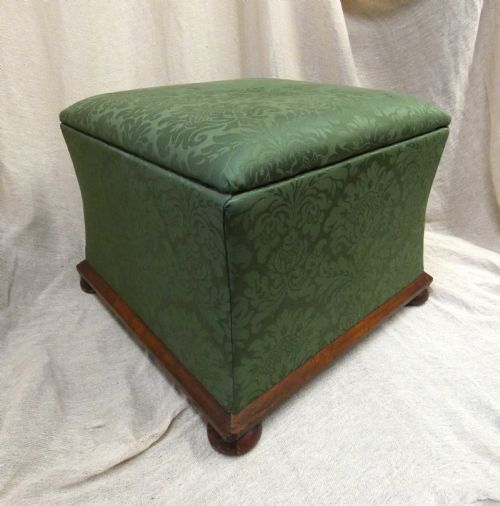


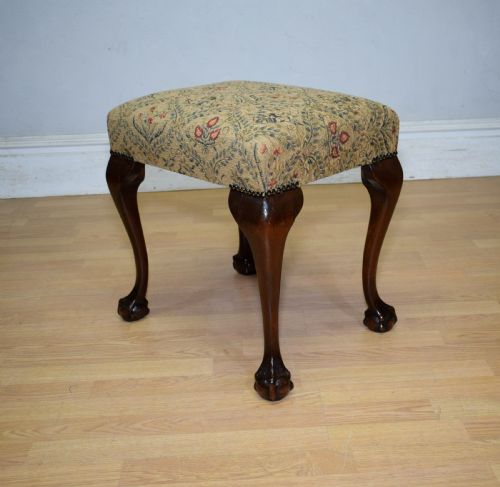


Traditional Wood Footrest
These traditional wood footrest pieces are solid timber supports built to rest tired feet, spanning periods from the eighteenth century to the early twentieth.
Traditional Wood Footrest
When you search for a traditional wood footrest, you encounter a variety of low timber stools and footstools designed for domestic comfort. These pieces range from compact square frames to long mahogany designs suited to fireside placement.
The selections available here lean heavily into Victorian examples alongside eighteenth-century Georgian items and later twentieth-century pieces. Alongside standard footstools, the inventory includes related seating forms such as children's furniture and occasional stools.
Makers shaped these items using established historical idioms, incorporating Queen Anne Revival, Chippendale, and French decorative influences. Each piece reflects the domestic seating habits of its respective period, from early Victorian parlours to Georgian reception rooms.
How they were made
Carpenters constructed the structural frames of these items using hardwoods such as mahogany, walnut, beech, and general hardwood. These timbers provided the necessary strength for daily foot support and heavy domestic wear.
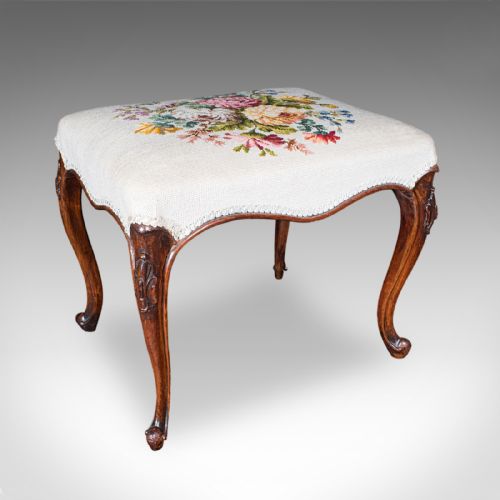
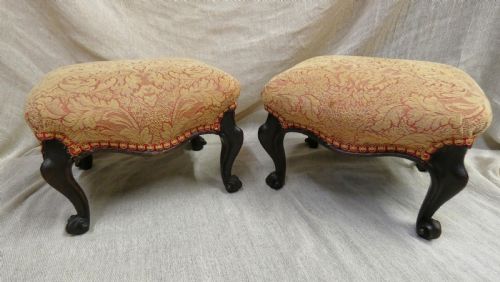
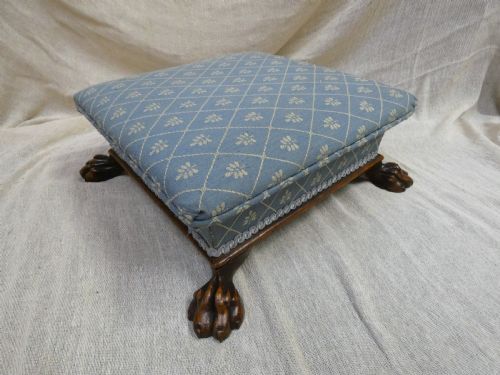
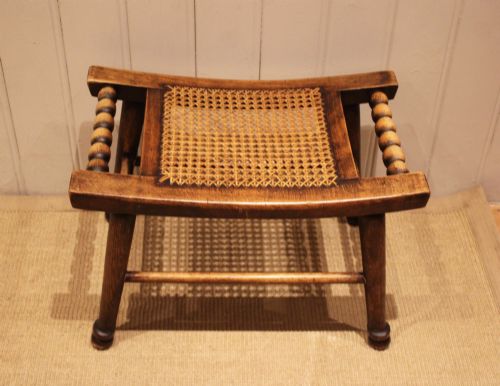
Upholstered surfaces relied on traditional textiles, including wool, needlepoint, tapestry, fabric, and leather, often stretched over internal padding. Some examples incorporated cane seating or brass details to accent the wooden frames.
The listings here feature Victorian, Regency, and eighteenth-century periods, constructed from mahogany, walnut, beech, and cane.
What varies in quality
The calibre of a traditional wood footrest depends significantly on the selection of timber and the precision of the joinery in the frame. Dense hardwoods like mahogany and walnut with clean, stable construction sit at the upper end of the range.
The execution of the upholstery and decorative detailing also defines the tier of the piece. Hand-carved walnut frames or carefully worked needlepoint and tapestry covers distinguish finer examples from plain utility stools.
The Traditional Wood Footrest Glossary
- Mahogany
- A durable tropical hardwood prized for its rich reddish-brown colour and stability in furniture construction. It appears frequently in eighteenth and nineteenth-century frames.
- Walnut
- A heavy, dark timber valued for its attractive grain pattern and strength. Cabinet makers utilised it extensively for decorative chairs and footstools.
- Needlepoint
- A form of counted thread embroidery stitched onto a stiff canvas mesh. It provides durable, decorative surface coverings for period footstools.
- Cane
- Strips of woven rattan material used to form breathable seat panels. It offers a lightweight alternative to solid timber or upholstered pads.
- Tapestry
- A heavy textile featuring woven pictorial or geometric designs. It was frequently employed to upholster formal seating during the eighteenth and nineteenth centuries.
Traditional Wood Footrest: Frequently Asked Questions
What is a traditional wood footrest?
A traditional wood footrest is a low domestic stool built from timbers like mahogany, walnut, or beech to support seated occupants.
These pieces often feature upholstered tops in wool, needlepoint, or leather, matching the prevailing furniture styles of their respective eras.
How do I date a footstool?
Dating relies on identifying the timber species, joinery techniques, and stylistic vocabulary such as Chippendale or Queen Anne revival influences.
Victorian and Georgian examples display distinct turning methods and upholstery fabrics characteristic of those historical periods.
Were these stools used daily?
These items served practical roles beside firesides and armchairs in period homes to keep feet away from cold draughty floors.
Their robust hardwood frames ensured they withstood continuous household use across generations.
How do I clean the wood?
Maintenance involves dusting timber surfaces gently and applying appropriate wax formulations suited to period hardwoods.
Harsh chemical cleaners should be avoided to preserve the natural patina developed on the mahogany and walnut over decades.